
Mantrailing: Debunking 5 Common Myths – by Susanne Broughton


Are you a looking for a unique and engaging activity to share with your dog? Look no further than mantrailing! This exciting and rewarding activity offers numerous benefits for both you and your dog. Unfortunately, there are some misconceptions floating around that may discourage potential enthusiasts. Fear not! In this blog, we will delve into the amazing benefits of mantrailing while debunking five common myths, including the notion that only certain breeds can excel in this activity.
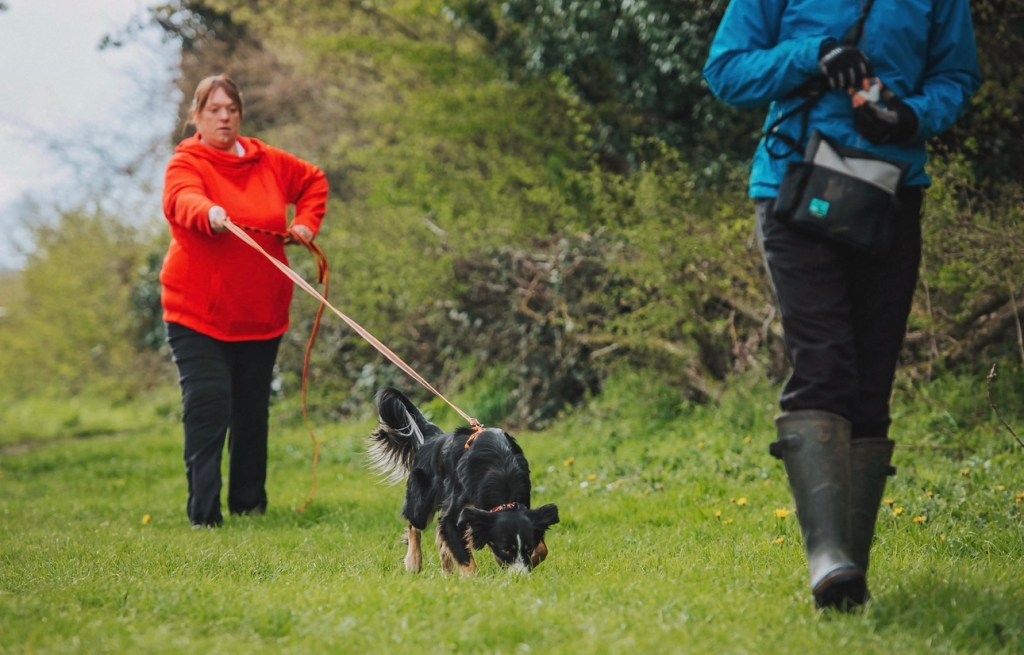
Maya hot on the heels of her trail layer
  1. Myth: Only certain breeds can trail.
    One of the most persistent myths about mantrailing is that only specific breeds possess the necessary skills to participate. In reality, any dog, regardless of breed or size, can learn to be a good mantrailer. While certain breeds may have natural instincts that make them excel in scent work, any dog can be trained to enjoy and succeed in mantrailing. It’s all about patience, consistency, and building a strong bond with your dog.
  2. Myth: Mantrailing is only for highly energetic dogs.
    Another misconception is that only high-energy dogs can benefit from mantrailing. While it’s true that energetic dogs often enjoy this activity, it can also be a great outlet for dogs with lower energy levels. Mantrailing provides mental stimulation, encourages problem-solving skills, and promotes overall well-being. It’s a fantastic way to engage and challenge dogs of all energy levels while strengthening the bond between you and your pet.
  3. Myth: Mantrailing is too complicated to learn.
    Some may think that mantrailing is a complex and challenging activity to teach their pets. However, with the right approach and guidance, mantrailing can be taught to dogs of all ages and skill levels. We will help you understand the basics, including teaching your dog to follow a specific scent, differentiate between scents, and work collaboratively with you. The key is to start with simple exercises and gradually build up skills through positive reinforcement and consistent practice.
  4. Myth: Mantrailing is only for professional search and rescue dogs.
    While mantrailing is commonly associated with search and rescue work, it’s essential to recognise that this activity can also be enjoyed recreationally. Participating in mantrailing provides mental stimulation, offers an opportunity for dogs to utilise their natural instincts, and encourages physical exercise.
  5. Myth: Mantrailing is time-consuming and requires extensive equipment.
    Contrary to popular belief, mantrailing can be adapted to fit your lifestyle. You don’t need elaborate equipment or hours of training sessions to enjoy this activity. Even short, regular sessions can provide significant benefits for your pet. With a few essential items like a long leash, harness, you can start your mantrailing adventure in no time. It’s a flexible activity that can be tailored to your schedule and preferences.


Mantrailing is a fantastic activity that offers numerous benefits for both you and your dog. By debunking these common myths, we hope to inspire pet owners to give mantrailing a try, regardless of their dog’s breed or energy level. The joy, mental stimulation, and strengthened bond you’ll experience with your pet are well worth the effort. So, grab your lead, follow the scent, and embark on an exciting mantrailing journey with your dog!

Check out the Doghampton Facebook page to start your journey.

Recognising Behavioral Signals and understanding Stress in Dogs


Our dogs are not immune to stress. Just like humans, they can experience a range of emotional and physiological changes when faced with stressors. As responsible pet owners, it’s crucial to recognise these signs and understand the underlying science behind stress in dogs. Failure to recognise these very often leads to trigger stacking. (Check out our previous blog)


When dogs encounter stress, their bodies release stress hormones such as cortisol and adrenaline. These hormones trigger various physiological changes that impact their behaviour and overall well-being. A study conducted by Beerda et al. (1999) found that stress in dogs can lead to increased heart rate, blood pressure, and respiratory rate. Additionally, elevated cortisol levels can affect the immune system and impair digestion, contributing to a host of health issues.

Some Behavioural Signals of Stress in Dogs:

  1. Excessive Barking or Howling:
    Stressed dogs may resort to excessive vocalisation as a way to express their anxiety or discomfort.
  2. Pacing or Restlessness:
    Restlessness, pacing back and forth, or an inability to settle down can indicate heightened stress levels in dogs.
  3. Excessive Panting or Drooling:
    When dogs are stressed, they may exhibit increased panting or drooling, as these physiological responses help regulate their body temperature during stressful situations.
  4. Tail Tucking between the Legs:
    A tucked tail is often a clear sign of fear or anxiety in dogs. It indicates their desire to withdraw or protect themselves from the stressor.
  5. Dilated Pupils:
    Stress can cause a dog’s pupils to dilate as a result of the increased release of adrenaline, preparing their bodies for a potential threat.
  6. Excessive Scratching or Licking:
    Stressed dogs may engage in excessive scratching or licking, as stress can trigger skin sensitivities and allergies.
  7. Reduced Appetite or Sudden Weight Loss:
    Just like humans, dogs may experience a loss of appetite or sudden weight loss during stressful periods. Stress can affect their digestive system, leading to decreased interest in food.
  8. Aggression or Growling:
    Stress can manifest as aggression or growling in dogs. This behaviour serves as a defensive mechanism to protect themselves from perceived threats.
  9. Trembling or Shaking:
    Trembling or shaking is a common physical manifestation of stress in dogs, indicating their heightened emotional state.
  10. Excessive Yawning:
    Dogs may yawn excessively when under stress. Yawning in this context is not necessarily due to tiredness but rather as a coping mechanism to release tension.
  11. Hiding or Seeking Solitude:
    Stressed dogs may seek isolation or hide in confined spaces as a way to cope with stressors.
  12. Excessive Shedding:
    Increased shedding can be a sign of stress in dogs, as the body responds to stress by shedding hair more rapidly.
  13. Excessive Vocalization:
    Some dogs may become vocal when stressed, whining or whimpering to express their discomfort.
  14. Destructive Behavior:
    Stress can lead to destructive behaviour in dogs, such as chewing on furniture, shoes, or other objects, as a way to alleviate their anxiety.
  15. Excessive Lethargy:
    While some dogs may become restless when stressed, others may display excessive lethargy, appearing sluggish or uninterested in their usual activities.
  16. Excessive Licking of Lips:
    Stressed dogs may frequently lick their lips or nose as a self-soothing behaviour to relieve stress.
  17. Frantic neediness: trying to climb up you jumping up, over friendly clingy behaviours.
  18. Excessive Salivation:
    Excessive salivation, often resulting in the dog having a wet or foamy mouth, can be a sign of stress or anxiety.
  19. Sudden Changes in Bathroom Habits:
    Stress can cause dogs to have accidents indoors or experience changes in their bathroom habits, such as increased frequency or difficulty urinating or defecating.
  20. Avoidance Behavior:
    Stressed dogs may actively avoid certain people, places, or situations that they associate with stress, seeking to distance themselves from potential stressors.


Recognising these behavioral signals is vital, as it allows us to address the underlying causes of stress in our dogs. Some common stressors for dogs include changes in their environment, separation anxiety, lack of physical or mental stimulation, noise phobias, or unfamiliar situations.

To alleviate stress in dogs, it’s essential to provide a safe and stress-free environment that meets their physical and emotional needs. This can include regular exercise, mental stimulation, a consistent routine, positive reinforcement training

Understanding the signs of stress in dogs is crucial for their overall well-being. By recognising these behavioural signals and addressing the underlying causes, we can help our dogs lead happier and healthier lives. Remember, each dog is unique, and stress manifests differently in individuals. If you suspect your dog is experiencing stress, consult a professional to develop a tailored approach that suits their specific needs. Let’s prioritise the mental and emotional health of our dogs!

References:

  • Beerda, B., Schilder, M. B., van Hooff, J. A., de Vries, H. W., & Mol, J. A. (1999). Chronic stress in dogs subjected to social and spatial restriction. II. Hormonal and immunological responses. Physiology & Behavior, 66(2), 243-254. doi: 10.1016/s0031-9384(98)00327-7