

It’s not just about training!!
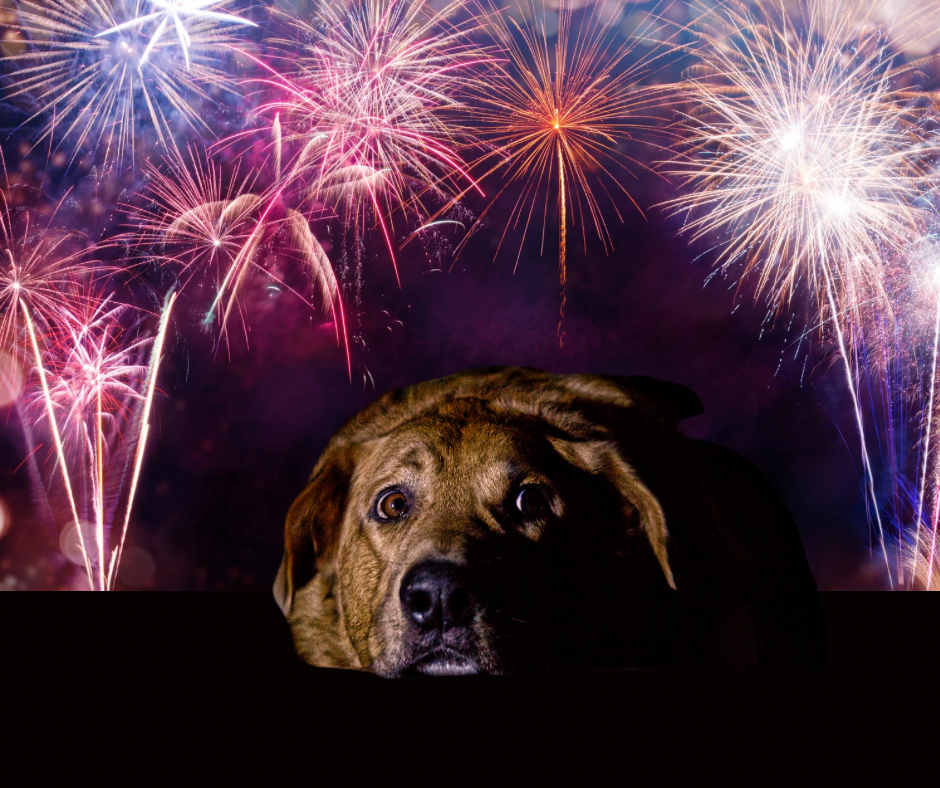
Every year, the UK calendar is packed with firework nights Bonfire Night, New Year’s Eve, Diwali, summer festivals. For us, it’s a sparkle show. For dogs, it’s basically: “The world is ending, run for cover!”
And science backs this up: up to 50% of dogs show fear of fireworks and other loud noises (Tiira et al., 2016, Scientific Reports). The signs can range from trembling to chewing through doors in a desperate escape attempt. Not fun for them, not fun for you.
I hope this guide blends research, practical solutions, and a dash of humour to help you understand what’s going on in your dog’s head and what you can do to help.
Let’s start with why dogs are terrified of fireworks
1. Super-hearing = super awful
Dogs hear at much higher frequencies than humans (up to 65 kHz, compared to our 20 kHz). That “pop” you shrug at? To them, it’s like standing next to a cannon (Heffner, 1983, Behavioral and Neural Biology).
2. It’s not just noise
Yes, the bang is the main culprit, but fireworks are a multi-sensory nightmare:
Sudden bright flashes Vibrations in the ground and walls The chemical smell of smoke And crucially, unpredictability
Dogs don’t think “celebration.” They think “sky grenades.”
3. Surprise is everything
Thunder gives a build-up. Fireworks? Pure jump scare. Imagine Netflix turning your rom-com into a horror movie without warning.
4. Hardwired survival mode
Dogs evolved to react quickly to sudden loud noises in the wild, it could mean predators or danger. Their brain doesn’t know the difference between a predator and a Catherine wheel (Overall, 2013, Manual of Clinical Behavioral Medicine for Dogs and Cats).
5. Memory that won’t quit
One bad firework experience and your dog files it under “Never Forget.” Next time, a flash or bang triggers panic before the actual noise even starts.
How common is this, really
Multiple population studies put noise sensitivity at roughly 32 to 39 percent of dogs, with fireworks commonly named, and with notable co occurrence alongside other fears.
Noise vs flashes: what science says
Studies consistently show that noise is the number one trigger (Sherman & Mills, 2008, Journal of Veterinary Behavior). Dogs are most distressed by the loud, sudden, unpredictable bangs.
But flashes, smells, and vibrations make things worse. Some dogs even learn to anticipate the bang after the flash cue more stress before the sound arrives. It’s rarely one or the other; it’s usually both working together to overwhelm your dog’s senses.
So what fear looks like in dogs
Signs vary, but common ones include:
Trembling, panting, drooling Ears pinned back, tail tucked Hiding or clinging Barking, whining, howling Refusing food Escape attempts (scratching, chewing, bolting)
At its worst, dogs can injure themselves or develop long-term noise phobias (Blackwell et al., 2013, Applied Animal Behaviour Science).
The science of what works (and what doesn’t)
Research has actually compared different strategies. Here’s the breakdown (Riemer, 2020, Journal of Veterinary Behavior):
✔ Counterconditioning (bang = treat) – effective for 70%+ of dogs
✔ Desensitisation (gradual noise exposure) – works long-term if started early
✔ Relaxation training – helps dogs cope better in stressful moments
✔ Safe zones & sound masking – reduce stress load
✔ Pressure wraps (ThunderShirt) – mixed results, helps some dogs
✔ Medication (vet-prescribed) – very effective in severe cases
⚠ Herbal remedies, supplements, pheromone sprays – mixed or weak evidence. They may help mild cases, but they’re not a magic bullet.

Key principles science, and no myths!!
Fear is an emotion, not a trick When your dog is shaking, panting, and hiding under the table, they are not “being naughty” or “trying it on.” Fear is an emotional response driven by the limbic system, not a conscious choice. You cannot “reinforce” fear by offering comfort or food any more than you can make someone more terrified of spiders by giving them chocolate or a hug after they scream. Blackwell et al. (2013) and Sherman & Mills (2008) both emphasise noise fears as emotional states requiring support, not punishment. In Riemer (2020), owner reports showed counterconditioning literally feeding after bangs was one of the most effective strategies.
If food could reinforce fear, every time you handed someone popcorn during a horror movie, they’d become more terrified. Spoiler, they don’t.
Thresholds matter Dogs can only learn when they are under threshold. Once your dog is trembling so much they cannot eat, the learning train has left the station. You can’t do algebra on a rollercoaster. At that point, comfort, safety, and possibly medication are the only ethical options. Riemer (2023) stresses that desensitisation and counterconditioning must happen at levels that do not elicit panic.
Early practice changes brains Counterconditioning needs to start before the big bangs. Use TV recordings of fireworks, playlists on YouTube, or even video clips with both flash and sound. Start so low your dog barely notices, pair with treats, play, or calm petting. Slowly increase volume and intensity. Pavlov 101: Classical conditioning works by changing associations, not by bribing behaviour.
Think of it like chilli sauce. Start with mild salsa, not ghost peppers. Otherwise you end up with tears, snot, and regrets!
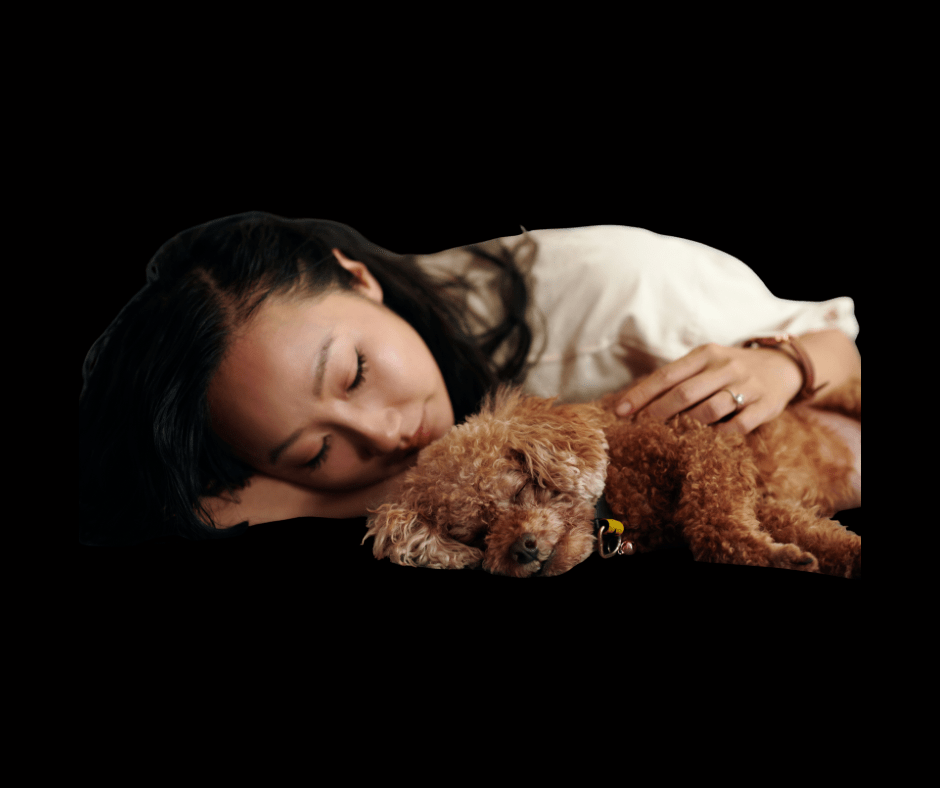
Comfort is not a crime Comforting a fearful dog does not make them “weaker.” Studies show dogs seek social support from humans in stressful situations, and our calm presence can reduce stress hormone levels (Mariti et al., 2012, Physiology & Behavior). You are their safe person. Be safe.
If your best friend is having a meltdown and you hand them a cup of tea, you don’t make them more likely to meltdown tomorrow. You just stop them from burning the house down tonight. Same with dogs.
Our three-stage survival plan
Stage 1: Prep (weeks before)
Build a safe zone Quiet room, blackout curtains, comfy bedding, white noise. Think luxury bunker, not prison cell. The more your dog learns to relax here in everyday life, the more effective it will be when fireworks kick off. Desensitisation & counterconditioning Firework playlist on whisper volume, food for calm behaviour, then slowly increasing over days or weeks.
Research shows counterconditioning (bang = treat/chicken) works in over 70% of cases (Riemer 2020). Humour note: Training during fireworks is not “surprise algebra,” it’s “tiny maths problems with sweets as prizes.” Keep it small and sweet. Relaxation cue Teach your dog to settle on a mat with a calm word. It sounds twee, but research backs this up (Riemer 2020 69% owner-reported effectiveness).
Think yoga class, but with fewer leggings and more liver treats. Introduce calming aids early ThunderShirts, Adaptil diffusers, Zylkene supplements. Introduce them during chill times, not five minutes before the sky explodes.
Logistics Walk and feed before dark, check ID tags, update microchips, and for dogs who go nuclear, get vet-prescribed medication ahead of time. Trial it on a quiet night so you don’t discover side effects mid-finale.
Stage 2: During the fireworks
Stay calm yourself Dogs read our body language and emotions. If you’re leaping around yelling “IT’S OKAY, IT’S OKAY,” your dog will think you’ve lost the plot. Breathe, sit, and be boringly calm. Allow hiding Don’t drag them from their den. Hiding is a natural coping strategy. They are not being “antisocial,” they are being smart survivalists. Use counterconditioning, if possible If your dog is calm enough to eat, use “bang = cheese.” Research says this shifts emotional responses over time (Riemer 2020).
If your dog won’t eat, stop trying. At that point, the brain is in panic mode and learning is paused.
Trying to train when your dog is over threshold is like handing someone a sandwich mid-bungee jump. Nice thought, wrong timing.
Distract before with enrichment Puzzle feeders, stuffed Kongs, lick mats. The act of licking and chewing activates calming pathways in the brain (Horowitz et al., 2019). Mask the noise Classical music, white noise, or TV can reduce the starkness of bangs (Kogan et al., 2012). Medication if needed For dogs that melt down, this is not failure, it’s welfare. Research shows medication is effective and humane when fears are severe (Sherman & Mills, 2008).
Stage 3: After
Recovery time
When the bangs finally stop, your dog’s body doesn’t flick a switch back to calm. During fireworks their system floods with adrenaline (for immediate fight or flight) and cortisol (the stress hormone that lingers). Adrenaline burns off within minutes to hours, but cortisol can stay elevated for up to 48–72 hours in dogs, which means their brain and body may not return to homeostasis (normal balance) straight away. Some dogs shake it off quickly, others need a couple of quiet days to reset. During this period, keep routines predictable, avoid extra stressors, and add gentle, sniffy walks that allow decompression without pressure.
Review what worked
Once your dog is calmer, take stock. Did they eat? Did the safe zone help? Did enrichment hold their attention? Make notes now so you can refine your plan for next year instead of winging it again when rockets start flying.
Seek help if it’s escalating
If your dog isn’t bouncing back, or each year seems worse, that’s your sign to get support. Early intervention prevents entrenched noise phobias. Reward-based behaviourists and vets can help design tailored plans and if medication is needed, it’s a welfare tool, not a failure.
Think of it like your dog had a wild night out they never wanted. While you’re ready to move on, their brain chemistry is still hungover. Dim the lights, keep things chill, and don’t invite them to karaoke just yet.
Final word
Fireworks won’t go away, but fear doesn’t have to rule your dog’s life. The recipe is simple: start early, stay calm, use science, and ignore old myths.
Your dog is not being dramatic. To them, fireworks are sky grenades, alien lasers, and smoke bombs rolled into one. Their logic is simple: bunker down until the world stops exploding. Our job is to help them feel safe, build new positive associations, and have medical backup when needed.
 UK SCENT SPORT