
What is Mantrailing ?

By Susanne Broughton
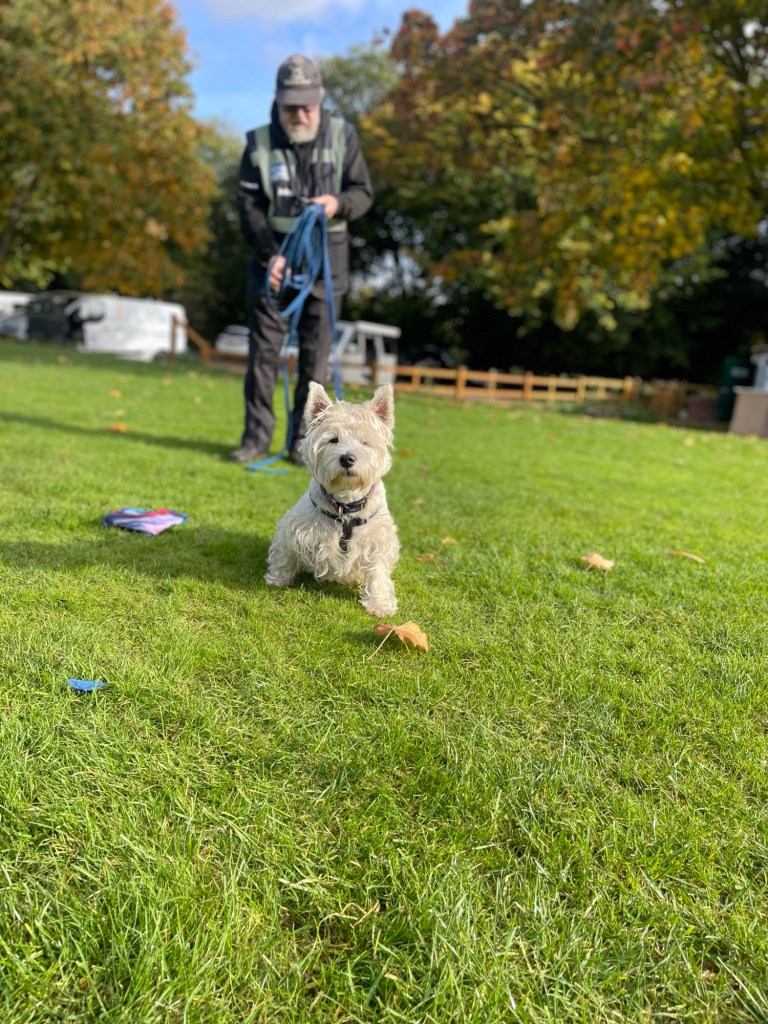
Mantrailing, the practice of using a dog’s extraordinary sense of smell to locate a specific person by following their unique scent trail, it has evolved from an essential tool for search and rescue to an exciting activity for pet owners. While professional mantrailing is widely known in fields like law enforcement and search and rescue operations, pet mantrailing allows regular dog owners to tap into their dogs’ innate abilities, turning it into a stimulating and fun exercise.

The Science Behind Mantrailing

Mantrailing is based on the fact that humans constantly shed skin cells, sweat, and other tiny particles that contain our individual scent profile. These scent particles, called rafts, float through the air and settle on the ground, creating a trail that a dog’s acute sense of smell can detect and follow.

Dogs have one of the most powerful olfactory systems in the animal kingdom, with 200 to 300 million scent receptors, compared to a human’s mere 5 million. Additionally, the part of a dog’s brain dedicated to processing smells is 40 times larger than in humans, enabling them to identify individual scents in a highly complex scent environment. This means that dogs can follow a specific person’s trail even in places where other humans or animals have been, and over various terrains such as forests, fields, and urban environments.

When a dog engages in mantrailing, it works by distinguishing the specific scent of the target person from all other smells in the environment. Dogs trained in mantrailing can follow these scent particles even hours or days after the person has passed through an area, as long as the environmental conditions such as wind, temperature, and humidity have not completely dispersed the scent.

The Origins of Mantrailing

Mantrailing as a practice has roots in early human history, but it became formalised as a technique in the 19th century. Bloodhounds, with their highly developed sense of smell, were used extensively in Europe for tracking escaped prisoners and lost individuals. Their natural tracking abilities made them highly effective in law enforcement and rescue missions.

One of the earliest recorded uses of mantrailing in a professional capacity was in Scotland in the 1800s, where Bloodhounds were employed to trail criminals. Around the same time, in the United States, Bloodhounds were famously used to track runaway slaves and later criminals. The technique spread rapidly across the world, becoming an essential tool in police work and search and rescue efforts.

Over time, other breeds, including German Shepherds, Belgian Malinois, and Labrador Retrievers, have been trained for mantrailing due to their strong scent detection abilities and intelligence. In recent years, mantrailing has moved beyond law enforcement and search and rescue to become a popular sport and recreational activity for pet owners.

Sport Mantrailing: A Modern Twist on an Ancient Skill

In sport mantrailing, regular pet dogs, rather than professional working dogs are trained to follow a specific human scent for recreational purposes. This form of mantrailing harnesses a dog’s natural scent-tracking instincts and channels them into an enjoyable and mentally stimulating activity.

While sport mantrailing is grounded in the same principles as professional mantrailing, it is often less formal and rigorous. Instead of searching for missing persons, dogs in pet mantrailing typically follow the scent of person just hiding. Sport mantrailing has become popular in Europe, particularly in Germany and the United Kingdom, where organised clubs and training courses have sprung up to teach dogs and their owners how to engage in the activity.

The Training Process

Training a dog for pet mantrailing starts with introducing the dog to a scent article, such as a piece of clothing that has been worn by the target person. The scent article contains the specific odour particles that the dog will be tasked with following. The dog then learns to search for the person who left the scent, starting with short, simple trails and gradually progressing to longer and more complex ones.

The key to successful mantrailing lies in a positive reinforcement training approach. Dogs are rewarded with treats, toys, or praise when they successfully locate the person they are trailing. This motivates them to engage in the activity with enthusiasm and improves their scent discrimination abilities.

Benefits of Sport Mantrailing

Sport mantrailing provides numerous benefits for both dogs and their owners:

  1. Mental Stimulation: Dogs need mental challenges to stay happy and healthy, and mantrailing offers a perfect way to engage their brain. The process of searching for and following a scent requires intense focus, which helps tire them out mentally.
  2. Physical Exercise: In addition to engaging a dog’s brain, mantrailing also provides physical exercise, as the dog has to move through different environments, sometimes at a fast pace, while following the scent trail.
  3. Strengthens the Dog-Owner Bond: Mantrailing is a cooperative activity between the dog and its handler. It fosters a strong sense of teamwork, as the dog learns to rely on its handler’s cues while the handler learns to trust the dog’s scent detection abilities.
  4. Confidence Building: Mantrailing can boost a dog’s confidence, particularly for shy or anxious dogs. Successfully finding the person at the end of the trail gives dogs a sense of accomplishment and encourages them to rely on their natural instincts.
  5. All Breeds Can Participate: While professional mantrailing often focuses on breeds known for their scenting abilities (like Bloodhounds or German Shepherds), pet mantrailing is open to all breeds and sizes. From small terriers to large retrievers, any dog can enjoy mantrailing with the right training.

The Role of Scent and Environmental Factors

While dogs’ noses are incredibly powerful, the environment plays a significant role in their mantrailing success. Factors like wind direction, humidity, temperature, and the presence of other animals can influence how a dog follows a trail.

  • Wind can carry scent particles over long distances, helping or hindering a dog’s ability to detect the trail. A light breeze can help spread the scent in a way that is easier for the dog to follow, while strong winds may scatter scent particles in multiple directions, making the trail more challenging.
  • Humidity helps to preserve scent particles in the environment, making it easier for dogs to follow older trails. Dry conditions, on the other hand, can cause the scent to dissipate more quickly.
  • Temperature also impacts scent detection. Cooler temperatures tend to preserve scent longer, while hotter conditions can cause scent particles to rise and disperse more quickly.

Understanding these environmental factors is crucial for pet owners who want to engage in mantrailing, as it helps them work with their dog more effectively.

Summary

Sport mantrailing is a fascinating and enriching activity that allows dogs to use their natural abilities while providing physical and mental stimulation. Rooted in centuries of professional use, the modern adaptation of mantrailing for pets opens up new possibilities for dog owners to bond with their pets and engage in a fun, team-based activity. From its origins in law enforcement and search and rescue to its current role as a recreational activity for dog lovers worldwide, mantrailing continues to showcase the extraordinary capabilities of canine olfaction, offering benefits for both dogs and humans alike.
Do you scare your dog to fight

The blood pounded in my ears the deafening echo of my heart filled my head making it impossible to think, my breathing so rapid I can’t get the oxygen I need to stop the panic I can feel bubbling up inside me.
The figure from the distance still running straight at me, My vision disfigured through the panic as if looking through a fish-eye lens. I have to get away I have to escape this creature who has me firmly in its sights. My friend has hold of me reassuring me that everything is ok, but I feel trapped and scared, overwhelmed by fear too much to even understand the words she is saying. And then it’s upon me, it’s hot breath in my face, the heady smell of it drowning out everything. I twist and turn trying to escape but she holds me tighter telling me it’s all going to be fine. My breathing is so hard, with every lung full reeking of his scent as if choking me with his stench.
If cry out in fear with my chest growing tight and still he is there breathing on my neck touching me taunting me. If I do nothing I will die! My instinct to survive takes over and I sink my teeth into him!

The ordeal is finally over I can breath again. But my friend is shouting I’m a ‘bad dog’  and “he just wanted to play”.

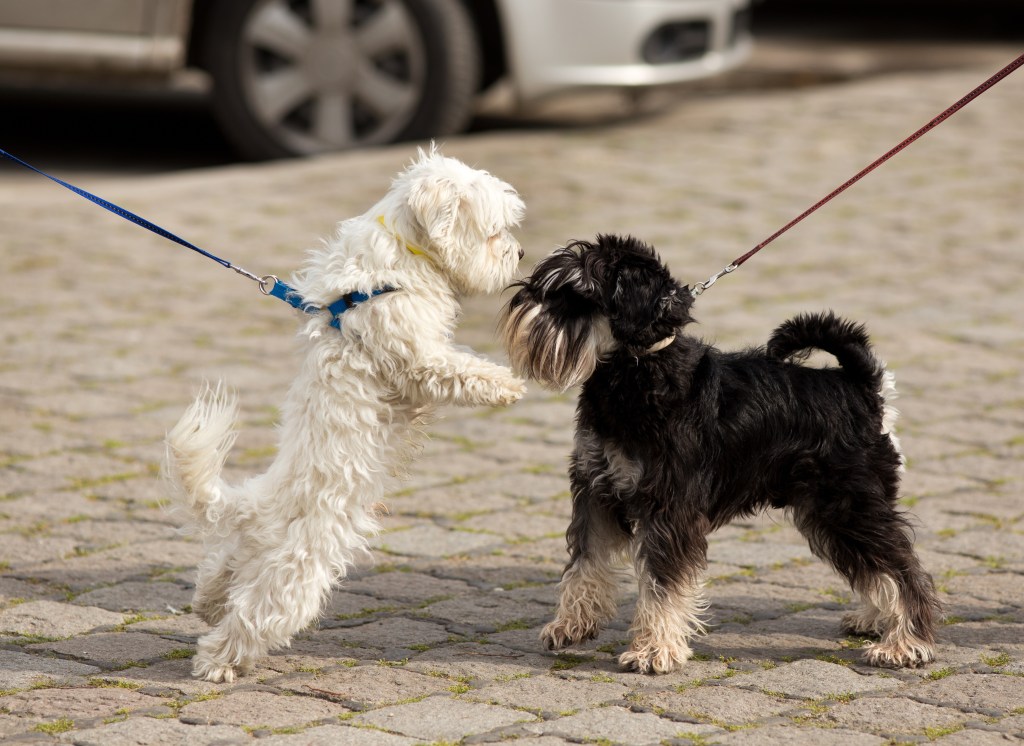
Running straight into the face of an unknown dog is NOT ‘FRIENDLY’.
It is rude and confrontational.

Any dog can be rude occasionally, they are animals but as owners we need to understand their world better and help them interact, after all many of these behaviours are because we have intervened in the natural interactions between dogs,

When we restrict our dog’s options to move away from something scary, we often remove the “flight option.” This leaves the dog few other choices, and one of them is often the “fight option.”

Never allow your dog to run up to another unless the owners have said its ok too, and even then remember that things can quickly change between dogs. My suggestion is the 3 second rule. Three seconds is the maximum amount of time the first meeting should last between dogs. This is more than enough time for the dog’s nose to have taken in and process an immense amount of information. Never pull your dog away as we don’t want either dog thinking there is anything negative about the meeting. A simple ‘this way’ or ‘come on’ maybe showing their ball if they have one. Many owners make the mistake of waiting that bit longer to see if they ‘get on’ or misreading a ‘freeze’ or other subtle body gestures that mean “I don’t like you furball, leave me alone”!

Featured

Dying to be trained, the facts all dog owners should know! – by Susanne Broughton

Photo by Pixabay on Pexels.com

Choose your dog services carefully.

The UK as the animal loving nation that is it known for has lead the way in animal welfare changes for the last century, so you would anticipate the statistics regarding animal welfare issues to have decreased with it?. However between 2013 and 2015 3000 people were convicted of animal cruelty but only 7 % of these received a custodial sentence. (RSPCA 2018) in 2018 the RSPCA rescued more than 102900 animals and investigated a total of 130700 cruelty complaints only 1678 of these cases resulted in prosecution. So have the changes in legislation helped pet welfare?

A BBC report stated that in 2009 Battersea Dogs home euthanized a total of 2815 dogs 1931 of these for behavioural and temperament issues. BBC (2010),

Are the laws promoting awareness or are they part of the problem?

As The Animal Welfare Act 2006  now pushes the responsibility for duty of care, more and more people are seeking the help of ‘professionals’ as the vast majority of dog owners are aware that training and exercise are vital to ensure a well balanced happy dog that can be integrated into society.

So why are there so many dogs that need help with behaviour problems. The canine world is a confusing place, for dogs, owners and people that work within it. Media ‘experts’ are all over our screens now, each dishing out their own approach to solving problems. This is still an unregulated field and there is no single professional governing body to ensure certain standards are adhered to. In the hands of an inexperienced or misled professional the very issues the dogs are displaying can become exaggerated to the point the dog is surrendered and or put to sleep.

Under the Animal Welfare act this ‘professional’ does have an obligation to work within the guide lines of this law. So any walker, pet sitter, trainer or behaviourist that works with a dog has a responsibility for not only the dog, but also its actions whilst under their instruction! They also have a duty of care to  ensure the dogs welfare needs are met and that it does not unnecessarily suffer. While working with a fearful dog if the wrong approach is taken or the correct programme rushed the dog could very likely be subjected to unnecessary suffering in the form of stress or fear, and the ‘professional’ will be held responsible for it. This responsibility reaches further than just the basic needs of the dog. The Control of Dogs Order 1992, states a collar must be worn with adequate detail whilst the dog is in a public place if the dog has no owner details whilst in the custody of a another person then they will be accountable. As is the same under the Dangerous Dogs Act 1991 section 3 clearly states that a dangerously out of control dog in public place is a criminal offence and whomever is in charge of the dog at the time will be deemed accountable for its actions.

“BUT MY DOG WOULDN’T HURT ANYONE” I hear you say and you are probably correct however you need to understand what defines a dog as dangerously out of control. The Control of dogs order defines a dangerously out of control dog as:

 A dog that not just injures someone which you would expect  but one that a person has grounds for reasonable apprehension that it may do so. The implications of this are momentous, if training or walking a reactive dog a member of the public comes to close and the dog lunges barking at them even though they have not made contact with that person and the situation has been controlled very quickly, The dog can still be reported as it could be deemed to have caused the person a reasonable apprehension that it may injure them. This could  lead to the dog being seized. Even something as everyday as a dog chasing, barking or jumping up at someone could lead to a complaint. If the dog happened to break free and injure a member of the public during a session this would mean the dog may never be returned home to it family and could very likely be destroyed.

 Safety and understanding of the implication of the law need to be the main priority for anyone working with dogs. Ability to interpret canine body language and continually managing the environment you are working within will reduce the risks and likelihood of any incident happening.

Professionals taking money for services from the public have a duty of care not only to ensure they abide by the law but they understand the implication if things go wrong and to also explain and assist you the owner as the same situation could quite easily happen. Did you know that your dog jumping up to say hello could get your lovable pup reported as a dangerous dog more importantly does the person you are paying know!

BBC (2010) Press Office, Available at: http://www.bbc.co.uk (Accessed: 28/05/2019).

RSPCA. (2019) Facts and figures, Available at: http://www.rspca.org.uk (Accessed: 28/05/2019).

the national archives (2019) The Dangerous dogs act 1991, Available at: http://www.legislation.gov.uk (Accessed: 25/05/2019).