“The Canine Conundrum: Exposing the Truth Behind UK Dog Food – What You Need to Know!”


As pet owners, we all want the best for our dogs. We shower them with love, attention, and care. However, one area that often goes overlooked is their diet. Feeding your dog a cheap dog food may seem like an economical choice, after all there must be regulations to ensure the standard of their food! right? Wrong! the dog food industry in the UK lacks stringent regulations, leaving a concerning gap in ensuring the quality and safety of the products we feed our pets. In this blog, we will explore the alarming lack of regulations in the UK dog food industry, citing specific cases of recalls, and uncovering the reasons behind this concerning issue.

1. The Absence of Adequate Regulations: The regulations governing pet food in the UK are significantly less rigorous compared to those imposed on human food. Currently, there is no specific legislation that sets out the minimum nutritional requirements or ingredients allowed in dog food. This lack of regulation allows for potential loopholes that could compromise the quality and safety of the products.

2. Ingredients Found in Dog Food and Associated Issues:

a. Fillers and By-Products: Some dog food manufacturers use fillers and by-products as cost-saving measures. These can include ingredients such as corn, wheat, soy, and meat by-products. While these ingredients may not pose an immediate danger, they lack the nutritional value necessary for a well-balanced diet, potentially leading to deficiencies and digestive issues in dogs.

b. Artificial Additives and Preservatives: Many dog foods contain artificial additives and preservatives to enhance flavour, colour, and shelf life. Some common additives include propylene glycol, BHA (butylated hydroxyanisole), BHT (butylated hydroxytoluene), and ethoxyquin. These additives have been linked to various health concerns such as allergies, organ damage, and even cancer in dogs.

c. Allergenic Ingredients: Certain dog food brands may contain ingredients that are known allergens for dogs, such as beef, chicken, dairy, or grains. Dogs with food allergies or sensitivities can experience symptoms like skin rashes, itching, gastrointestinal issues, and even chronic ear infections when exposed to these allergenic ingredients.

3. Recalls and Safety Concerns:

a. The 2007 Pet Food Recall: One of the most notorious cases of dog food recalls occurred in 2007 when contaminated ingredients from China led to the deaths of thousands of pets in the US. Although not directly related to UK regulations, this incident shed light on the potential risks associated with inadequate quality control and lack of transparency in the dog food industry.

b. The 2019 Taurine Deficiency Scare: In 2019, a worrying trend emerged as several dog breeds were diagnosed with taurine deficiency, a condition linked to heart disease. Investigations revealed that certain dog food brands contained insufficient levels of taurine, a crucial amino acid for canine health. This case highlighted the need for stricter regulations to ensure essential nutrients are present in dog food.

4. The Role of Self-Regulation: Currently, self-regulation plays a significant role in the UK dog food industry. Manufacturers are responsible for ensuring the quality and safety of their products, and adherence to voluntary guidelines such as those set by the European Pet Food Industry Federation (FEDIAF). However, relying solely on self-regulation poses inherent limitations and potential conflicts of interest, compromising the well-being of our pets.

5. The Path Towards Improvement: Recognising the need for change, various organisations and pet food manufacturers have been advocating for stricter regulations in the UK. Calls for mandatory labelling, clearer ingredient disclosure, and nutritional standards have gained momentum, aiming to provide pet owners with greater transparency and peace of mind.

Can this effect behaviour or just health?
The absence of stringent regulations in the UK dog food industry raises concerns about the quality and safety of the products we feed our four-legged companions. Ingredients found in some dog foods, such as fillers, artificial additives, and allergenic substances, can lead to nutritional deficiencies, allergies, and other health issues in dogs. Combined with cases of recalls and safety concerns, this emphasizes the pressing need for stronger regulations to protect our pets’ health. As responsible pet owners, it is essential to stay informed, demand transparency, and support initiatives that aim to improve the regulations surrounding dog food manufacturing. Together, we can ensure a healthier and safer future for our furry friends.

1. Lack of Essential Nutrients: The use of fillers instead of the necessary nutrients that your dog needs to thrive are typically high in carbohydrates and lack essential proteins, vitamins, and minerals. This nutritional deficiency can impact your dog’s physical and mental well-being, leading to lethargy, weakened immune system, and an array of behavioural problems.

2. Hyperactivity and Aggression: Diet plays a crucial role in a dog’s behaviour. Feeding your dog food that contains excessive levels of artificial additives, preservatives, and food colourings can trigger hyperactivity and restlessness. The lack of proper nutrition and an imbalanced diet can contribute to irritability, anxiety, and even aggression in some cases.

3. Digestive Issues: Poor-quality ingredients and fillers can upset your dog’s digestive system. Digestive issues like diarrhoea, constipation, and excessive gas can be signs that your dog’s current diet is not suitable for their optimal gut health. These digestive problems can lead to discomfort and subsequently affect your dog’s behaviour, causing irritability and mood swings.

4. Skin Problems and Itching: Many dog foods contain low-quality protein sources and unhealthy fats that can lead to skin issues, such as dryness, itchiness, and inflammation. Uncomfortable skin conditions can cause your dog to scratch excessively, leading to behavioural changes like restlessness, irritability, and difficulty in focusing.

5. Poor Dental Health: The quality of your dog’s food can significantly impact their dental health. Foods lacking in the necessary texture and quality to promote good oral hygiene and can lead to dental diseases, including gum infections and tooth decay, which can cause pain and discomfort. These discomforts can manifest in behavioural changes like aggression, reluctance to eat, and increased irritability.

Conclusion: Feeding your dog cheaper dog food may seem like a money-saving option initially, but the long-term consequences can outweigh the short-term benefits. Poor nutrition resulting from low-quality ingredients can lead to a range of behavioural issues, including hyperactivity, aggression, digestive problems, skin issues, and poor dental health. It is crucial to prioritise your dog’s nutritional needs by investing in high-quality dog food that provides a balanced diet to ensure their overall well-being and behaviour stability.

Choosing the best types of food to feed your dog is essential for their overall health and well-being. While individual dietary needs may vary based on factors such as age, breed, and any underlying health conditions, here are some general guidelines for selecting high-quality dog food:

1. Look for Complete and Balanced Formulas: Ensure that the dog food you choose is labelled as “complete and balanced” by reputable organisations.

2. Real Meat as the Main Ingredient: Check the ingredient list and look for real meat, such as chicken, beef, lamb, or fish, listed as the primary ingredient. Dogs are carnivores by nature and require a high-quality protein source to thrive.

3. Avoid Fillers and By-products: Steer clear of dog foods that contain fillers like corn, wheat, and soy. These ingredients offer little nutritional value and are often used as inexpensive fillers. Similarly, avoid foods that contain meat by-products, as they are less desirable protein sources compared to whole meats.

4. Whole Grains and Vegetables: While dogs primarily need animal-based protein, some whole grains and vegetables can provide additional nutritional benefits. Look for dog foods that include wholesome sources of carbohydrates like brown rice, sweet potatoes, and peas.

5. Natural Preservatives and Additives: Opt for dog foods that use natural preservatives like mixed tocopherols (vitamin E) instead of artificial ones like BHA, BHT, and ethoxyquin. Additionally, avoid foods with excessive artificial colours, flavours, and additives, as these are unnecessary and can potentially trigger allergies or behavioural issues.

6. Consider Specific Dietary Needs: If your dog has specific dietary needs due to allergies, sensitivities, or health conditions, consult with an independent veterinarian to determine the best food options. They may recommend specialised diets that are grain-free, limited ingredient, or formulated for specific health concerns.

7. Wet vs. Dry Food: Both wet and dry dog food can be part of a balanced diet. Wet food generally has higher moisture content and can be beneficial for dogs who don’t drink much water or have dental issues. Dry food, on the other hand, can help maintain dental health and is often more convenient. Some pet owners even opt for a combination of both, offering wet food as a topper or occasional treat.

Remember, always transition your dog to a new food gradually to avoid digestive upset. Consult with your canine nutritionist for personalised recommendations based on your dog’s specific needs and monitor their health and behaviour to ensure they are thriving on their chosen diet.

Facts about the top 5 UK brands:

Royal Canin: Royal Canin is a popular dog food brand in the UK, known for its extensive range of breed-specific and life stage-specific formulas. The company is owned by Mars, Incorporated, a global food and pet care company. In 2013 they issued a voluntary recall in for specific batches of their dry dog food formulas due to potential salmonella contamination.

Hill’s Science Diet: Hill’s Science Diet is a widely recognised brand that offers a variety of dog food options tailored to specific health needs. The brand is owned by Colgate-Palmolive Company, a multinational consumer products company. IN 2019 they voluntarily recalled several of their canned dog food products due to elevated levels of vitamin D. James

Wellbeloved: James Wellbeloved is a well-regarded dog food brand in the UK, known for its hypoallergenic formulas suitable for dogs with food sensitivities. The brand is owned by Mars, Incorporated. No major recalls or issues reported in the UK in the past 10 years.

Burns Pet Nutrition: Burns Pet Nutrition is a family-owned business that focuses on producing natural and holistic dog food. The brand is known for using high-quality ingredients and avoiding artificial additives. No major recalls or issues reported in the UK in the past 10 years.

Lily’s Kitchen: Lily’s Kitchen is a premium dog food brand that prides itself on using natural, organic ingredients. The brand offers a range of wet and dry dog food options. Lily’s Kitchen was founded by Henrietta Morrison and is now owned by Nestlé Purina PetCare, a subsidiary of Nestlé.  In 2018 for specific batches of their dog food products. The recall was initiated due to potential elevated levels of vitamin D.

How do I choose the best for my dog?

Its a difficult to navigate the minefield of dog food so I have attached a link below to ‘All about dog food’. They are a comprehensive website dedicated to providing pet owners with detailed and unbiased information about dog food products available in the market. The website offers a wealth of resources and tools to help dog owners make informed decisions when it comes to choosing the best food for their furry companions. Their website features a user-friendly interface, making it easy to navigate and find the information needed. It provides a wide range of articles, guides, and reviews that cover various aspects of dog food, including ingredients, nutritional content, manufacturing processes, and brand comparisons. One of the good features of “All About Dog Food” is its comprehensive dog food directory. This directory allows you to search for specific dog food products and access detailed information about their ingredients, nutritional analysis, and user ratings. It also provides a unique rating system called the “Dog Food Directory Rating” that evaluates each product based on its quality and nutritional value. If that isn’t enough they regularly update their content to keep up with the latest research, industry news, and recalls. This ensures that you have access to the most up-to-date and reliable information to make informed decisions about their dogs’ diets. It is valuable resource for those seeking reliable information, guidance, and recommendations on choosing the best dog food for their pets.

Thanks for reading

References: European Pet Food Industry Federation (FEDIAF). (n.d.). Retrieved from https://www.fediaf.org/ Animal and Plant Health Agency. (n.d.). Pet food manufacturing and imports. Retrieved from https://www.gov.uk/guidance/pet-food-manufacturing-and-imports  Royal Canin UK. (2013). Voluntary recall of specific Royal Canin dry dog food formulas. Retrieved from https://www.royalcanin.co.uk/about-us/recall-information/ Hill’s Pet Nutrition UK. (2019). Hill’s Pet Nutrition recalls canned dog food due to high levels of vitamin D. Retrieved from https://www.hillspet.co.uk/productlist James Wellbeloved. (n.d.). Our approach to pet food safety. Retrieved from https://www.wellbeloved.com/our-approach-to-pet-food-safety/ Burns Pet Nutrition. (n.d.). Quality and safety. Retrieved from https://burnspet.co.uk/quality-and-safety/ Lily’s Kitchen. (2018). Voluntary product recall. Retrieved from https://www.lilyskitchen.co.uk/news/voluntary-product-recall
Understanding Age-Related Behavioural Changes in Dogs


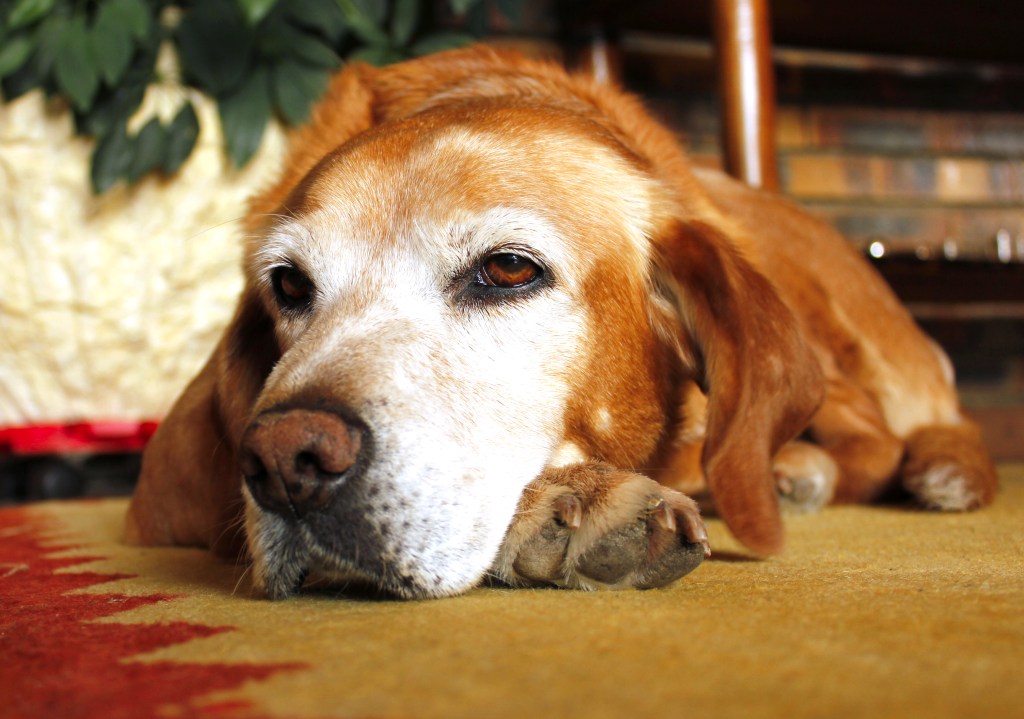
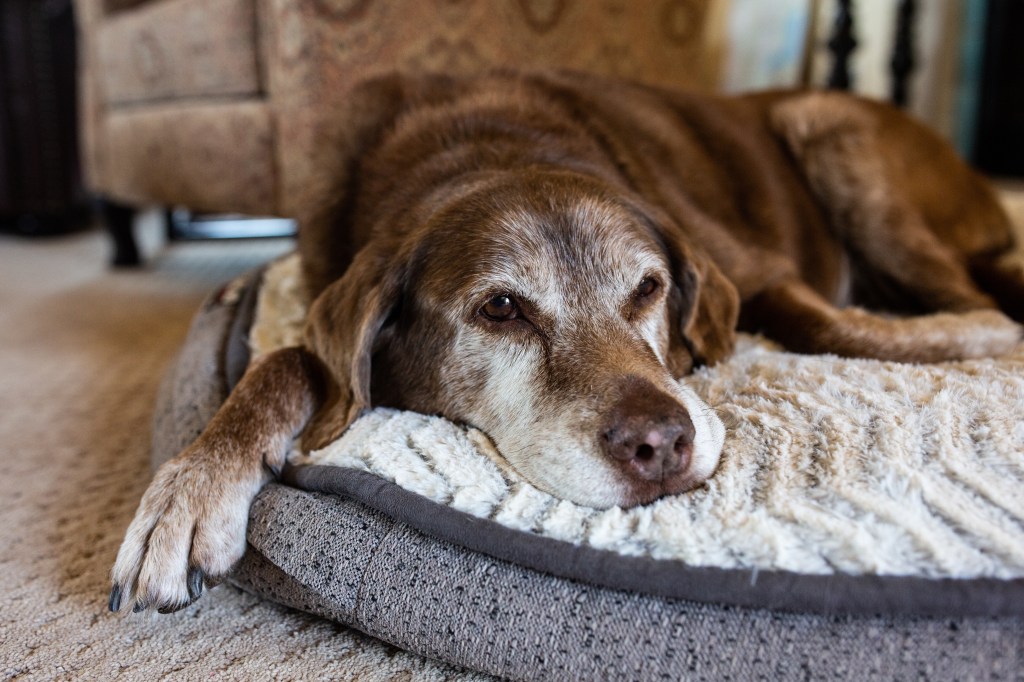
As our beloved canine companions age, they may experience behavioural changes that resemble dementia in humans. Known as Canine Cognitive Dysfunction (CCD), this condition can significantly impact a dog’s behaviour, leading to confusion, disorientation, and memory loss. Understanding these changes, their causes, and exploring ways to help our furry friends cope with CCD is crucial in ensuring their well-being and quality of life.

Causes of Age-Related Behavioural Changes:
Age-related behavioural changes in dogs are often the result of the natural aging process. As dogs grow older, their brains can accumulate a build up of proteins that interfere with nerve cell function. This build-up affects cognitive abilities, leading to CCD. Common behavioural changes associated with CCD include confusion, disorientation, altered sleep patterns, house soiling, and decreased social interactions.

Recognising the Signs:
It is essential for us as pet owners to be vigilant in recognising potential signs of CCD. While these changes may be subtle, they should not be dismissed as typical aging. If your dog exhibits any of the following symptoms, consult with a veterinarian:

1. Disorientation: Your dog may appear lost or confused in familiar environments.
2. Social Interactions: Reduced interest in social activities, toys, or family members.
3. Sleep Disturbances: Changes in sleep patterns, such as increased daytime sleep or restlessness at night.
4. House Soiling: Forgetting house training and having accidents indoors.
5. Activity Levels: Decreased enthusiasm for exercise or play.

Ways to Help Dogs with CCD:
1. Establish a Consistent Routine: Providing a predictable routine can reduce confusion and disorientation. Stick to regular feeding, exercise, and playtimes to create a sense of stability.
2. Mental Stimulation: Engage your dog in interactive games, puzzles, and training exercises to keep their minds active and stimulated.
3. Environmental Adaptations: Make adjustments to the living environment to accommodate your dog’s changing needs. Use visual cues and landmarks to help them navigate their surroundings more easily.
4. Sensory Enrichment: Provide sensory stimulation through toys with different textures, scents, and sounds to engage your dog’s senses.
5. Balanced Diet: Opt for high-quality senior dog food that supports brain health. Supplements like antioxidants, omega-3 fatty acids, and B vitamins may also be beneficial (consult with your vet before introducing any new supplements).

Medication for CCD:

Selegiline is an oral medication used to treat CCD in dogs. It works by protecting nerve cells and enhancing dopamine in the brain, which can help improve cognitive function. It increases the production of dopamine, a neurotransmitter that helps regulate movement, emotion, and cognition. By enhancing the production of dopamine, the drug helps protect nerve cells from damage and enhance cognitive function, which can reduce the symptoms of CCD.

Selegiline has been shown to provide some relief from CCD symptoms in dogs. Owners have reported improvements in as little as two weeks, with some dogs even showing restored mental alertness and increased social interactions. Although Selegiline is generally safe and well-tolerated, some dogs may experience side effects such as vomiting, diarrhea, or loss of appetite. If your dog experiences any of these symptoms, contact your veterinarian immediately.


Dementia and age-related behavioural changes in older dogs can be challenging for both pets and their owners. However, by recognizing the signs, providing a supportive environment, and considering appropriate medications, we can help our dogs maintain a good quality of life. Remember, early detection and intervention are key. If you suspect CCD in your aging dog, consult with a veterinarian who can provide guidance tailored to your pet’s specific needs.

Understanding Your Dog’s Behaviour:

A Guide for Frustrated Owners

Why fighting genetics is a loosing battle. It is vital to consider genetics when training dogs with bad behaviour because genetics can significantly influence a dog’s behaviour and temperament. Dogs inherit certain traits and tendencies from their parents and ancestors, which can impact their behaviour patterns, instincts, and predisposition to certain behaviours.

Understanding a dog’s genetic background can provide valuable insights into their behaviour. Certain breeds have been selectively bred for specific purposes, such as herding, guarding, or hunting, and these instincts may manifest in their behaviour. For example, a herding breed may display a strong desire to chase and nip at moving objects, like children or bicycles, which can be misinterpreted as aggression or bad behaviour.

By considering a dog’s genetic predispositions, we can tailor our training methods and techniques accordingly. For example, a dog with a high prey drive may benefit from structured and consistent training that focuses on redirecting their natural instincts in a positive way.

Furthermore, understanding a dog’s genetics can help us set realistic expectations and avoid frustration. Some behaviours may be more challenging to modify due to genetic factors. It’s important to remember that while training can have a significant impact, it cannot completely override a dog’s genetic predispositions.

Overall, considering genetics when training dogs with bad behaviour allows us to develop a more comprehensive and effective training plan that takes into account the dog’s natural instincts and actually use these to our benefit, leading to better outcomes and a deeper understanding of the dog’s behaviour.

Here are the top 5 issues we get calls for.

1. Destructive Chewing:
   – Provide plenty of appropriate chew toys and rotate them regularly to keep your dog engaged.
   – Dog-proof your home by removing valuable or hazardous items from your dog’s reach.
   – Supervise your dog and redirect their chewing behaviour to appropriate toys when they start chewing on something they shouldn’t.

2. Excessive Barking:
   – Identify the triggers for your dog’s barking and work on desensitizing them to those triggers through gradual exposure and positive reinforcement.
   – Provide mental and physical stimulation for your dog through regular exercise and interactive toys.
   – Teach your dog a “quiet” command using positive reinforcement training techniques

3. Separation Anxiety:
   – Gradually desensitize your dog to your departures by practicing short absences and gradually increasing the time.
   – Create a safe and comfortable space for your dog when you’re away, such as a crate or a designated area.
   – Use positive reinforcement training techniques to reward calm behaviour when you leave and return.

4. Lead Reactivity:

– Identify the stimulus, is it the lead? cars? movement? people? dogs? etc
   – Gradually desensitize your dog to the presence of the stimuli by using counter-conditioning techniques.
   – Use a front-clip harness or head collar to give you more control and prevent pulling.
   – Seek professional help from a qualified dog trainer or behaviourist to address lead reactivity as this can escalate to being dangerous quickly.

5. Jumping Up on People:
   – Teach your dog an alternative behaviour, such as sitting or offering a paw, that is incompatible with jumping.
   – Ignore the jumping behaviour and only reward your dog when they exhibit the desired alternative behaviour.
   – Consistently reinforce the desired behaviour and provide plenty of positive reinforcement for calm greetings.

Always remember that consistency, patience, and positive reinforcement are key when addressing behavioural issues in dogs. It’s important to tailor your approach to your specific dogs needs and seek professional help if you are unsure.

It is easier to pay for one session to ensure your on the right path then leaving it until the behaviour has escalated.

Remember we are here to help.

Is Christmas Merry for our Dogs?

Christmas is a happy time for humans to get together and be merry (or argue depending on your family) But it can be a stressful and confusing time for our dogs.

Routines change, more people visit, or they are alone more often than normal, most dogs like routine and can get anxious when there are changes. On top of this they now have to cope with a tree in the house they can’t pee on, it has shiny balls all over it and nobody throws them! sometimes there are even edible things hanging there too that can’t be eaten, interesting presents they can’t chew, twinkling lights with wires that bite.

Did you know some fir trees produce oils which are mildly toxic and if ingested could cause your dog to vomit or excessively drool.

We all know there are loads of Christmas foods which are poisonous or toxic to your dog, including grapes, sultanas chocolate and raisins,

mince pies, Christmas puddings, dried fruit nuts, chocolate, even something that sound like they could be safe often aren’t. Turkey  scraps could contain tiny bones which are dangerous.

This doesn’t mean we should lock ourselves away and not celebrate, it’s just something all dog owners need to be aware of so we can make sure Christmas is a happy time for our dogs too.

Dog bites over the Christmas periods are higher than any other time of the year, in the majority of cases this involves young children. Not all dogs like tiny humans, they are loud and erratic. At Christmas they can be more excited than normal, maybe they have friends over, or even relatives the dogs have never even met!

All of this on top of probably getting less physical exercise than usual as we are all busy desperately trying to prep a meal and trimmings for the whole of the Moscow state circus !

Most well-socialised family dogs can cope with the temporary craziness of Christmas – and some actually enjoy it, however for a surprisingly large number it’s stressful and worrying. A dog that is under-exercised, over stimulated, under-supervised and over-threshold is an accident just waiting to happen.

So how can we prevent the dog from biting?

Make sure they get enough exercise, (it might actually help your stress levels to escape in the fresh air for an hour. Aunt Mable won’t notice the dust behind the chair!

Supervise all interactions between children and dogs. If you can’t, then create a safe space  for your dog to get away

Try and keep your dog’s routine the same as always.

Watch out for any signs your dog might be getting stressed.

Licking their lips, or parts of their bodies

Not settling

Following you around

peeing in the house

Chewing

Pacing or shaking

Whining or barking. …

Yawning, drooling,

Panting.

If you recognise the early signs then  help your dog,

Give them a quiet area away from everyone. Maybe try  Lick mats or a kong, with some tasty treats.

Have yourselves a merry Christmas and relax and enjoy the time with your friends and family  knowing that your dogs are safe and happy too.

Pacing or shaking

Whining or barking. …

Yawning, drooling,

Panting.

If you recognise the early signs then  help your dog,

Give them a quiet area away from everyone. Maybe try  Lick mats or a kong, with some tasty treats.

Have yourselves a merry Christmas and relax and enjoy the time with your friends and family  knowing that your dogs are safe and happy too.

Do you scare your dog to fight

The blood pounded in my ears the deafening echo of my heart filled my head making it impossible to think, my breathing so rapid I can’t get the oxygen I need to stop the panic I can feel bubbling up inside me.
The figure from the distance still running straight at me, My vision disfigured through the panic as if looking through a fish-eye lens. I have to get away I have to escape this creature who has me firmly in its sights. My friend has hold of me reassuring me that everything is ok, but I feel trapped and scared, overwhelmed by fear too much to even understand the words she is saying. And then it’s upon me, it’s hot breath in my face, the heady smell of it drowning out everything. I twist and turn trying to escape but she holds me tighter telling me it’s all going to be fine. My breathing is so hard, with every lung full reeking of his scent as if choking me with his stench.
If cry out in fear with my chest growing tight and still he is there breathing on my neck touching me taunting me. If I do nothing I will die! My instinct to survive takes over and I sink my teeth into him!

The ordeal is finally over I can breath again. But my friend is shouting I’m a ‘bad dog’  and “he just wanted to play”.

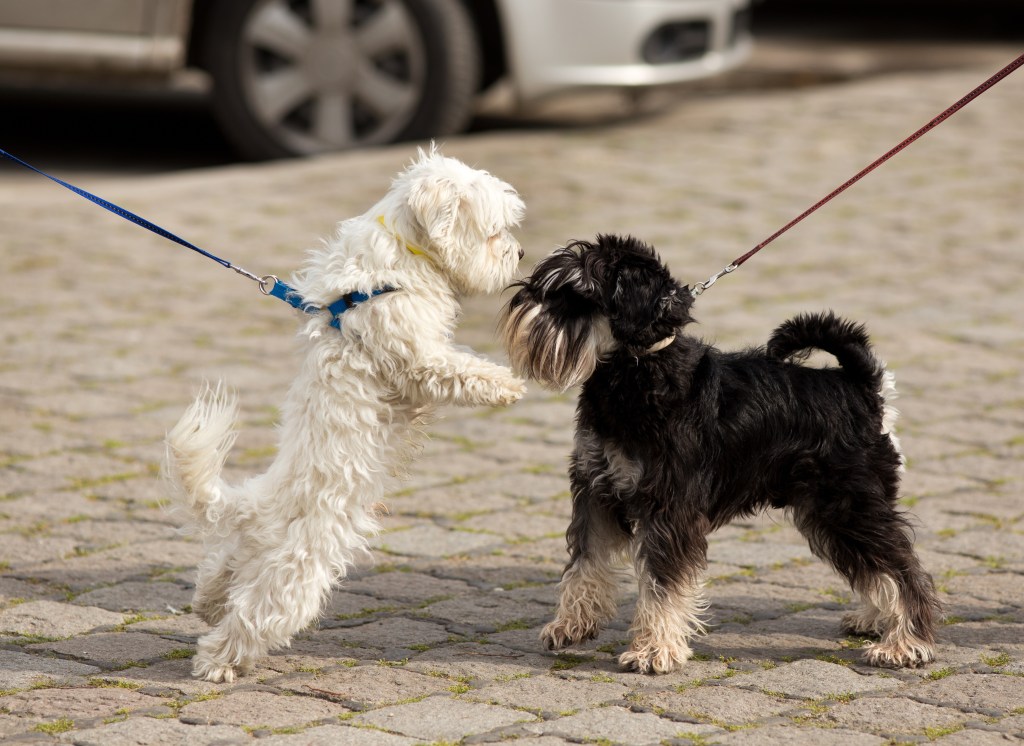
Running straight into the face of an unknown dog is NOT ‘FRIENDLY’.
It is rude and confrontational.

Any dog can be rude occasionally, they are animals but as owners we need to understand their world better and help them interact, after all many of these behaviours are because we have intervened in the natural interactions between dogs,

When we restrict our dog’s options to move away from something scary, we often remove the “flight option.” This leaves the dog few other choices, and one of them is often the “fight option.”

Never allow your dog to run up to another unless the owners have said its ok too, and even then remember that things can quickly change between dogs. My suggestion is the 3 second rule. Three seconds is the maximum amount of time the first meeting should last between dogs. This is more than enough time for the dog’s nose to have taken in and process an immense amount of information. Never pull your dog away as we don’t want either dog thinking there is anything negative about the meeting. A simple ‘this way’ or ‘come on’ maybe showing their ball if they have one. Many owners make the mistake of waiting that bit longer to see if they ‘get on’ or misreading a ‘freeze’ or other subtle body gestures that mean “I don’t like you furball, leave me alone”!

What is punishment?

Julia Langlands

Do you use punishment when teaching and living with your dog?

Many people say that they don’t use punishment, but are they correct? What is punishment anyway?

Punishment: An operant conditioning term that refers to the application or removal of something immediately following a behaviour in order to reduce the likelihood of the behaviour being repeated again in the future.

The word ‘punishment’ has such a stigma attached to it with regards dog psychology/training – it seems to be only associated with abuse and bad practise in the public eye. This is understandable as we tend to think of punishment in human terms, as retribution, paying for misdeeds or ‘getting our own back’. We think of parking fines and imprisonment, loss of freedom etc. So in this context it would be an unpleasant and largely ineffective training approach if applied to dogs!

In the scientific context however the term ‘punishment’ is completely misunderstood. It refers to the act of providing a consequence in relation to a behaviour in order to decrease the likelihood of that behaviour being repeated, the ‘punishment’ is delivered in a neutral state and no emotion is implied or involved. This should be descriptive and usually ‘blocks’ an unwanted behaviour before it starts to escalate, thus allowing for an alternative behaviour to be trained in it’s place so that we can reward this, and teach a better response or reaction in future. So, looking at it this way, this is not cruel or abusive at all, it is a very basic fundamental need, it ensures clarity and confidence in behaviours, allows us to halt a ritual that is damaging so that we can redirect onto a great alternative that is rewarding. This maximises the potential for enjoyment of joint activities and ensures that the dog has all of the information that he needs to live in our complex world and to thrive, be included in family life and enjoy freedom within the structure. Dogs with boundaries are relaxed and confident, they know the rules, stress levels are low and security is high!

Some scenarios;

A dog leaving his food in order to go for a drink from the water bowl and returning to find that the cat has finished his dinner – the act of abandoning his meal has been punished. He may begin to guard his food from the cat – so not a good outcome here. Or he may merely learn to be more watchful when the cat is around – maybe doling out a bit of punishment himself in the form of strong eye contact. We could avoid this entirely by not allowing the cat to approach the food bowl.

Saying ‘No’ with a firm glance when our dog goes to steal our lunch is a punishment. In future he will understand that our food is off limits – possibly a life saver if that food happens to be a bowl of unattended chocolate raisins!

Telling off a dog that has chewed up the sofa earlier that day is punishing. Not a good time to punish however – the chewing was probably stress related due to our absence, likely due to our poor planning or a lack of fulfilment in the dog, and probably occurred hours ago! This is not an appropriate time or context to use punishment at all. Punish yourself by hitting the credit card to buy another sofa but don’t punish the dog, it’s too late, it’s not appropriate and it could make matters worse!

Putting a tennis ball into a pocket when our dog bites at our hand in excitement for a game is a punishment, this provides not only a punishing consequence for the teeth to maintain safety, but very importantly, provides a consequence for excessive excitement (this part is passive association so isn’t technically punishment, but it is an association that is super-important!!). Excitement slips into anxiety very easily and isn’t a good state to promote, we CERTAINLY shouldn’t throw the ball at this point.

Clapping your hands to interrupt with a startle as a dog dips her head into the bin to retrieve the string from the Sunday Roast is a punishment! Again possibly a life saving punishment, there’s tin foil and cooked chicken bones in there too!

Punishment gets a terrible reputation because of the potential for abuse, and some terrible misapplication in the past, BUT It is the way in which punishment is applied, and the circumstances surrounding the punishment that makes it a kindness or a cruelty, not the act itself.

A punishment that is too extreme, inappropriate in context or administered in anger or frustration is not in the spirit of natural punishment, and would be better termed abuse! In nature dogs gain such a lot of information from the environment through punishments and rewards – equally. They learn what is safe and healthy and what is not, how to approach dogs if they want to play and what kind of approach results in social aggression, they learn what gets them what they want and they learn the boundaries of others – in our complicated and busy human world we need to be sure to describe the many rules to live by very clearly indeed. If we tell our dogs what to do and reward then this is a great start! We mustn’t omit the other side of the coin however, rules that are enforced maintain physical safety, and promote emotional calmness. This is a need and a right, this is our job as caretaker, owner and as the dog’s family.

It is very unfortunate that behavioural research adopted the term ‘punishment’ in this way. The negative cultural connotations associated with it in no way describe the scientific principle related to decreasing a given behaviour. Historically punishment has been misapplied and this has created a huge taboo when discussing the concept frankly and openly. But I think we need to be clear about what it is we are referring to when we discuss any terms used in behaviour modification, as some such as this could be misconstrued. In fact they regularly are – and this is currently leading to a sinister upsurge of unbalanced, unhappy, stressed and miserable dogs. It is no freak coincidence that euthanasia within rescue, and dog bites have increased massively since society adopted the ‘punishment is nasty and unnecessary’ stance. I think that many people have thrown the baby, the bath and their common sense out with the bath water! In the true sense punishment is calming and descriptive, necessary and kind.

So to sum up, unless we allow our dogs to do only what they want to do when they want to do it, and hang the consequences, safety and emotional balance, then perhaps a more accurate statement would be to say that we ‘do not use abusive methods’. Or perhaps we could state that we ‘avoid all but low level correction’, ‘preferring to use reward based training where possible’. This would be more accurate and would be a great basis for training and behaviour! Genuine ‘reward only’ approach is not kind at all when it comes to behaviour intervention for the most part! It is a bastardisation of the science, it is ineffective for many dogs and for addressing many issues, and for me can be as confusing and cruel as adopting an approach that is devoid of all reward.

Food for thought… both punishment AND reward can be a kindness or a cruelty. One without the other will never be enough to help every dog in every scenario.

if you enjoyed this read please take a look at julia’s page,

https://www.facebook.com/balancebehaviour/

Mantrailing is more than training.

Please read this article from Mantrailing uk

Find an event at Doghampton

Mantrailing is like no other activity or sport that you can take part in with your pet dog. It is completely unique dog training in many ways but quite interestingly, it can help solve a number of unwanted behavioural problems that may challenge your every day life with your dog such as fear, hyperactivity, phobias, stress, anxiety, reactivity and aggression.

Mantrailing is allowing the dog to make the right choices independently and will be much more satisfying and prioritising the preferred habits in the brain. It has the effect that over time, it changes unwanted habitual behavior and shapes new behavior that is the final, desired goal. It interrupts and redirects unwanted dog behavior, will give the dog satisfaction and can be therapeutic. This, in turn, will provide various benefits and will give you and the dog more confidence and stress free experiences.

These dog behaviours can lead to you becoming extremely isolated with your dog and having stressful and disappointing experiences and missing out on taking part in various activities or even simple dog walks.

Mantrailing is the ultimate sport for turning a pessimist into an optimist!

It is one of the very few sports where the dog can work freely and the handler can enjoy watching their dog work. It is all about putting the dog in control and the handlers taking a back seat and watching how the dog works tricky trails out themselves. Through this, the handler learns to read the dogs body language, which creates a great bond and ultimately will equate to further progression in their behavioural and every-day training.

By taking part in Mantrailing, both you and your dog become a team – the best team imaginable! You will achieve success after success together, getting a buzz each time a missing person is found.

This will also help with building the dog’s confidence and self-esteem up in a very short period of time. It helps the dog to become less stressed, relax, learn a new game and have endless fun along the way. By working as a team, the dog will naturally want to engage with their handler and learn.

A dog’s nose dominates its brain, so naturally Mantrailing provides mental, intellectual stimulation for your dog, providing an exceptional workout for the brain, tiring them out without the need for physical exercise. This is perfect for dogs that are still bouncing around the house after endless walks, puppies, elderly dogs or dogs that are unable to complete as much physical exercise for one reason or another.

“It is invaluable dog training.”

It´s not competitive or over arousing like some other dog sports. It is fantastic at getting the dogs to solve problems, which in turn will build confidence and make the dog more likely to respond to behavioural modification training as the dog will want to engage and learn. This will help to change the dog’s reaction to certain situations such as a person, a dog, another animal or person.

“By making Mantrailing the best game ever, we change the priorities for the dog.”

Behaviour, that has become habitual for the dog, such as chasing a runner or barking at another dog, can be challenging to reverse. By making Mantrailing, which is a natural game, more fun, exciting and rewarding, we are changing the priorities for the dog. All over sudden, chasing that bike isn´t as important as following the trail that leads to receiving the best reward. A lot of dogs find trailing rewarding in itself.

Once the dog understands the concept of Mantrailing, which happens usually within the first session, there is no stopping them from doing their ‘job’. The dogs are extremely intent on following the trail to find their missing person, that whatever or whoever gets in their way is completely ignored. This has, for expample, enabled dog reactive dogs to ignore any other dogs on or near their trail.

Nervous dogs have been brave enough to pass objects or scenarios they once wouldn’t pass or take food from strangers that they might not normally approach.

Olfaction is believed to be the dogs’ most powerful and perhaps important sense. Their sensory world is impressively different from ours, they observe their world through relentless sniffing and scent discrimination. Dogs can have up to 300 million olfactory cells, whereas us humans have only about 15 million.

“It is believed that they can detect a tea spoon of sugar in an olympic sized pool.”

Canine olfaction is a growing area of scientific investigation and there are many new applications surfacing every year. The dogs’ brain is build around the information it gets from scent which is closely linked to emotions. Endorphins are chemicals that are produced in the brain during times of stimulation and excitement, they create feelings of calmness and happiness and decrease stress and anxiety.

When endorphin levels are too low the dog is likely to feel under a lot of stress, which can result in undesired or obsessive behaviours that the dogs use as a mechanism to cope. Anything that induces pain or excitement boosts endorphin levels, so a dog could chew his own paw, spin, or chase shadows all day as their way of creating enough endorphins for normal function.

The more the brain can be engaged and challenged with new behaviours, the more relaxed and content the dog will be. Stimulating the dog mentally and physically can help it cope with lower than average levels of endorphins being produced.

So what are you waiting for? Get trailing!

To find out more about Mantrailing and how to get involved, visit our events page or join our Facebook group “Mantrailing Association UK”

Find out more

Sign up for more info

References

https://www.researchgate.net/publication/280446218_Canine_Olfaction_Scent_Sign_and_Situation

http://www.balancebehaviour.org/

The Importance of play.

The Triangle of Play
This is written by a good friend of mine the legend that is Denise Price. Aka ‘gripper’
There is a link to her page below please take a look.

Triangle-of-Play

The Triangle of Play

There are 3 essential ingredients to play – the dog, the toy …  and you. It is all three of these components that make the play really fun, and make up what I like to call “The Triangle of Play”. Leave a toy static in a toy box: your dog may pick it up once in a while, but will soon lose interest. Yet if you pick up the toy and generate some energy with it, you’ll also pick up your dog’s interest, and there you have the “Triangle of Play”: dog, toy and handler.

Play has been a theme in class recently, and spurred on by my colleague Samantha Dobson, I’ve got round to blogging it so that I can share it with you.

So, let’s play!

Why play?

It is really important to play with your dog. Play helps strengthen your bond with your dog:

“Most types of play appear to improve social cohesion between humans and dogs, increasing their familiarity and reducing agonistic interactions” (Somerville et al, 2017 [3])

The more you engage in the right kind of play, the better the bond with your dog can get:

“Play frequency and form may therefore be an indicator of the quality of dog-owner relationships.” (Bradshaw et al, 2014 [4])

Creating a good toy drive also gives you another reward option – sometimes food just doesn’t cut it.

But I don’t know how to play!

Tug-game

If you’re like me, you might find “playing” difficult at first. I love structured activities – when I play with my 8-year old son, we often do arts & crafts, board games, Lego, etc. However, when it comes to imaginative play, role play, then I begin to flounder after a few minutes. Somewhere on the journey to adulthood inhibitions have crept in, and play can become stilted and awkward unless I “let go” and properly engage with him. It takes a conscious effort for me to do it; hopefully I’ll get there before he grows up all too quickly!

Not knowing how to play with their dog affects many of my students in class; they worry they’re “not doing it right”. I love teaching my two dogs Mabel and Murphy tricks, agility, obedience and so on. It’s fun for me – structured, enjoyable fun. But that is not playing.

When I watch Mabel & Murphy play together, I imagine that I’d be hard pressed to match the fun factor they generate. They take turns to chase, dart around, duck and dive, sometimes have a little tussle, sometimes play tug-of-war with gusto. It all looks brilliant fun. How can I match that? The good news is that I don’t have to – that isn’t comparing like with like. Dog’s view playing with other dogs quite differently to playing with a human. With the former it has more of a competitive element;

“when the play-partner is a person, however, the important thing is the social contact that the game produces” (Bradshaw, 2011, p.204 [1]).

It is you that makes the game fun!

We can learn to play. In November last year, I invited Craig Ogilvie to come to my Haynes workshops to give me kick-start in Interactive Play [5] – and if you can get to one of his popular sessions then do! The triangle picture is me playing with Mabel under Craig’s guidance. My take home (or rather, take to the training class) points were to really engage with her, don’t be afraid to get puffed out, go for it, let the dog get the toy.

Note: if your dog has resource guarding / behavioural issues, consult your behaviourist for advice before embarking on play with your dog.

The Triangle of Play: Dog, Toy, Handler

1. The Dog

Border-Collie-at-play

How will your dog like playing? Think a little about your dog’s breed – what are they designed to do? A toy breed may have very different ideas about what constitutes a good game compared to a terrier, or a gun dog, or a working dog.

Hundreds of years of breeding will have a big influence on which bits of the predatory motor patterns

ORIENT > EYE-STALK > CHASE > GRAB-BITE > KILL-BITE > DISSECT > CONSUME

(Copppinger and Coppinger, 2004, p.209)

they exhibit. It is well known that Border Collie’s are bred to have “the eye”; they exhibit ORIENT > EYE-STALK > CHASE very strongly to ensure that they work their flocks successfully. To generalise, Border Collie’s should prefer games that involve movement and chasing – so a toy attached to a flirt pole and you working the chase might be a good option for them. Terriers are bred to hunt out and kill vermin so exhibit CHASE > GRAB-BITE > KILL-BITE > HEAD-SHAKE > DISSECT motor patterns – so they should enjoy getting a good grab of a small furry toy, and having a really good rag on it (but don’t expect the toy to last long!). Ideally, retrieval gun dogs should prefer to retrieve their quarry, but it’d be a poor show at a shoot if they dissected the game: their motor patterns would typically be: ORIENT > CHASE > GRAB-BITE (Coppinger and Coppinger, 2004, p.210). So they might prefer not to engage in a full on head shake with their tug game; holding the toy may suffice.

This gives you some idea about how they will go about playing, but do bear in mind that every dog is an individual: see breed as a guide rather than a universal law.

2. The Toy

What toy will your dog like playing with? That’s really up to your dog!

Think about the texture of the toy – what do they prefer to hold in their mouth – canvas, fur, rope, smooth rubber, textured rubber, felt (e.g., tennis ball covering)? Think about the size of your dog – their toy has to comfortably fit in their mouth, can they get a good grip on it without it being a choke hazard? Does a squeaky toy excite them? As the play needs to involve you, it is helpful that you choose something you can easily get hold of (or attach to a flirt pole). If your dog is a little “mouthy” make sure there’s enough length in the toy to ensure no accidental mouth to hand contact.

Plaited-Fleece-Toy

The ideal toy could be a tennis ball stuffed in a knotted sock if your dog is a little bit ball (or sock) obsessed. If a ball on a rope is their thing, pick a rope width and ball size that’s appropriate to their mouth size. Maybe a long plaited fleece would suit a dog that prefers a soft feel to its “prey” but also prefers a little distance from his handler (or vice versa!). Some dogs may love a furry squeaky toy, others may prefer a canvas one. Rubber hoops are good (pullers).

A fair few dogs I know love collecting plastic bottles – they like the crinkly noise they make when they are crunched – so “upcycle” a bottle, pop it in an old footie sock. Remember, it’s what floats your dog’s boat, so think about what they naturally make a beeline for. See reference [7] for ideas from tug-e-nuff. Trial and error will play a part until you hit the jackpot. Once you do, keep that toy aside – it is the special toy for your “Triangle of Play”, so only get it out for your play sessions.

3. The Handler: YOU

Playing with your dog and their toy:

  • Make the toy really exciting by wiggling it around, lots of movement; your energy and vocalisations should really get the dog going. Don’t waft it in front of your dog’s face; instead whizz it around at ground level to encourage your dog to EYE-STALK > CHASE the toy. Lose your inhibitions, don’t be shy! As long as your dog is excited to watch and chase the toy, that could be enough play for your first session. Keep it brief and lively, no more than a couple of minutes to begin with, and then pop the toy away – leave the dog wanting more!

  • If your dog grabs and bites the toy, praise them with a “Good Hold”. It doesn’t matter if they don’t get a hold of it in your first few sessions, they will soon get the idea and engage with the you and the toy as their confidence grows – they might just look at it and follow it with their eyes the first few times, then next time begin to chase and sniff it, in later sessions perhaps chase and grab then release, before finally chasing, grabbing and holding. Take your time over several short cheerful sessions to develop the hold. Once they do take a hold of the you, encourage them to keep hold of it. Move with the dog, with cheerful vocalisations and plenty of praise.

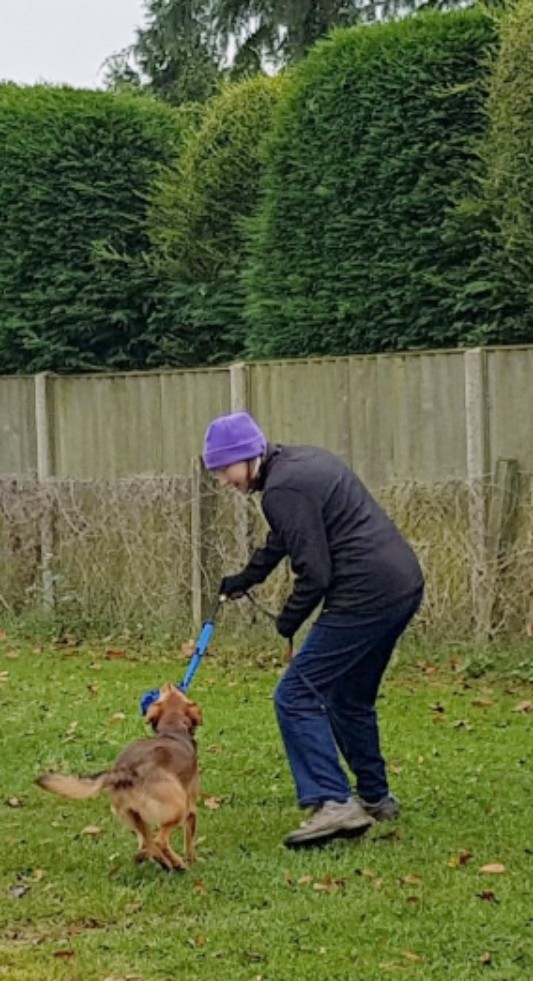
  • When your dog has hold of the toy, tug at it with them – a swishing side to side motion is ideal. Avoid raising the toy upwards with the dog attached to it – we’re not interested in developing a strong jaw, we’re looking at light hearted jolly play. Your dog may offer some vocalisations – go with it, they’re having fun!

  • Once they’ve got the hang of holding the toy, teach them to release the toy. You’ll need another toy. Make toy no.1 really exciting by wiggling it around, lots of movement; your energy and vocalisations should really get the dog going. Once the dog has seized the toy, say “Good Hold”, and encourage some tugging. When you are ready, toy no.1 becomes ‘dead’ – you stop moving it and disengage from play (but do not release the toy). But all of a sudden you whip out toy no.2, and now it’s all about toy no.2. Really go for it! If you’re a bit puffed out and feel like a wally, you’re probably doing it right! Once your dog is reliably releasing the toy in exchange for another one, you can introduce your “Out” cue word. Click here for a nice video example from Steve Mann of the IMDT [6].

  • To avoid frustration, let them win the toy – it is rewarding and will make them want to play more: “The majority of dogs do not seem to regard competitive games played with a human partner as “dominance” contests: rather, winning possession of objects during games appears to be simply rewarding. “ (Bradshaw et al, 2014 [4])

  • The extent of the hold/tug really depends on your dog. Some dogs will hold on for dear life, whereas others will just have a little nibble and tug. The engagement is what matters, not the tug.

So long as it is right for your dog, you’re doing it right!

2-toy-play

So, go and play with your dog – use the “Triangle of Play” to build your bond with your dog.

All images and text Copyright: Denise Price, 18 June 2018.

https://www.facebook.com/DenisePriceDogInstructor/

References

  1. John Bradshaw, In Defence of Dogs (2011), London, Penguin Books.
  2. Raymond Coppinger and Lorna Coppinger, Dogs (2004), London, Crosskeys Select Books.
  3. Sommerville, R., O’Connor, E.A., Asher, L., Applied Animal Behaviour Science (2017), Why do dogs play? Function and welfare implications of play in the domestic dog,  https://doi.org/10.1016/j.applanim.2017.09.007
  4. Bradshaw, J. W. S., Carter, A., Rooney, N. J., Behavioural Processes 110 (2014), Why do adult dogs ‘play’? https://doi.org/10.1016/j.beproc.2014.09.023
  5. Craig Ogilvie: http://craigogilviedogtraining.com
  6. A lovely video explanation of the “Out” can be found by Steve Mann of the IMDT here: https://www.youtube.com/watch?v=d5ldRn9iS5Y
  7. Ideas for toys: lovely variety can be found here https://tug-e-nuff.co.uk/collections/bungee-tug-toys-1

The newest fun dog sport, and 5 reasons to take it up

WHAT IS MANTRAILING?

1.  It is low impact which is suitable for puppies and dogs of  all ages

2.  Dogs are on lead, so no embarrassing incidents

3.  It’s easy to practice at home, Not much equipment needed

4.  Always in small groups.

5.  Dogs are worked one at a time so no issues for those that are dog nervous

6.  We train in new places every week

7.  It’s a great way to build confidence in nervous dogs

8.  It helps calm overexcited dogs as they need to concentrate more

9.  Fantastic way to build the bond and understanding between dog and handler

Have you heard of Mantrailing before?

Do you think it is only for really sporty dogs and super fit owners?

So here is the truth behind Mantrailing:

It is an exciting new trailing sport where your dog learns to track
missing/hidden people based on their unique smell!

Any dog can do this, from small to massive, from young to old, and any breed
too!

Even reactive dogs, as we only work one dog at a time and specifically
choose the person they are finding to match the dogs personality, it can help
improve their confidence immensely.

But I’m not fit enough to do that! We match the length and type of trail to
meet your requirements. Trust me I’m no athlete!

My dog has rubbish recall! No worries all dogs are worked on leads so they
are under control at all times.

We teach you to work as a team with your dog and help you understand body
language and how dogs see our world.

Once you have the basics you can progress through
more exciting trails in differing environments, and join in with competitions
and fun days or for the more competitive work towards  your level 1 certificate!

When it is not your turn to trail you have the
opportunity to watch other teams at work which is extremely beneficial for
progressing on your journey and understanding of dogs track scent, and the
effects of the environment on the trail, after all you are learning too.
it is low impact and highly addictive sport that requires concentration from
the dog and therefore really helps build focus and can give nervous dogs the
chance to build some real self confidence!

So come join us on this highly addictive adventure! Start soon and you may have
time to join in the Halloween ghost hunt!!

Take a look at our events page on http://www.facebook.com/doghampton

or sign up for our newsletter so you don’t miss out!

Importance of allowing your dog to sniff

Photo by Pixabay on Pexels.com

BY MARTHA KNOWLES | MAY 14, 2018 | THOUGHTS & READS

I peek out the front door to check on my dog, who is sunning himself in his favourite spot in the sun. He is lying on an old moving trolley, since repurposed to give him a boost up to the sunrays, which don’t reach the ground at this time of morning. As I stick my head out the door, he lifts his nose, and I can see his nostrils gently flare in and out as he recognizes I am close. He does not see me with his eyes, as they are squinted shut due to the sun, but he sees me with his nose.

There are many more examples of my dog using his nose to see. When I return from the shops, and we greet enthusiastically, my human tendency is to reach out and touch to say hello, but he ducks away, preferring to sniff my hands first to see where I have been. (If you have not already read about the human as opposed to canine perspective of greeting, it is worth reading ‘How do you greet a dog politely’). When I return from volunteering at the dog shelter, he sniffs my shoes and clothes carefully. I get the full pat down with the nose. If I offer him something, whether it is an object or food, he does not use his eyes to examine the item further; he sniffs it.

On one occasion, when out on a walk with my dog, he stopped, hesitant to go further. I surveyed the pavement ahead. It seemed clear. I thought he was being overly sensitive and encouraged him to continue. As we passed the parked cars ahead, hiding behind the wheel of the last car was a cat. I felt very foolish. My dog was right – there was something ahead! He had seen it with his nose. I should have listened. Being human, I had immediately dismissed what I could not see with my eyes. On another occasion, he started sniffing the ground very attentively, seemingly following a trail back and forth, as he narrowed in on the direction of the scent trail. Looking ahead to see what had taken his interest, it was easy for me to quickly spot a scattering of nacho chips that had been discarded on the pavement. This time my eyesight won out against my dog’s nose, and I was able to divert him away.

Even with these simple observations, it is apparent how often my dog uses his nose and scent to make sense of and navigate his environment.

It is understandable why the use of olfaction may be the predominant sense for dogs. It is estimated that dogs have 300 million olfactory receptor cells; in comparison humans have about 5 million. Dogs have the ability of smelling with each nostril on an individual basis, allowing them to distinguish the direction of the scent. The slits on the side of the nose allow for the old air to exit at the same time as the dog is breathing in new air through the nostrils, allowing the dog to take in scent continuously. The air is separated and passes through an area at the back of the nose that has a labyrinth of scroll-like bony structures called turbinates. The air is filtered through the turbinates for olfaction, while some of the air follows a separate route down the pharynx for respiration. The air that humans take in for respiration and scent is not separated, going in and out with the air that we smell. Additionally, dogs have a secondary olfactory organ called the vomeronasal organ that allows dogs to detect pheromones and non-volatile chemicals. There are times where you can spot the dog using his vomeronasal organ, as he will display a tonguing response. The dog may chatter his teeth or drool a bit at the mouth as he deciphers the components of the scent. To interpret all this information, a larger percentage of the dog’s brain is used to process scent, with the olfactory bulb taking up more area of the brain than it does in humans. The dog can detect smells at concentrations of 100 million times less than our noses can detect.

In Alexandra Horowitz’s book, ‘Being a Dog: Following the Dog Into a World of Smell’, she gives an example of scientific research to test scent thresholds of detection dogs. One of the tests was how diluted an odour could become before the dog would struggle to detect the odour. The scent of amyl acetate (smell of banana) had to be distinguished from non amyl acetate canisters. The dog kept finding the scent until it was diluted to the equivalent of a couple of drops of amyl acetate to one trillion drops of water.

It is estimated that dogs have 300 million olfactory receptor cells; in comparison humans have about 5 million.

The following Ted-Ed video lesson by Alexandra Horowitz gives a good summary of the dog’s sense of smell and why dogs are physically able to process scent so efficiently. For an in-depth look at how dogs perceive the world with their noses, it is well worth reading Alexandra Horowitz’s book, ‘Being a Dog: Following the Dog Into a World of Smell’.


Imagine visiting an art gallery if every time you attempted to look at a painting, you were forced to move along and had your eyes covered, missing the chance to get a glimpse of the painting. How frustrating an experience would that be? As humans, we do not have the same level of perception and therefore discount dogs’ levels of sensory perception far too many times, especially when giving them opportunities to interact with the environment. Too often I have seen guardians impatiently yanking their dogs away if the dog stops to sniff even for a moment. I have observed dogs that are walked obediently to heel and not permitted to stray to sniff, dogs walked with equipment that does not allow them to dip their noses down or move their heads or bodies with ease, or walks that are carefully curated from a human perspective, where the walk is a quick march for exercise purposes and stopping is not tolerated. The mental stimulation from sniffing and exploring can be just as tiring as physical exercise.

If my dog responds to an environment in a manner in which he is comfortable to investigate it – in an in-depth manner with calm sniffing – this indicates that the walk is going well and the environment is suitable for him. If my dog is pulling, moving erratically and choosing not to engage with the environment by sniffing, this is a telltale sign that he is not coping for some reason. So sniffing calmly and engaging with the environment can give clues as to the internal state of your dog. A good walk for my dog would be one in which he meanders with a calm, loose, slow-moving body, taking his time to stop at various spots to sniff and investigate. To do so, the leash needs to be long enough for him to move comfortably, and the equipment he is wearing should not hinder him from being able to reach the ground with his nose easily. The choice of walk should be individual for each dog; certain environments or times or the duration of a walk can be too stimulating for some dogs. A dog may not have the appropriate skill level or coping skills for a particular environment, or the dog’s stress level may be too high to cope with a particular walk.

How your dog engages with the environment by sniffing, and in which context he does so, can give vital clues as to how comfortable your dog is feeling and if he is coping within an environment.

There is another important reason to pay attention to your dog’s sniffing. On certain occasions, sniffing plays a part in how dogs communicate. If you have not already read the dog body language article about sniffing, you can read about it here.

The dog may stop to sniff as a calming signal or negotiation. For example, a dog may use sniffing the ground at a distance in the beginning stages of approaching another dog. A slow non-direct approach is polite, and it gives each party the opportunity to negotiate at a distance. In another context, sniffing could be used as a way to defuse a situation; one dog may walk away sniffing the ground, encouraging the other dog to mirror him, defusing the interaction.

Depending on context, sniffing the ground could also be displacement behaviour or a stress response. If the dog is unsure of something ahead, he may slow and start sniffing the ground, showing he may be feeling conflicted. It is vital to allow your dog to express himself and to observe your dog’s body language so you can offer support in such situations.

I mentioned an example of when my dog chooses to sniff the ground as displacement when he feels uncomfortable, in this article: ‘Considering the effects of walking or running straight towards a dog’.

The body language that occurs when a dog starts sniffing due to displacement can be subtle. It is crucial to observe changes in the environment, noting the dog’s whole body and body posture, as well as movement and body language signals. For instance, a dog may see something ahead, pause, and then subtly curve his body away from the object that is causing discomfort. He may then do some displacement sniffing. It is worth observing how he sniffs; some displacement sniffing may seem less focused than when a dog is actively investigating a scent. In other instances, it can seem out of place, as the dog suddenly finds a spot to sniff intently. The dog may use the moment of sniffing as a surreptitious way of surveying the environment, so it is important to observe where the gaze of the eyes falls. The dog may also move his ears, perhaps to the side slightly, in order to use his other senses to gather further information. One should pay attention to the subtleties.

Scent is the predominant way in which dogs make sense of their world. Sniffing is vital to the way dogs gather information and interact with their environment. At times, depending on the context, a dog is not just sniffing a scent; he is communicating. What he is communicating can vary according to the circumstances, so it is worth paying attention in order to be a supportive partner. Allowing your dog to interact fully with his environment and express himself with ease ensures a stronger, mutually connected relationship between dog guardian and dog.

  •  Just 1 more reason to take up Trailing or Tracking with your dog.

http://www.doghampton.co.uk