What is Mantrailing ?

By Susanne Broughton
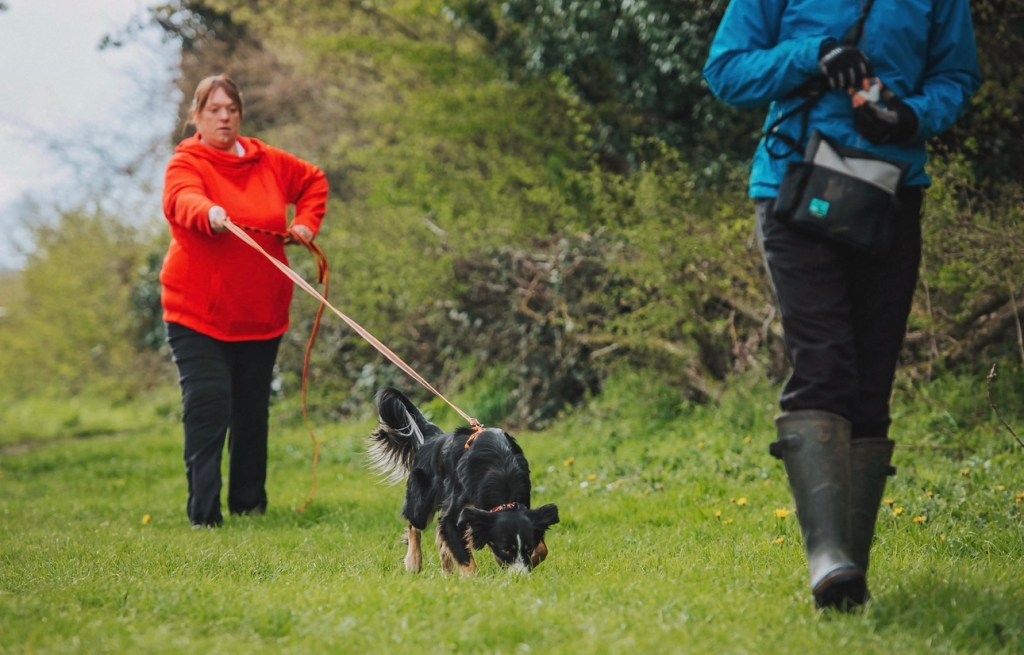
Mantrailing, the practice of using a dog’s extraordinary sense of smell to locate a specific person by following their unique scent trail, it has evolved from an essential tool for search and rescue to an exciting activity for pet owners. While professional mantrailing is widely known in fields like law enforcement and search and rescue operations, pet mantrailing allows regular dog owners to tap into their dogs’ innate abilities, turning it into a stimulating and fun exercise.

The Science Behind Mantrailing

Mantrailing is based on the fact that humans constantly shed skin cells, sweat, and other tiny particles that contain our individual scent profile. These scent particles, called rafts, float through the air and settle on the ground, creating a trail that a dog’s acute sense of smell can detect and follow.

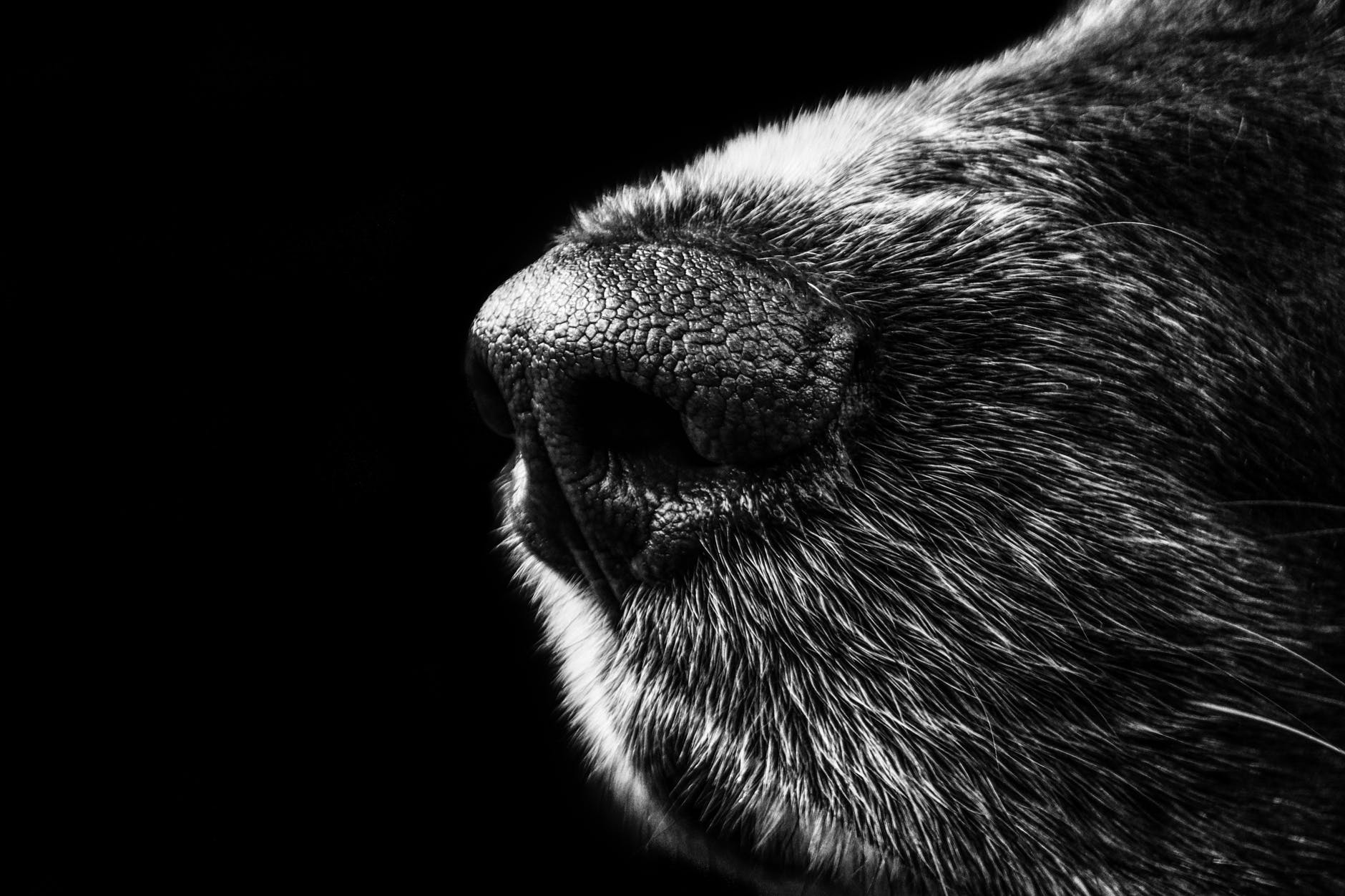
Dogs have one of the most powerful olfactory systems in the animal kingdom, with 200 to 300 million scent receptors, compared to a human’s mere 5 million. Additionally, the part of a dog’s brain dedicated to processing smells is 40 times larger than in humans, enabling them to identify individual scents in a highly complex scent environment. This means that dogs can follow a specific person’s trail even in places where other humans or animals have been, and over various terrains such as forests, fields, and urban environments.

When a dog engages in mantrailing, it works by distinguishing the specific scent of the target person from all other smells in the environment. Dogs trained in mantrailing can follow these scent particles even hours or days after the person has passed through an area, as long as the environmental conditions such as wind, temperature, and humidity have not completely dispersed the scent.

The Origins of Mantrailing

Mantrailing as a practice has roots in early human history, but it became formalised as a technique in the 19th century. Bloodhounds, with their highly developed sense of smell, were used extensively in Europe for tracking escaped prisoners and lost individuals. Their natural tracking abilities made them highly effective in law enforcement and rescue missions.

One of the earliest recorded uses of mantrailing in a professional capacity was in Scotland in the 1800s, where Bloodhounds were employed to trail criminals. Around the same time, in the United States, Bloodhounds were famously used to track runaway slaves and later criminals. The technique spread rapidly across the world, becoming an essential tool in police work and search and rescue efforts.

Over time, other breeds, including German Shepherds, Belgian Malinois, and Labrador Retrievers, have been trained for mantrailing due to their strong scent detection abilities and intelligence. In recent years, mantrailing has moved beyond law enforcement and search and rescue to become a popular sport and recreational activity for pet owners.

Sport Mantrailing: A Modern Twist on an Ancient Skill

In sport mantrailing, regular pet dogs, rather than professional working dogs are trained to follow a specific human scent for recreational purposes. This form of mantrailing harnesses a dog’s natural scent-tracking instincts and channels them into an enjoyable and mentally stimulating activity.

While sport mantrailing is grounded in the same principles as professional mantrailing, it is often less formal and rigorous. Instead of searching for missing persons, dogs in pet mantrailing typically follow the scent of person just hiding. Sport mantrailing has become popular in Europe, particularly in Germany and the United Kingdom, where organised clubs and training courses have sprung up to teach dogs and their owners how to engage in the activity.

The Training Process

Training a dog for pet mantrailing starts with introducing the dog to a scent article, such as a piece of clothing that has been worn by the target person. The scent article contains the specific odour particles that the dog will be tasked with following. The dog then learns to search for the person who left the scent, starting with short, simple trails and gradually progressing to longer and more complex ones.

The key to successful mantrailing lies in a positive reinforcement training approach. Dogs are rewarded with treats, toys, or praise when they successfully locate the person they are trailing. This motivates them to engage in the activity with enthusiasm and improves their scent discrimination abilities.

Benefits of Sport Mantrailing

Sport mantrailing provides numerous benefits for both dogs and their owners:

  1. Mental Stimulation: Dogs need mental challenges to stay happy and healthy, and mantrailing offers a perfect way to engage their brain. The process of searching for and following a scent requires intense focus, which helps tire them out mentally.
  2. Physical Exercise: In addition to engaging a dog’s brain, mantrailing also provides physical exercise, as the dog has to move through different environments, sometimes at a fast pace, while following the scent trail.
  3. Strengthens the Dog-Owner Bond: Mantrailing is a cooperative activity between the dog and its handler. It fosters a strong sense of teamwork, as the dog learns to rely on its handler’s cues while the handler learns to trust the dog’s scent detection abilities.
  4. Confidence Building: Mantrailing can boost a dog’s confidence, particularly for shy or anxious dogs. Successfully finding the person at the end of the trail gives dogs a sense of accomplishment and encourages them to rely on their natural instincts.
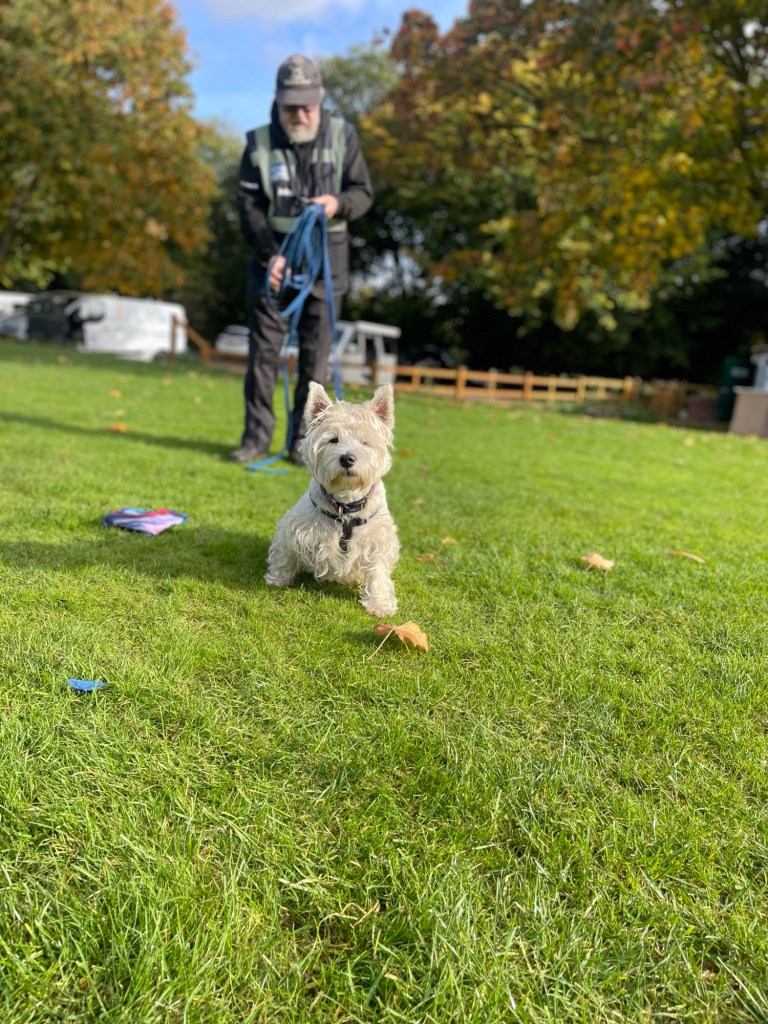
  5. All Breeds Can Participate: While professional mantrailing often focuses on breeds known for their scenting abilities (like Bloodhounds or German Shepherds), pet mantrailing is open to all breeds and sizes. From small terriers to large retrievers, any dog can enjoy mantrailing with the right training.

The Role of Scent and Environmental Factors

While dogs’ noses are incredibly powerful, the environment plays a significant role in their mantrailing success. Factors like wind direction, humidity, temperature, and the presence of other animals can influence how a dog follows a trail.

  • Wind can carry scent particles over long distances, helping or hindering a dog’s ability to detect the trail. A light breeze can help spread the scent in a way that is easier for the dog to follow, while strong winds may scatter scent particles in multiple directions, making the trail more challenging.
  • Humidity helps to preserve scent particles in the environment, making it easier for dogs to follow older trails. Dry conditions, on the other hand, can cause the scent to dissipate more quickly.
  • Temperature also impacts scent detection. Cooler temperatures tend to preserve scent longer, while hotter conditions can cause scent particles to rise and disperse more quickly.

Understanding these environmental factors is crucial for pet owners who want to engage in mantrailing, as it helps them work with their dog more effectively.

Summary

Sport mantrailing is a fascinating and enriching activity that allows dogs to use their natural abilities while providing physical and mental stimulation. Rooted in centuries of professional use, the modern adaptation of mantrailing for pets opens up new possibilities for dog owners to bond with their pets and engage in a fun, team-based activity. From its origins in law enforcement and search and rescue to its current role as a recreational activity for dog lovers worldwide, mantrailing continues to showcase the extraordinary capabilities of canine olfaction, offering benefits for both dogs and humans alike.

Mantrailing Dogs Human VOCs


Based on the research of Lauryn DeGreeff

Mantrailing dogs have long been recognised for their remarkable ability to track human scent over long distances and diverse environments. The core of this ability lies in their sensitivity to volatile organic compounds (VOCs), which are emitted by the human body. Lauryn DeGreeff’s research delves into the chemistry of these VOCs and how they are transported through the environment, providing essential insights into the mechanics of canine olfactory tracking.

The Chemistry of Human VOCs

Human bodies constantly emit a variety of volatile organic compounds through processes such as sweating, respiration, and natural skin exfoliation. These VOCs include acids, alcohols, ketones, and aldehydes, which form a unique olfactory signature detectable by dogs. As DeGreeff’s research reveals, each person’s scent profile is distinct, influenced by genetics, diet, health, and environment. This makes it possible for mantrailing dogs to follow the specific scent of an individual despite competing odors in the environment.

To better understand this, DeGreeff employs headspace sampling and gas chromatography-mass spectrometry (GC-MS) to analyse the chemical composition of human scent. Through this approach, she has identified key VOCs that play a critical role in helping dogs distinguish human odor from background smells.

Vapor Transport Mechanics: How Human Scent Moves Through the Air

Once human VOCs are emitted from the body, they are carried into the environment through a process known as vapor transport. Vapor transport mechanics refer to how volatile compounds behave once they leave their source, in this case, the human body. Several key factors influence how these VOCs move through the air and are detected by dogs.

Temperature

Temperature significantly impacts vapor transport. Higher temperatures can cause human VOCs to evaporate more rapidly, enhancing the scent’s strength and making it easier for dogs to detect in the immediate vicinity. However, this also means that the scent may dissipate more quickly, becoming harder to follow over long distances. Conversely, in cooler temperatures, VOCs may evaporate more slowly but remain closer to the ground, allowing a more sustained scent trail for tracking.

Humidity

Humidity levels influence how long VOCs remain suspended in the air. In high-humidity environments, water vapor can trap VOCs, creating a “cloud” of scent that lingers close to the ground, which is ideal for dogs following a trail. On the other hand, in dry conditions, VOCs are more likely to dissipate quickly, reducing the overall strength of the scent trail.

Wind and Air Currents

Air movement, including wind speed and direction, plays a significant role in the distribution of VOCs. Strong winds can spread scent molecules over a broader area, forcing dogs to use cross-wind search patterns to locate the source of the scent. DeGreeff’s research indicates that experienced dogs are adept at compensating for such environmental factors, adjusting their search strategies to relocate dispersed VOCs.

Surface Interaction

The surface on which a person walks also affects how VOCs are deposited and re-released into the air. For example, porous surfaces like grass and dirt can absorb VOCs, slowly releasing them over time, which creates a more persistent scent trail. In contrast, harder surfaces such as concrete or asphalt may retain less scent, making tracking more difficult for the dog. DeGreeff’s research shows that dogs can still detect residual scents on such surfaces, though it often requires more effort and skill.

How Mantrailing Dogs Detect and Follow Human Scent

Mantrailing dogs are specially trained to detect the VOCs released by humans and follow the vapor trail, regardless of environmental conditions. Their noses are finely tuned to pick up even the smallest concentrations of VOCs, allowing them to detect scent trails that may be hours or even days old.

DeGreeff’s research highlights that dogs do not simply follow skin flakes or sweat droplets left behind by humans. Instead, they rely on the invisible vapor trail of VOCs that evaporate from a person’s body. This vapor trail is dynamic and interacts with the environment in complex ways, influenced by factors like temperature, wind, and terrain. Mantrailing dogs are trained to process these environmental cues and adjust their behaviour accordingly, making them incredibly effective in tracking over various terrains and conditions.

Human Scent and Thermal Lift

While DeGreeff’s research doesn’t explicitly focus on “thermal lift” as a distinct concept, the idea can be inferred from her studies on how temperature gradients affect vapor transport. Thermal lift occurs when warm air rises, carrying scent molecules upwards, potentially making it more challenging for dogs to detect scent at ground level. This is especially relevant in situations where scent trails may “lift” off the ground and disperse at higher altitudes, causing dogs to lose the scent temporarily. However, experienced dogs often compensate for this by circling back to re-locate the scent at a different elevation.

Synthetic Training Aids and Practical Applications

One of the key contributions of DeGreeff’s research is the development of synthetic training aids that replicate human VOCs. These training aids allow dogs to practice in controlled environments, where the concentration of VOCs can be adjusted to simulate real-world conditions, such as a faint scent trail in a windy or dry environment.

By studying vapor transport mechanics, DeGreeff helps optimise the preparation and usage of these training materials, ensuring they mimic the complex environmental factors dogs will encounter in the field. Her work also emphasises the importance of proper storage and handling of these aids to maintain their chemical integrity over time.

Summary

Lauryn DeGreeff’s research into VOC chemistry and vapor transport mechanics has significantly advanced our understanding of how mantrailing dogs detect and follow human scent. By exploring the interaction between human-emitted VOCs and environmental factors such as temperature, humidity, and wind, DeGreeff’s work helps optimise the training and deployment of these dogs in real-world tracking scenarios. Her insights into vapor transport provide the foundation for improving canine performance, ensuring that mantrailing dogs remain at the forefront of search-and-rescue, law enforcement, and other scent-based detection fields.

In sum, the science behind mantrailing dogs’ success lies not just in their extraordinary olfactory abilities, but also in the nuanced understanding of how human VOCs behave in the natural world—a topic that DeGreeff’s research continues to illuminate.

Mantrailing: Debunking 5 Common Myths – by Susanne Broughton


Are you a looking for a unique and engaging activity to share with your dog? Look no further than mantrailing! This exciting and rewarding activity offers numerous benefits for both you and your dog. Unfortunately, there are some misconceptions floating around that may discourage potential enthusiasts. Fear not! In this blog, we will delve into the amazing benefits of mantrailing while debunking five common myths, including the notion that only certain breeds can excel in this activity.

Maya hot on the heels of her trail layer
  1. Myth: Only certain breeds can trail.
    One of the most persistent myths about mantrailing is that only specific breeds possess the necessary skills to participate. In reality, any dog, regardless of breed or size, can learn to be a good mantrailer. While certain breeds may have natural instincts that make them excel in scent work, any dog can be trained to enjoy and succeed in mantrailing. It’s all about patience, consistency, and building a strong bond with your dog.
  2. Myth: Mantrailing is only for highly energetic dogs.
    Another misconception is that only high-energy dogs can benefit from mantrailing. While it’s true that energetic dogs often enjoy this activity, it can also be a great outlet for dogs with lower energy levels. Mantrailing provides mental stimulation, encourages problem-solving skills, and promotes overall well-being. It’s a fantastic way to engage and challenge dogs of all energy levels while strengthening the bond between you and your pet.
  3. Myth: Mantrailing is too complicated to learn.
    Some may think that mantrailing is a complex and challenging activity to teach their pets. However, with the right approach and guidance, mantrailing can be taught to dogs of all ages and skill levels. We will help you understand the basics, including teaching your dog to follow a specific scent, differentiate between scents, and work collaboratively with you. The key is to start with simple exercises and gradually build up skills through positive reinforcement and consistent practice.
  4. Myth: Mantrailing is only for professional search and rescue dogs.
    While mantrailing is commonly associated with search and rescue work, it’s essential to recognise that this activity can also be enjoyed recreationally. Participating in mantrailing provides mental stimulation, offers an opportunity for dogs to utilise their natural instincts, and encourages physical exercise.
  5. Myth: Mantrailing is time-consuming and requires extensive equipment.
    Contrary to popular belief, mantrailing can be adapted to fit your lifestyle. You don’t need elaborate equipment or hours of training sessions to enjoy this activity. Even short, regular sessions can provide significant benefits for your pet. With a few essential items like a long leash, harness, you can start your mantrailing adventure in no time. It’s a flexible activity that can be tailored to your schedule and preferences.


Mantrailing is a fantastic activity that offers numerous benefits for both you and your dog. By debunking these common myths, we hope to inspire pet owners to give mantrailing a try, regardless of their dog’s breed or energy level. The joy, mental stimulation, and strengthened bond you’ll experience with your pet are well worth the effort. So, grab your lead, follow the scent, and embark on an exciting mantrailing journey with your dog!

Check out the Doghampton Facebook page to start your journey.

Dogs Can Sniff Out Cancer In Blood With Nearly 97% Accuracy, Study Shows

Dog cancer smell study

article by Andrea D. Steffen May 14, 2019

Blood-sniffing dogs may become the latest frontier in cancer detection, a new study presented at the American Society for Biochemistry and Molecular Biology annual meeting during the 2019 Experimental Biology conference in Orlando, Florida reveals.

By using their superb sense of smell — which is 10,000 times more accurate than a human’s, therefore making them highly sensitive to odors we can’t perceive — the trained lab dogs were able to pick-out blood samples from cancer patients with 97 percent accuracy. Did we even need another reason to call dogs “man’s best friend?”

Heather Junqueira, lead researcher on the study, says the results could lead to canine detection as a low-cost, non-invasive approach to cancer screening and perhaps other diseases. Dogs may also be able to detect cancer earlier than other traditional exams, she added.

Junqueira said:

“This work is very exciting because it paves the way for further research along two paths, both of which could lead to new cancer-detection tools. One is using canine scent detection as a screening method for cancers, and the other would be to determine the biologic compounds the dogs detect and then design cancer-screening tests based on those compounds.”

Four beagles were taught to distinguish between healthy blood samples and those from patients with malignant lung cancer by Janqueira and her team at BioScentDx, the lab where the study was performed. One did not cooperate, but the other three dogs were able to identify cancerous samples 96.7 percent of the time.

Current And Future Studies

Now they are testing whether dogs can smell cancer in the breath condensate of breast cancer patients. The company launched a breast cancer study in which participants donate samples of their breath for screening by trained cancer-sniffing dogs. Next, they plan to isolate the chemical compounds in samples and find out exactly where the odor originates. They are quite confident the dogs will be able to perform well through all the types of smell tests they put them through.

If you are interested in training your dogs natural ability for a fun sport that is suitable for any dog take a look at our page.

http://www.facebook.com/doghampton

We run Scent detection, Mantrailing and Tracking classes

Featured

Mantrailing is more than training.

Please read this article from Mantrailing uk

Find an event at Doghampton

Mantrailing is like no other activity or sport that you can take part in with your pet dog. It is completely unique dog training in many ways but quite interestingly, it can help solve a number of unwanted behavioural problems that may challenge your every day life with your dog such as fear, hyperactivity, phobias, stress, anxiety, reactivity and aggression.

Mantrailing is allowing the dog to make the right choices independently and will be much more satisfying and prioritising the preferred habits in the brain. It has the effect that over time, it changes unwanted habitual behavior and shapes new behavior that is the final, desired goal. It interrupts and redirects unwanted dog behavior, will give the dog satisfaction and can be therapeutic. This, in turn, will provide various benefits and will give you and the dog more confidence and stress free experiences.

These dog behaviours can lead to you becoming extremely isolated with your dog and having stressful and disappointing experiences and missing out on taking part in various activities or even simple dog walks.

Mantrailing is the ultimate sport for turning a pessimist into an optimist!

It is one of the very few sports where the dog can work freely and the handler can enjoy watching their dog work. It is all about putting the dog in control and the handlers taking a back seat and watching how the dog works tricky trails out themselves. Through this, the handler learns to read the dogs body language, which creates a great bond and ultimately will equate to further progression in their behavioural and every-day training.

By taking part in Mantrailing, both you and your dog become a team – the best team imaginable! You will achieve success after success together, getting a buzz each time a missing person is found.

This will also help with building the dog’s confidence and self-esteem up in a very short period of time. It helps the dog to become less stressed, relax, learn a new game and have endless fun along the way. By working as a team, the dog will naturally want to engage with their handler and learn.

A dog’s nose dominates its brain, so naturally Mantrailing provides mental, intellectual stimulation for your dog, providing an exceptional workout for the brain, tiring them out without the need for physical exercise. This is perfect for dogs that are still bouncing around the house after endless walks, puppies, elderly dogs or dogs that are unable to complete as much physical exercise for one reason or another.

“It is invaluable dog training.”

It´s not competitive or over arousing like some other dog sports. It is fantastic at getting the dogs to solve problems, which in turn will build confidence and make the dog more likely to respond to behavioural modification training as the dog will want to engage and learn. This will help to change the dog’s reaction to certain situations such as a person, a dog, another animal or person.

“By making Mantrailing the best game ever, we change the priorities for the dog.”

Behaviour, that has become habitual for the dog, such as chasing a runner or barking at another dog, can be challenging to reverse. By making Mantrailing, which is a natural game, more fun, exciting and rewarding, we are changing the priorities for the dog. All over sudden, chasing that bike isn´t as important as following the trail that leads to receiving the best reward. A lot of dogs find trailing rewarding in itself.

Once the dog understands the concept of Mantrailing, which happens usually within the first session, there is no stopping them from doing their ‘job’. The dogs are extremely intent on following the trail to find their missing person, that whatever or whoever gets in their way is completely ignored. This has, for expample, enabled dog reactive dogs to ignore any other dogs on or near their trail.

Nervous dogs have been brave enough to pass objects or scenarios they once wouldn’t pass or take food from strangers that they might not normally approach.

Olfaction is believed to be the dogs’ most powerful and perhaps important sense. Their sensory world is impressively different from ours, they observe their world through relentless sniffing and scent discrimination. Dogs can have up to 300 million olfactory cells, whereas us humans have only about 15 million.

“It is believed that they can detect a tea spoon of sugar in an olympic sized pool.”

Canine olfaction is a growing area of scientific investigation and there are many new applications surfacing every year. The dogs’ brain is build around the information it gets from scent which is closely linked to emotions. Endorphins are chemicals that are produced in the brain during times of stimulation and excitement, they create feelings of calmness and happiness and decrease stress and anxiety.

When endorphin levels are too low the dog is likely to feel under a lot of stress, which can result in undesired or obsessive behaviours that the dogs use as a mechanism to cope. Anything that induces pain or excitement boosts endorphin levels, so a dog could chew his own paw, spin, or chase shadows all day as their way of creating enough endorphins for normal function.

The more the brain can be engaged and challenged with new behaviours, the more relaxed and content the dog will be. Stimulating the dog mentally and physically can help it cope with lower than average levels of endorphins being produced.

So what are you waiting for? Get trailing!

To find out more about Mantrailing and how to get involved, visit our events page or join our Facebook group “Mantrailing Association UK”

Find out more

Sign up for more info

References

https://www.researchgate.net/publication/280446218_Canine_Olfaction_Scent_Sign_and_Situation

http://www.balancebehaviour.org/

Importance of allowing your dog to sniff

Photo by Pixabay on Pexels.com

BY MARTHA KNOWLES | MAY 14, 2018 | THOUGHTS & READS

I peek out the front door to check on my dog, who is sunning himself in his favourite spot in the sun. He is lying on an old moving trolley, since repurposed to give him a boost up to the sunrays, which don’t reach the ground at this time of morning. As I stick my head out the door, he lifts his nose, and I can see his nostrils gently flare in and out as he recognizes I am close. He does not see me with his eyes, as they are squinted shut due to the sun, but he sees me with his nose.

There are many more examples of my dog using his nose to see. When I return from the shops, and we greet enthusiastically, my human tendency is to reach out and touch to say hello, but he ducks away, preferring to sniff my hands first to see where I have been. (If you have not already read about the human as opposed to canine perspective of greeting, it is worth reading ‘How do you greet a dog politely’). When I return from volunteering at the dog shelter, he sniffs my shoes and clothes carefully. I get the full pat down with the nose. If I offer him something, whether it is an object or food, he does not use his eyes to examine the item further; he sniffs it.

On one occasion, when out on a walk with my dog, he stopped, hesitant to go further. I surveyed the pavement ahead. It seemed clear. I thought he was being overly sensitive and encouraged him to continue. As we passed the parked cars ahead, hiding behind the wheel of the last car was a cat. I felt very foolish. My dog was right – there was something ahead! He had seen it with his nose. I should have listened. Being human, I had immediately dismissed what I could not see with my eyes. On another occasion, he started sniffing the ground very attentively, seemingly following a trail back and forth, as he narrowed in on the direction of the scent trail. Looking ahead to see what had taken his interest, it was easy for me to quickly spot a scattering of nacho chips that had been discarded on the pavement. This time my eyesight won out against my dog’s nose, and I was able to divert him away.

Even with these simple observations, it is apparent how often my dog uses his nose and scent to make sense of and navigate his environment.

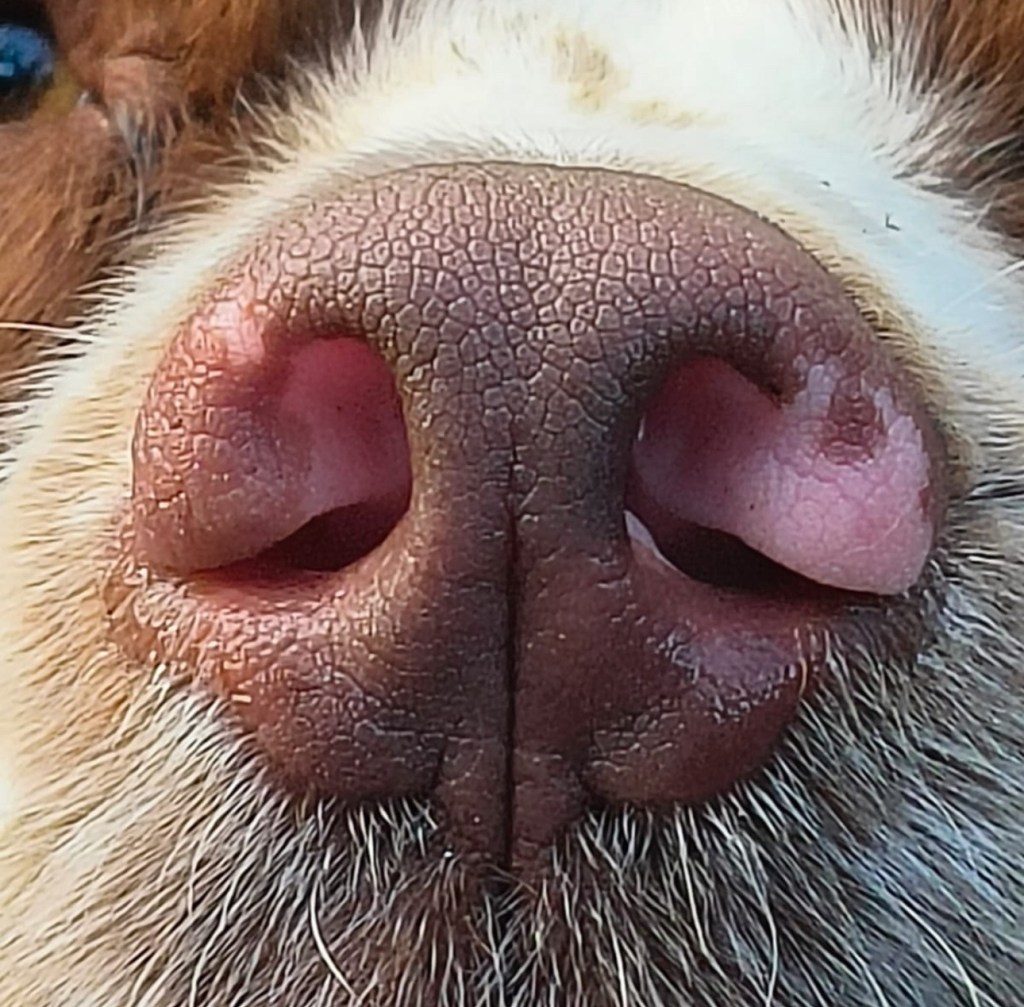
It is understandable why the use of olfaction may be the predominant sense for dogs. It is estimated that dogs have 300 million olfactory receptor cells; in comparison humans have about 5 million. Dogs have the ability of smelling with each nostril on an individual basis, allowing them to distinguish the direction of the scent. The slits on the side of the nose allow for the old air to exit at the same time as the dog is breathing in new air through the nostrils, allowing the dog to take in scent continuously. The air is separated and passes through an area at the back of the nose that has a labyrinth of scroll-like bony structures called turbinates. The air is filtered through the turbinates for olfaction, while some of the air follows a separate route down the pharynx for respiration. The air that humans take in for respiration and scent is not separated, going in and out with the air that we smell. Additionally, dogs have a secondary olfactory organ called the vomeronasal organ that allows dogs to detect pheromones and non-volatile chemicals. There are times where you can spot the dog using his vomeronasal organ, as he will display a tonguing response. The dog may chatter his teeth or drool a bit at the mouth as he deciphers the components of the scent. To interpret all this information, a larger percentage of the dog’s brain is used to process scent, with the olfactory bulb taking up more area of the brain than it does in humans. The dog can detect smells at concentrations of 100 million times less than our noses can detect.

In Alexandra Horowitz’s book, ‘Being a Dog: Following the Dog Into a World of Smell’, she gives an example of scientific research to test scent thresholds of detection dogs. One of the tests was how diluted an odour could become before the dog would struggle to detect the odour. The scent of amyl acetate (smell of banana) had to be distinguished from non amyl acetate canisters. The dog kept finding the scent until it was diluted to the equivalent of a couple of drops of amyl acetate to one trillion drops of water.

It is estimated that dogs have 300 million olfactory receptor cells; in comparison humans have about 5 million.

The following Ted-Ed video lesson by Alexandra Horowitz gives a good summary of the dog’s sense of smell and why dogs are physically able to process scent so efficiently. For an in-depth look at how dogs perceive the world with their noses, it is well worth reading Alexandra Horowitz’s book, ‘Being a Dog: Following the Dog Into a World of Smell’.


Imagine visiting an art gallery if every time you attempted to look at a painting, you were forced to move along and had your eyes covered, missing the chance to get a glimpse of the painting. How frustrating an experience would that be? As humans, we do not have the same level of perception and therefore discount dogs’ levels of sensory perception far too many times, especially when giving them opportunities to interact with the environment. Too often I have seen guardians impatiently yanking their dogs away if the dog stops to sniff even for a moment. I have observed dogs that are walked obediently to heel and not permitted to stray to sniff, dogs walked with equipment that does not allow them to dip their noses down or move their heads or bodies with ease, or walks that are carefully curated from a human perspective, where the walk is a quick march for exercise purposes and stopping is not tolerated. The mental stimulation from sniffing and exploring can be just as tiring as physical exercise.

If my dog responds to an environment in a manner in which he is comfortable to investigate it – in an in-depth manner with calm sniffing – this indicates that the walk is going well and the environment is suitable for him. If my dog is pulling, moving erratically and choosing not to engage with the environment by sniffing, this is a telltale sign that he is not coping for some reason. So sniffing calmly and engaging with the environment can give clues as to the internal state of your dog. A good walk for my dog would be one in which he meanders with a calm, loose, slow-moving body, taking his time to stop at various spots to sniff and investigate. To do so, the leash needs to be long enough for him to move comfortably, and the equipment he is wearing should not hinder him from being able to reach the ground with his nose easily. The choice of walk should be individual for each dog; certain environments or times or the duration of a walk can be too stimulating for some dogs. A dog may not have the appropriate skill level or coping skills for a particular environment, or the dog’s stress level may be too high to cope with a particular walk.

How your dog engages with the environment by sniffing, and in which context he does so, can give vital clues as to how comfortable your dog is feeling and if he is coping within an environment.

There is another important reason to pay attention to your dog’s sniffing. On certain occasions, sniffing plays a part in how dogs communicate. If you have not already read the dog body language article about sniffing, you can read about it here.

The dog may stop to sniff as a calming signal or negotiation. For example, a dog may use sniffing the ground at a distance in the beginning stages of approaching another dog. A slow non-direct approach is polite, and it gives each party the opportunity to negotiate at a distance. In another context, sniffing could be used as a way to defuse a situation; one dog may walk away sniffing the ground, encouraging the other dog to mirror him, defusing the interaction.

Depending on context, sniffing the ground could also be displacement behaviour or a stress response. If the dog is unsure of something ahead, he may slow and start sniffing the ground, showing he may be feeling conflicted. It is vital to allow your dog to express himself and to observe your dog’s body language so you can offer support in such situations.

I mentioned an example of when my dog chooses to sniff the ground as displacement when he feels uncomfortable, in this article: ‘Considering the effects of walking or running straight towards a dog’.

The body language that occurs when a dog starts sniffing due to displacement can be subtle. It is crucial to observe changes in the environment, noting the dog’s whole body and body posture, as well as movement and body language signals. For instance, a dog may see something ahead, pause, and then subtly curve his body away from the object that is causing discomfort. He may then do some displacement sniffing. It is worth observing how he sniffs; some displacement sniffing may seem less focused than when a dog is actively investigating a scent. In other instances, it can seem out of place, as the dog suddenly finds a spot to sniff intently. The dog may use the moment of sniffing as a surreptitious way of surveying the environment, so it is important to observe where the gaze of the eyes falls. The dog may also move his ears, perhaps to the side slightly, in order to use his other senses to gather further information. One should pay attention to the subtleties.

Scent is the predominant way in which dogs make sense of their world. Sniffing is vital to the way dogs gather information and interact with their environment. At times, depending on the context, a dog is not just sniffing a scent; he is communicating. What he is communicating can vary according to the circumstances, so it is worth paying attention in order to be a supportive partner. Allowing your dog to interact fully with his environment and express himself with ease ensures a stronger, mutually connected relationship between dog guardian and dog.

  •  Just 1 more reason to take up Trailing or Tracking with your dog.

http://www.doghampton.co.uk