

Bringing home a rescue dog is an incredibly rewarding experience, but let’s be honest sometimes it feels like you’ve just adopted a furry little question mark. One minute they’re cautiously sniffing around, and the next, they’re hiding behind the couch like it’s a zombie apocalypse. If your new pup is on the nervous side, don’t worry force-free training, tapping into the natural desires and patience can work wonders.
Meet Goose – My Own Rescue Success Story
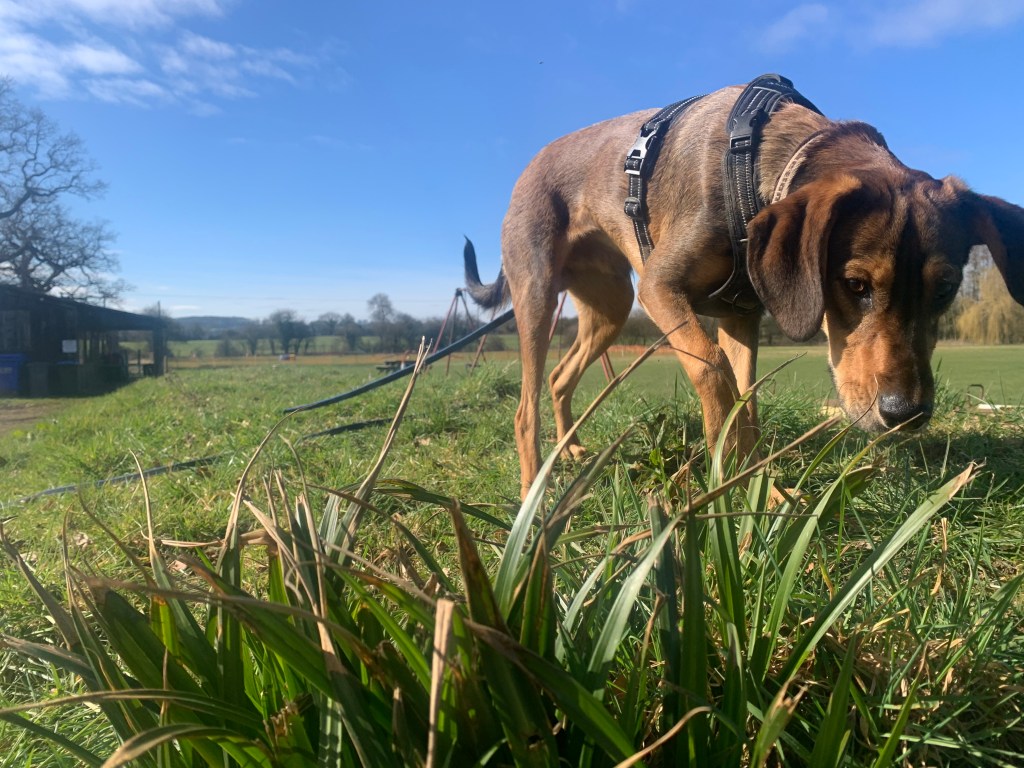
Before we start, let me introduce you to Goose, my own rescue dog. When Goose first arrived, he was anxious and unsure of his new surroundings. With patience, positive reinforcement, and force-free training, he slowly blossomed into the confident (so of the time) and loving companion he is today. His journey inspired me to help other dogs adjust and thrive, which is a large part of the work DogHampton in Northamptonshire do, we are dedicated to force-free training and helping dogs build trust with their humans.
Once Goose had settled, we introduced track trailing as a way to build his confidence. This safe, on-lead activity allowed him to tap into his natural instincts to hunt and follow scents while giving him a structured way to engage with the world around him. Since he was securely on a lead, we didn’t have to worry about his lack of recall, and he absolutely thrived with this newfound job! Watching him follow a trail with excitement and determination was a game-changer in his journey toward confidence.
Step 1: Give Them Time to Decompress
Imagine you just moved to a foreign country where you don’t speak the language, the food is weird, and the locals (that’s you) keep staring at you expectantly. Overwhelming, right? That’s exactly how your rescue dog feels.
- Create a quiet, cozy space where they can retreat.
- Keep introductions slow—let them come to you instead of overwhelming them with affection.
- Stick to a consistent routine to build a sense of security.
Step 2: Build Trust with Positive Reinforcement
Force-free training is the gold standard for gaining a nervous rescue dog’s trust. This means no yelling, no harsh corrections, and definitely no dominance-based techniques. Instead, let’s bribe I mean, motivate them with tasty rewards and praise.
- Use high-value treats (think chicken, cheese, or whatever makes their tail wag like a propeller).
- Mark and reward calm behaviours if they sit or make eye contact, praise them.
- Respect their space forcing interaction can backfire. Let them approach you in their own time.
Step 3: Teach Basic Cues at Home
So, what’s the best way to train my dog at home? Short, positive sessions in a quiet environment. Nervous dogs thrive when they understand what’s expected of them, so start with simple cues.
- Sit and Down – These give your dog something to focus on besides their worries.
- Touch (target training) – Encourages engagement in a non-threatening way.
- Mat training – Teaches them that their bed is a safe, rewarding place.
Step 4: Socialisation—At Their Pace
Rescue dogs often have a history, and we don’t always know the full story. That’s why socialisation should be gentle and gradual.
- Start with low-distraction environments before heading to busier places.
- Let them observe from a distance before encouraging interaction.
- Keep interactions with other dogs and people short and positive.
Step 5: Addressing Fear-Based Behaviours
If your dog reacts nervously (barking, cowering, freezing), resist the urge to punish them. Instead:
- Identify triggers and work on desensitisation.
- Allow them to retreat from the trigger, build trust and become your dogs ‘safe space’.
- Pair scary things with rewards (e.g., if they’re scared of the vacuum, give treats when it’s off and gradually when it’s on).
- Use calming tools like snuffle mats, lick mats, or anxiety wraps.
- Timing is crucial, contact a professional to help
Step 6: Be Patient, Celebrate Small Wins
Progress won’t always be linear some days, your dog will feel brave, and others, they might regress. That’s totally normal! Celebrate the small victories, whether it’s the first tail wag or finally venturing into the kitchen without hesitation.
Final Thoughts
Learning how to train a rescue dog isn’t about quick fixes it’s about building trust, confidence, and a lasting bond. Force-free training ensures they feel safe while learning the ropes of their new life. With patience, love, and a little humour, your rescue dog will go from nervous newbie to confident companion in no time!
Bonus Tip: If you’re feeling stuck, consider working with a force-free trainer who can offer guidance tailored to your dog’s unique needs. If you’re in Northamptonshire, DogHampton is here to help, just like we helped Goose!🐾
 UK SCENT SPORT