Recognising Behavioral Signals and understanding Stress in Dogs


Our dogs are not immune to stress. Just like humans, they can experience a range of emotional and physiological changes when faced with stressors. As responsible pet owners, it’s crucial to recognise these signs and understand the underlying science behind stress in dogs. Failure to recognise these very often leads to trigger stacking. (Check out our previous blog)


When dogs encounter stress, their bodies release stress hormones such as cortisol and adrenaline. These hormones trigger various physiological changes that impact their behaviour and overall well-being. A study conducted by Beerda et al. (1999) found that stress in dogs can lead to increased heart rate, blood pressure, and respiratory rate. Additionally, elevated cortisol levels can affect the immune system and impair digestion, contributing to a host of health issues.

Some Behavioural Signals of Stress in Dogs:

  1. Excessive Barking or Howling:
    Stressed dogs may resort to excessive vocalisation as a way to express their anxiety or discomfort.
  2. Pacing or Restlessness:
    Restlessness, pacing back and forth, or an inability to settle down can indicate heightened stress levels in dogs.
  3. Excessive Panting or Drooling:
    When dogs are stressed, they may exhibit increased panting or drooling, as these physiological responses help regulate their body temperature during stressful situations.
  4. Tail Tucking between the Legs:
    A tucked tail is often a clear sign of fear or anxiety in dogs. It indicates their desire to withdraw or protect themselves from the stressor.
  5. Dilated Pupils:
    Stress can cause a dog’s pupils to dilate as a result of the increased release of adrenaline, preparing their bodies for a potential threat.
  6. Excessive Scratching or Licking:
    Stressed dogs may engage in excessive scratching or licking, as stress can trigger skin sensitivities and allergies.
  7. Reduced Appetite or Sudden Weight Loss:
    Just like humans, dogs may experience a loss of appetite or sudden weight loss during stressful periods. Stress can affect their digestive system, leading to decreased interest in food.
  8. Aggression or Growling:
    Stress can manifest as aggression or growling in dogs. This behaviour serves as a defensive mechanism to protect themselves from perceived threats.
  9. Trembling or Shaking:
    Trembling or shaking is a common physical manifestation of stress in dogs, indicating their heightened emotional state.
  10. Excessive Yawning:
    Dogs may yawn excessively when under stress. Yawning in this context is not necessarily due to tiredness but rather as a coping mechanism to release tension.
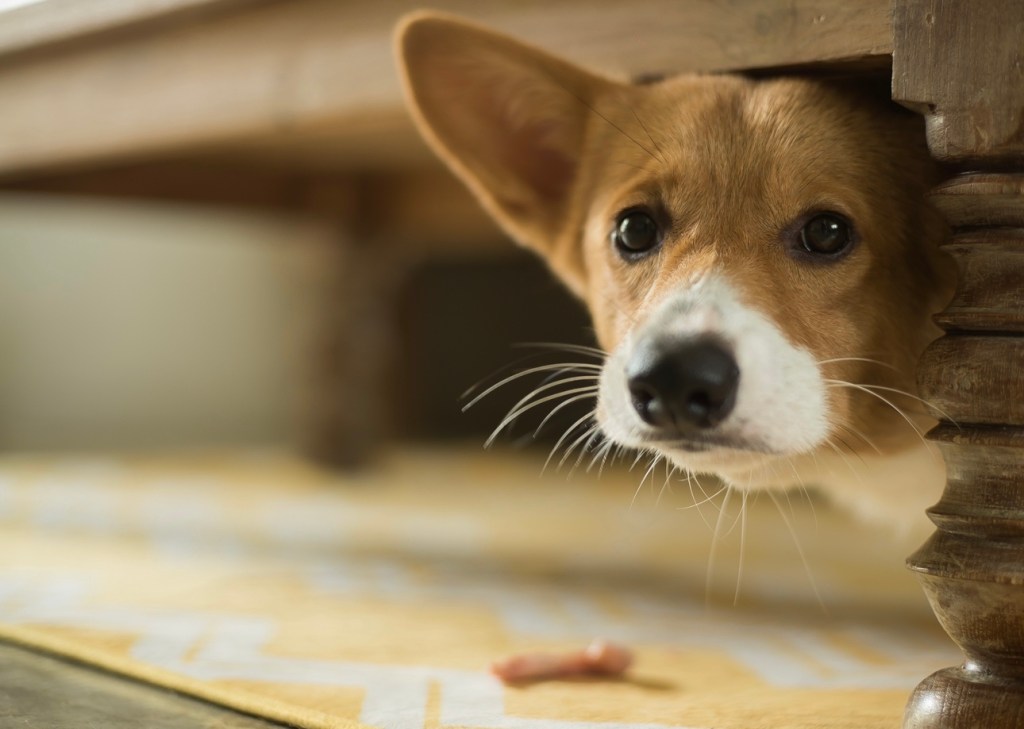
  11. Hiding or Seeking Solitude:
    Stressed dogs may seek isolation or hide in confined spaces as a way to cope with stressors.
  12. Excessive Shedding:
    Increased shedding can be a sign of stress in dogs, as the body responds to stress by shedding hair more rapidly.
  13. Excessive Vocalization:
    Some dogs may become vocal when stressed, whining or whimpering to express their discomfort.
  14. Destructive Behavior:
    Stress can lead to destructive behaviour in dogs, such as chewing on furniture, shoes, or other objects, as a way to alleviate their anxiety.
  15. Excessive Lethargy:
    While some dogs may become restless when stressed, others may display excessive lethargy, appearing sluggish or uninterested in their usual activities.
  16. Excessive Licking of Lips:
    Stressed dogs may frequently lick their lips or nose as a self-soothing behaviour to relieve stress.
  17. Frantic neediness: trying to climb up you jumping up, over friendly clingy behaviours.
  18. Excessive Salivation:
    Excessive salivation, often resulting in the dog having a wet or foamy mouth, can be a sign of stress or anxiety.
  19. Sudden Changes in Bathroom Habits:
    Stress can cause dogs to have accidents indoors or experience changes in their bathroom habits, such as increased frequency or difficulty urinating or defecating.
  20. Avoidance Behavior:
    Stressed dogs may actively avoid certain people, places, or situations that they associate with stress, seeking to distance themselves from potential stressors.


Recognising these behavioral signals is vital, as it allows us to address the underlying causes of stress in our dogs. Some common stressors for dogs include changes in their environment, separation anxiety, lack of physical or mental stimulation, noise phobias, or unfamiliar situations.

To alleviate stress in dogs, it’s essential to provide a safe and stress-free environment that meets their physical and emotional needs. This can include regular exercise, mental stimulation, a consistent routine, positive reinforcement training

Understanding the signs of stress in dogs is crucial for their overall well-being. By recognising these behavioural signals and addressing the underlying causes, we can help our dogs lead happier and healthier lives. Remember, each dog is unique, and stress manifests differently in individuals. If you suspect your dog is experiencing stress, consult a professional to develop a tailored approach that suits their specific needs. Let’s prioritise the mental and emotional health of our dogs!

References:

  • Beerda, B., Schilder, M. B., van Hooff, J. A., de Vries, H. W., & Mol, J. A. (1999). Chronic stress in dogs subjected to social and spatial restriction. II. Hormonal and immunological responses. Physiology & Behavior, 66(2), 243-254. doi: 10.1016/s0031-9384(98)00327-7
I broke my dog!

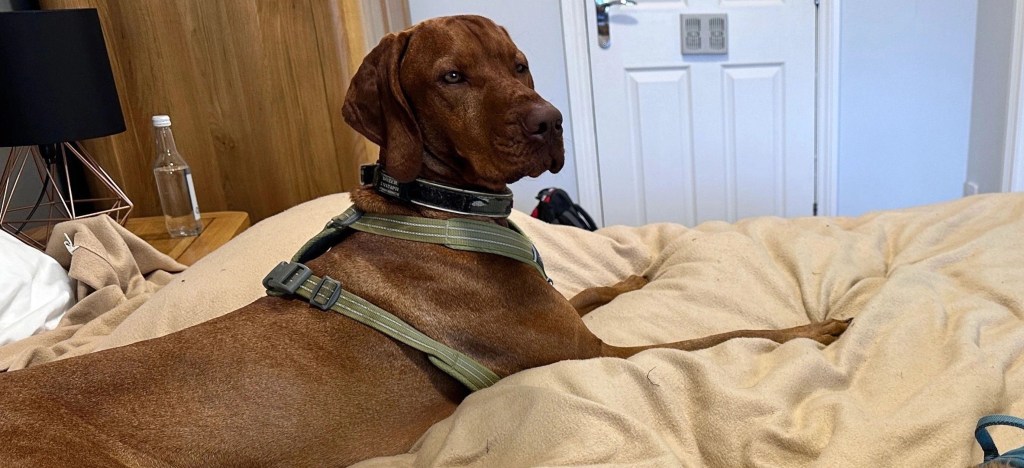
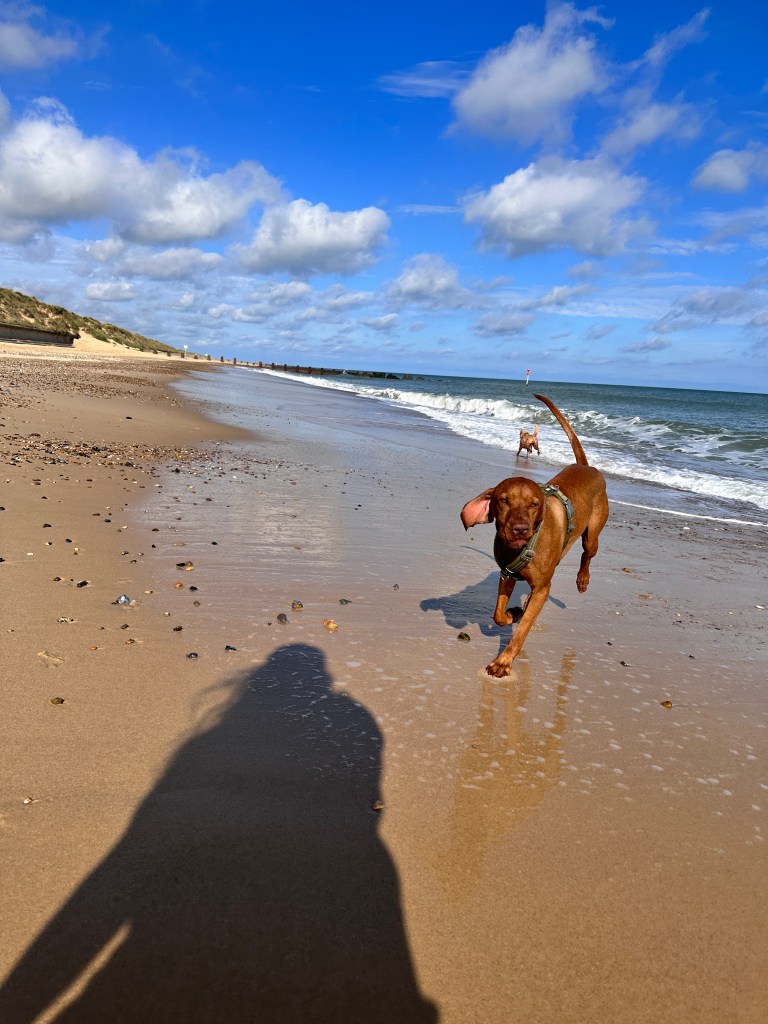
Last night, my adorable dog Dozer suddenly transformed into a completely different creature. He exhibited reactive behaviour, which is not typical of him at all. We were sitting in a pub, patiently waiting for our food, when someone walked past with another dog. Normally, this wouldn’t have fazed him, but this time he abruptly lunged forward, barking so loudly that it startled everyone around us. His barking persisted, and we had to remove him from the room and take him outside. This is completely out of character for our baby Dozer.

So, what caused this sudden change? The answer is trigger stacking. Our recent experiences have been quite eventful as we are currently staying in a hotel near Southampton. While it sounds lovely, the past few days have been filled with various stressors for Dozer. It all started five days ago when we were still in Waxham, in our caravan. Thomas, who Dozer loves left to go home, and our pup began searching for him during every walk. Then, during a lunch outing, a dog sitting at the next table stared intently at Dozer, making him feel unsettled. Following that, we experienced three storm fronts with thunder throughout the night, which is never pleasant when living in a caravan.

The next morning, strong winds with 30mph gusts caused our awning to start separating from the caravan. We had to frantically empty its contents and take it down in high winds, creating a lot of noise and chaos. While we were finishing packing away tables and chairs, Dozer was let out to investigate. Unfortunately, in the mess, I accidentally trapped my finger in a folding table, causing a painful injury to my finger and blood to pour everywhere. Dozer became stressed and began to jump up at me almost trying to climb up me after sniffing all of the blood. The following night brought another storm, and yesterday morning, we embarked on a long five-hour drive to Southampton through horrendous weather. Arriving late at the hotel, Dozer, who had never been in a hotel before, couldn’t settle down. He spent most of the night pacing and grumbling at every noise.

All of these stressors and changes have been too much for my sweet Dozer to handle and recover from. Sometimes life becomes difficult to control, and our dogs struggle to keep up with the fast pace. This is my apology to my beloved dog and my confession of feeling like a less-than-perfect caretaker.

So what exactly is trigger stacking?

Trigger stacking in dogs occurs when multiple stressors or triggers accumulate, overwhelming the dog’s coping mechanisms and resulting in an exaggerated or inappropriate response. Similar to humans, dogs can experience stress from various sources like loud noises, unfamiliar environments, changes in routine, and interactions with other animals or people.

When a dog faces multiple stressors in a short period, these triggers can accumulate and have a cumulative effect. For instance, if a dog is already anxious due to a thunderstorm and then encounters a stranger entering their home, their reaction may be more intense compared to experiencing only one stressor at a time. This is because each trigger adds to the dog’s overall stress level, making it challenging for them to remain calm.

During trigger stacking, the body releases adrenaline and cortisol, stress hormones that prepare the dog for a fight-or-flight response. It takes time for these hormones to return to normal levels, and the dog’s body to reach homeostasis. This is why it’s crucial to manage trigger stacking and prevent it from occurring in the first place.

Once we are back home, I will give Dozer a few days of normality to allow his cortisol levels to reduce (which can take up to 3 days). After that, I will gradually reintroduce him to pubs and cafes, taking small steps to ensure he doesn’t generalise his behaviour to all eating places. It is important to plan and organize this process carefully. If I miss the signs of him becoming uneasy and allow him to become overwhelmed to the point of reacting with an outburst, we risk creating a pattern.

Although trigger stacking led to this behaviour, in Dozer’s mind, barking and lunging were attempts to make the other dog go away. By removing him from the situation, this goal was achieved. I’m not suggesting that we should have moved him outside to calm down because we most certainly should have, but rather pointing out that mismanaging the situation could create a pattern where Dozer believes barking and lunging leads to the removal of the perceived threat.

This is often where reactive behaviour starts. Owners may either avoid the situation entirely, which means the dog never learns how to react appropriately other than barking and lunging, or they continue to expose the dog to the situation but in excessive amounts, resulting in a cycle of bark-lunge-removal. This can be incredibly frustrating for both the owner and the dog.

To visualize the situation, imagine it as a game of buckeroo, with the original trigger being the full load that causes the donkey to buck. To start, we need to have just one or two items on the saddle, then stop and give time between sessions to remove the items and allow your dog to process and recover.

Remember, each dog is unique, so it’s always recommended to consult with a professional dog trainer or behaviourist who can provide personalised guidance and support based on your dog’s specific needs

Featured

Mantrailing is more than training.

Please read this article from Mantrailing uk

Find an event at Doghampton

Mantrailing is like no other activity or sport that you can take part in with your pet dog. It is completely unique dog training in many ways but quite interestingly, it can help solve a number of unwanted behavioural problems that may challenge your every day life with your dog such as fear, hyperactivity, phobias, stress, anxiety, reactivity and aggression.

Mantrailing is allowing the dog to make the right choices independently and will be much more satisfying and prioritising the preferred habits in the brain. It has the effect that over time, it changes unwanted habitual behavior and shapes new behavior that is the final, desired goal. It interrupts and redirects unwanted dog behavior, will give the dog satisfaction and can be therapeutic. This, in turn, will provide various benefits and will give you and the dog more confidence and stress free experiences.

These dog behaviours can lead to you becoming extremely isolated with your dog and having stressful and disappointing experiences and missing out on taking part in various activities or even simple dog walks.

Mantrailing is the ultimate sport for turning a pessimist into an optimist!

It is one of the very few sports where the dog can work freely and the handler can enjoy watching their dog work. It is all about putting the dog in control and the handlers taking a back seat and watching how the dog works tricky trails out themselves. Through this, the handler learns to read the dogs body language, which creates a great bond and ultimately will equate to further progression in their behavioural and every-day training.

By taking part in Mantrailing, both you and your dog become a team – the best team imaginable! You will achieve success after success together, getting a buzz each time a missing person is found.

This will also help with building the dog’s confidence and self-esteem up in a very short period of time. It helps the dog to become less stressed, relax, learn a new game and have endless fun along the way. By working as a team, the dog will naturally want to engage with their handler and learn.

A dog’s nose dominates its brain, so naturally Mantrailing provides mental, intellectual stimulation for your dog, providing an exceptional workout for the brain, tiring them out without the need for physical exercise. This is perfect for dogs that are still bouncing around the house after endless walks, puppies, elderly dogs or dogs that are unable to complete as much physical exercise for one reason or another.

“It is invaluable dog training.”

It´s not competitive or over arousing like some other dog sports. It is fantastic at getting the dogs to solve problems, which in turn will build confidence and make the dog more likely to respond to behavioural modification training as the dog will want to engage and learn. This will help to change the dog’s reaction to certain situations such as a person, a dog, another animal or person.

“By making Mantrailing the best game ever, we change the priorities for the dog.”

Behaviour, that has become habitual for the dog, such as chasing a runner or barking at another dog, can be challenging to reverse. By making Mantrailing, which is a natural game, more fun, exciting and rewarding, we are changing the priorities for the dog. All over sudden, chasing that bike isn´t as important as following the trail that leads to receiving the best reward. A lot of dogs find trailing rewarding in itself.

Once the dog understands the concept of Mantrailing, which happens usually within the first session, there is no stopping them from doing their ‘job’. The dogs are extremely intent on following the trail to find their missing person, that whatever or whoever gets in their way is completely ignored. This has, for expample, enabled dog reactive dogs to ignore any other dogs on or near their trail.

Nervous dogs have been brave enough to pass objects or scenarios they once wouldn’t pass or take food from strangers that they might not normally approach.

Olfaction is believed to be the dogs’ most powerful and perhaps important sense. Their sensory world is impressively different from ours, they observe their world through relentless sniffing and scent discrimination. Dogs can have up to 300 million olfactory cells, whereas us humans have only about 15 million.

“It is believed that they can detect a tea spoon of sugar in an olympic sized pool.”

Canine olfaction is a growing area of scientific investigation and there are many new applications surfacing every year. The dogs’ brain is build around the information it gets from scent which is closely linked to emotions. Endorphins are chemicals that are produced in the brain during times of stimulation and excitement, they create feelings of calmness and happiness and decrease stress and anxiety.

When endorphin levels are too low the dog is likely to feel under a lot of stress, which can result in undesired or obsessive behaviours that the dogs use as a mechanism to cope. Anything that induces pain or excitement boosts endorphin levels, so a dog could chew his own paw, spin, or chase shadows all day as their way of creating enough endorphins for normal function.

The more the brain can be engaged and challenged with new behaviours, the more relaxed and content the dog will be. Stimulating the dog mentally and physically can help it cope with lower than average levels of endorphins being produced.

So what are you waiting for? Get trailing!

To find out more about Mantrailing and how to get involved, visit our events page or join our Facebook group “Mantrailing Association UK”

Find out more

Sign up for more info

References

https://www.researchgate.net/publication/280446218_Canine_Olfaction_Scent_Sign_and_Situation

http://www.balancebehaviour.org/

Featured

Dying to be trained, the facts all dog owners should know! – by Susanne Broughton

Photo by Pixabay on Pexels.com

Choose your dog services carefully.

The UK as the animal loving nation that is it known for has lead the way in animal welfare changes for the last century, so you would anticipate the statistics regarding animal welfare issues to have decreased with it?. However between 2013 and 2015 3000 people were convicted of animal cruelty but only 7 % of these received a custodial sentence. (RSPCA 2018) in 2018 the RSPCA rescued more than 102900 animals and investigated a total of 130700 cruelty complaints only 1678 of these cases resulted in prosecution. So have the changes in legislation helped pet welfare?

A BBC report stated that in 2009 Battersea Dogs home euthanized a total of 2815 dogs 1931 of these for behavioural and temperament issues. BBC (2010),

Are the laws promoting awareness or are they part of the problem?

As The Animal Welfare Act 2006  now pushes the responsibility for duty of care, more and more people are seeking the help of ‘professionals’ as the vast majority of dog owners are aware that training and exercise are vital to ensure a well balanced happy dog that can be integrated into society.

So why are there so many dogs that need help with behaviour problems. The canine world is a confusing place, for dogs, owners and people that work within it. Media ‘experts’ are all over our screens now, each dishing out their own approach to solving problems. This is still an unregulated field and there is no single professional governing body to ensure certain standards are adhered to. In the hands of an inexperienced or misled professional the very issues the dogs are displaying can become exaggerated to the point the dog is surrendered and or put to sleep.

Under the Animal Welfare act this ‘professional’ does have an obligation to work within the guide lines of this law. So any walker, pet sitter, trainer or behaviourist that works with a dog has a responsibility for not only the dog, but also its actions whilst under their instruction! They also have a duty of care to  ensure the dogs welfare needs are met and that it does not unnecessarily suffer. While working with a fearful dog if the wrong approach is taken or the correct programme rushed the dog could very likely be subjected to unnecessary suffering in the form of stress or fear, and the ‘professional’ will be held responsible for it. This responsibility reaches further than just the basic needs of the dog. The Control of Dogs Order 1992, states a collar must be worn with adequate detail whilst the dog is in a public place if the dog has no owner details whilst in the custody of a another person then they will be accountable. As is the same under the Dangerous Dogs Act 1991 section 3 clearly states that a dangerously out of control dog in public place is a criminal offence and whomever is in charge of the dog at the time will be deemed accountable for its actions.

“BUT MY DOG WOULDN’T HURT ANYONE” I hear you say and you are probably correct however you need to understand what defines a dog as dangerously out of control. The Control of dogs order defines a dangerously out of control dog as:

 A dog that not just injures someone which you would expect  but one that a person has grounds for reasonable apprehension that it may do so. The implications of this are momentous, if training or walking a reactive dog a member of the public comes to close and the dog lunges barking at them even though they have not made contact with that person and the situation has been controlled very quickly, The dog can still be reported as it could be deemed to have caused the person a reasonable apprehension that it may injure them. This could  lead to the dog being seized. Even something as everyday as a dog chasing, barking or jumping up at someone could lead to a complaint. If the dog happened to break free and injure a member of the public during a session this would mean the dog may never be returned home to it family and could very likely be destroyed.

 Safety and understanding of the implication of the law need to be the main priority for anyone working with dogs. Ability to interpret canine body language and continually managing the environment you are working within will reduce the risks and likelihood of any incident happening.

Professionals taking money for services from the public have a duty of care not only to ensure they abide by the law but they understand the implication if things go wrong and to also explain and assist you the owner as the same situation could quite easily happen. Did you know that your dog jumping up to say hello could get your lovable pup reported as a dangerous dog more importantly does the person you are paying know!

BBC (2010) Press Office, Available at: http://www.bbc.co.uk (Accessed: 28/05/2019).

RSPCA. (2019) Facts and figures, Available at: http://www.rspca.org.uk (Accessed: 28/05/2019).

the national archives (2019) The Dangerous dogs act 1991, Available at: http://www.legislation.gov.uk (Accessed: 25/05/2019).