Understanding Age-Related Behavioural Changes in Dogs


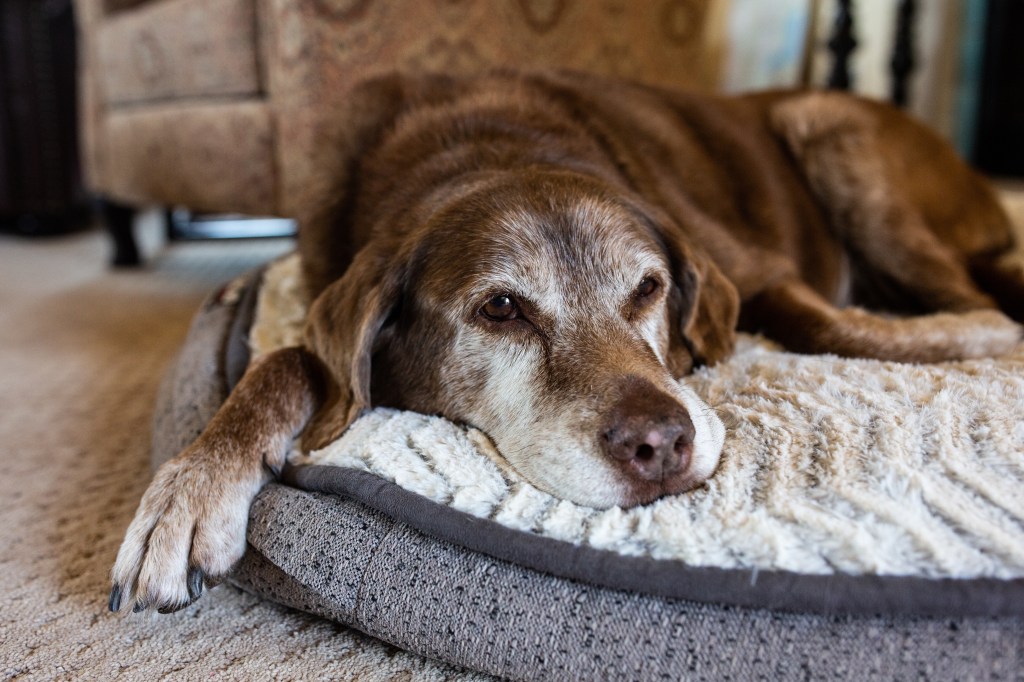
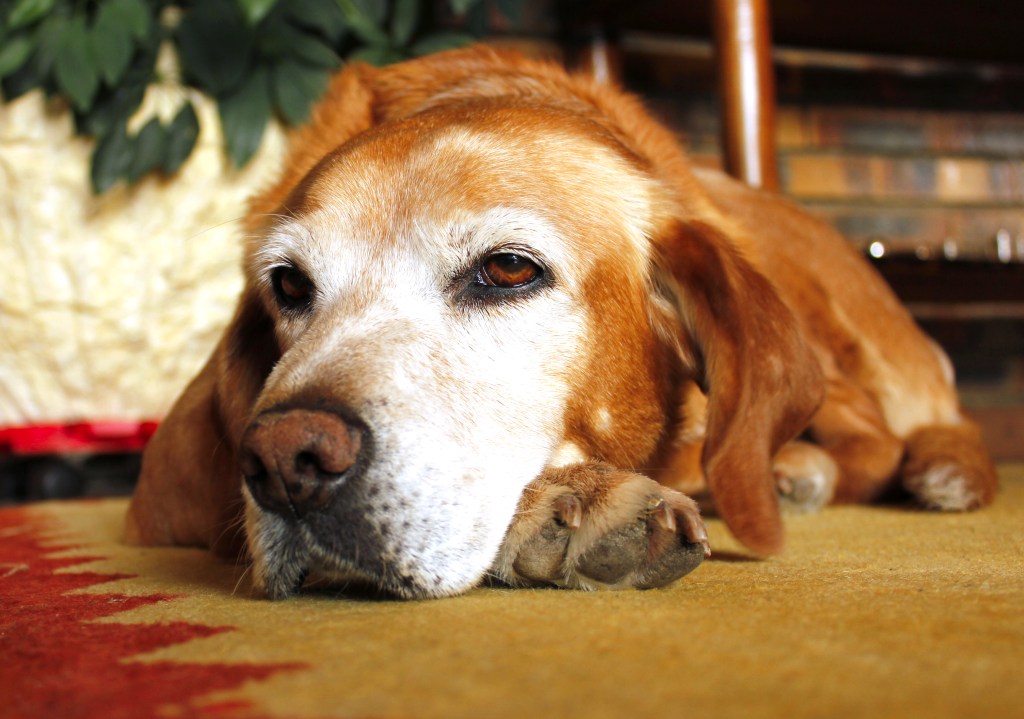
As our beloved canine companions age, they may experience behavioural changes that resemble dementia in humans. Known as Canine Cognitive Dysfunction (CCD), this condition can significantly impact a dog’s behaviour, leading to confusion, disorientation, and memory loss. Understanding these changes, their causes, and exploring ways to help our furry friends cope with CCD is crucial in ensuring their well-being and quality of life.

Causes of Age-Related Behavioural Changes:
Age-related behavioural changes in dogs are often the result of the natural aging process. As dogs grow older, their brains can accumulate a build up of proteins that interfere with nerve cell function. This build-up affects cognitive abilities, leading to CCD. Common behavioural changes associated with CCD include confusion, disorientation, altered sleep patterns, house soiling, and decreased social interactions.

Recognising the Signs:
It is essential for us as pet owners to be vigilant in recognising potential signs of CCD. While these changes may be subtle, they should not be dismissed as typical aging. If your dog exhibits any of the following symptoms, consult with a veterinarian:

1. Disorientation: Your dog may appear lost or confused in familiar environments.
2. Social Interactions: Reduced interest in social activities, toys, or family members.
3. Sleep Disturbances: Changes in sleep patterns, such as increased daytime sleep or restlessness at night.
4. House Soiling: Forgetting house training and having accidents indoors.
5. Activity Levels: Decreased enthusiasm for exercise or play.

Ways to Help Dogs with CCD:
1. Establish a Consistent Routine: Providing a predictable routine can reduce confusion and disorientation. Stick to regular feeding, exercise, and playtimes to create a sense of stability.
2. Mental Stimulation: Engage your dog in interactive games, puzzles, and training exercises to keep their minds active and stimulated.
3. Environmental Adaptations: Make adjustments to the living environment to accommodate your dog’s changing needs. Use visual cues and landmarks to help them navigate their surroundings more easily.
4. Sensory Enrichment: Provide sensory stimulation through toys with different textures, scents, and sounds to engage your dog’s senses.
5. Balanced Diet: Opt for high-quality senior dog food that supports brain health. Supplements like antioxidants, omega-3 fatty acids, and B vitamins may also be beneficial (consult with your vet before introducing any new supplements).

Medication for CCD:

Selegiline is an oral medication used to treat CCD in dogs. It works by protecting nerve cells and enhancing dopamine in the brain, which can help improve cognitive function. It increases the production of dopamine, a neurotransmitter that helps regulate movement, emotion, and cognition. By enhancing the production of dopamine, the drug helps protect nerve cells from damage and enhance cognitive function, which can reduce the symptoms of CCD.

Selegiline has been shown to provide some relief from CCD symptoms in dogs. Owners have reported improvements in as little as two weeks, with some dogs even showing restored mental alertness and increased social interactions. Although Selegiline is generally safe and well-tolerated, some dogs may experience side effects such as vomiting, diarrhea, or loss of appetite. If your dog experiences any of these symptoms, contact your veterinarian immediately.


Dementia and age-related behavioural changes in older dogs can be challenging for both pets and their owners. However, by recognizing the signs, providing a supportive environment, and considering appropriate medications, we can help our dogs maintain a good quality of life. Remember, early detection and intervention are key. If you suspect CCD in your aging dog, consult with a veterinarian who can provide guidance tailored to your pet’s specific needs.

Understanding Your Dog’s Behaviour:

A Guide for Frustrated Owners

Why fighting genetics is a loosing battle. It is vital to consider genetics when training dogs with bad behaviour because genetics can significantly influence a dog’s behaviour and temperament. Dogs inherit certain traits and tendencies from their parents and ancestors, which can impact their behaviour patterns, instincts, and predisposition to certain behaviours.

Understanding a dog’s genetic background can provide valuable insights into their behaviour. Certain breeds have been selectively bred for specific purposes, such as herding, guarding, or hunting, and these instincts may manifest in their behaviour. For example, a herding breed may display a strong desire to chase and nip at moving objects, like children or bicycles, which can be misinterpreted as aggression or bad behaviour.

By considering a dog’s genetic predispositions, we can tailor our training methods and techniques accordingly. For example, a dog with a high prey drive may benefit from structured and consistent training that focuses on redirecting their natural instincts in a positive way.

Furthermore, understanding a dog’s genetics can help us set realistic expectations and avoid frustration. Some behaviours may be more challenging to modify due to genetic factors. It’s important to remember that while training can have a significant impact, it cannot completely override a dog’s genetic predispositions.

Overall, considering genetics when training dogs with bad behaviour allows us to develop a more comprehensive and effective training plan that takes into account the dog’s natural instincts and actually use these to our benefit, leading to better outcomes and a deeper understanding of the dog’s behaviour.

Here are the top 5 issues we get calls for.

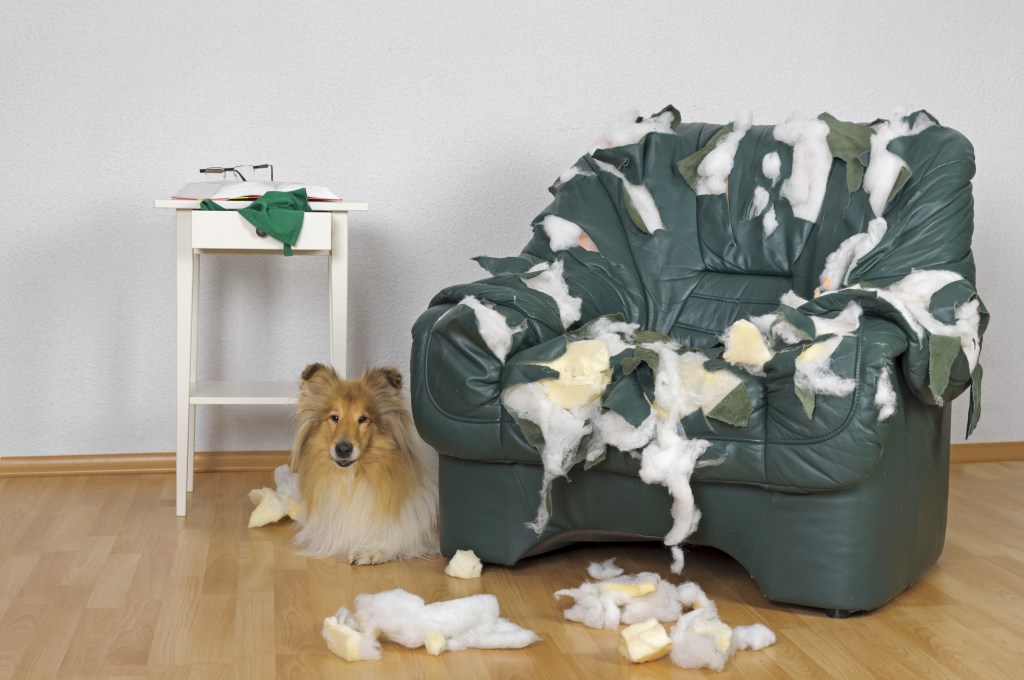
1. Destructive Chewing:
   – Provide plenty of appropriate chew toys and rotate them regularly to keep your dog engaged.
   – Dog-proof your home by removing valuable or hazardous items from your dog’s reach.
   – Supervise your dog and redirect their chewing behaviour to appropriate toys when they start chewing on something they shouldn’t.

2. Excessive Barking:
   – Identify the triggers for your dog’s barking and work on desensitizing them to those triggers through gradual exposure and positive reinforcement.
   – Provide mental and physical stimulation for your dog through regular exercise and interactive toys.
   – Teach your dog a “quiet” command using positive reinforcement training techniques

3. Separation Anxiety:
   – Gradually desensitize your dog to your departures by practicing short absences and gradually increasing the time.
   – Create a safe and comfortable space for your dog when you’re away, such as a crate or a designated area.
   – Use positive reinforcement training techniques to reward calm behaviour when you leave and return.

4. Lead Reactivity:

– Identify the stimulus, is it the lead? cars? movement? people? dogs? etc
   – Gradually desensitize your dog to the presence of the stimuli by using counter-conditioning techniques.
   – Use a front-clip harness or head collar to give you more control and prevent pulling.
   – Seek professional help from a qualified dog trainer or behaviourist to address lead reactivity as this can escalate to being dangerous quickly.

5. Jumping Up on People:
   – Teach your dog an alternative behaviour, such as sitting or offering a paw, that is incompatible with jumping.
   – Ignore the jumping behaviour and only reward your dog when they exhibit the desired alternative behaviour.
   – Consistently reinforce the desired behaviour and provide plenty of positive reinforcement for calm greetings.

Always remember that consistency, patience, and positive reinforcement are key when addressing behavioural issues in dogs. It’s important to tailor your approach to your specific dogs needs and seek professional help if you are unsure.

It is easier to pay for one session to ensure your on the right path then leaving it until the behaviour has escalated.

Remember we are here to help.

🐶 STOP IGNORING ME 🐶


I’m sure we all have been ignored when someone is engrossed in a film! But did you know this is actually a phenomenon called “inattentional deafness”. 👂
Studies on humans revealed that concentration on visual tasks will render you temporarily deaf to normal sounds.
🧠 Brain scans have showed that people do not purposely ignore known sounds, but that they actually aren’t hearing them in the first place!
The findings support a shared audio-visual centre, which, when depleted under load, leads to failures of sensory perception and awareness.
Example:
You turn down the music in your car so you can see better? Especially when we want to focus on reading the street names.
🐕 So how does this relate to dogs?
The thalamus is the area of the brain that’s is responsible for relaying sensory information such as hearing, sight, touch and pain. It also enables the dog to concentrate on one thing at a time.
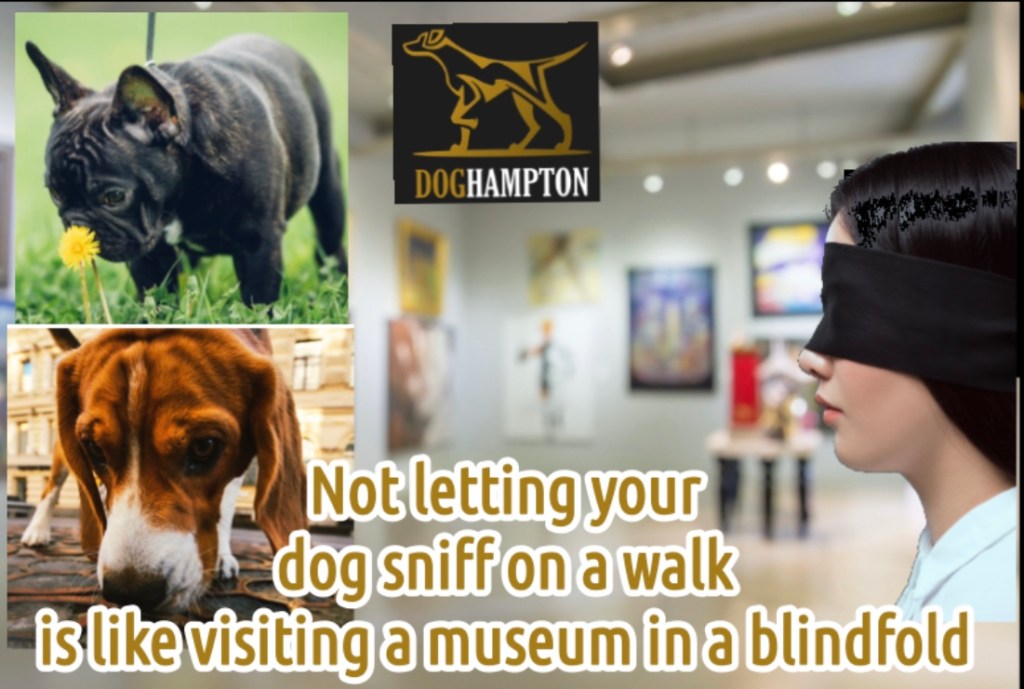
So just like your partner watching a film, when your dog is sniffing the ‘pee mail’ and all the wonderful smells on his walk, they will very likely not hear you and why should they? It’s their walk after all!
Wait for your dog to finish “reading” then call him back!

Puppy Conner

Sharpening the teeth

It’s been a busy morning!
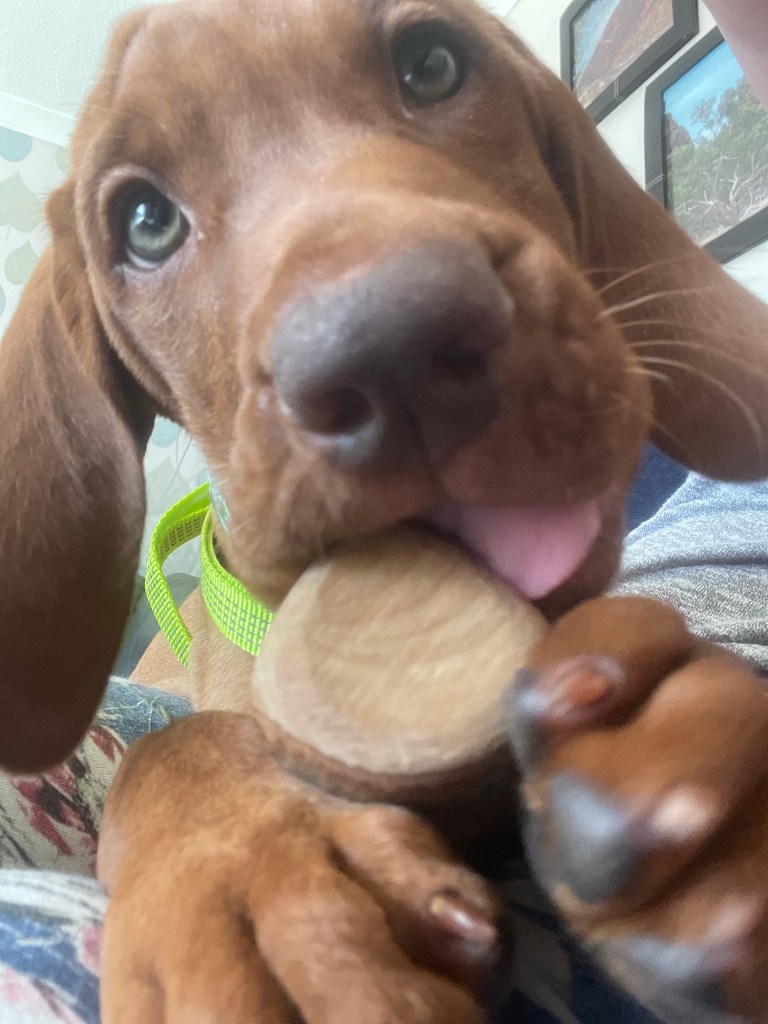
I needed a pee at 06:00! as my humans only give me a treat and a dance when I make my waterfalls outside, I decided it was best to wake them up, that wasn’t that easy! I had to shout as loud as I could, I didn’t give up and I was right, daddy took me out and I got some yummy treats.
Daddy was muttering something about 6 am on a bloomin Sunday I’m not sure what that means but he didn’t look his happy self so I cheered him up with a game a ‘shark attack’, I loves my needle teeths, so does daddy!! he makes funny noises when I try and pull the hairs off his legs with them!

Mummy’s been great fun this morning she hasn’t sat down for a minute, I found us a new amazing game, not sure what to call it yet, but boy it’s the best ever. I hunt around for things then start chewing them, and mummy has to chase me and get them out of my mouth before I swallow them. I think Mummy is winning but wow it’s such fun!

It sucks having to share the same water bowl as my older sister, she is smelly and so old, I think she puts cooties in the water!
I tried to explain this to mummy & daddy but they didn’t get it! I really had to think hard how I could get then to clean the cooties out!!
I tried barking at the bowl, bowing at it, zooming past it, sitting and staring at it, I even tried getting the cooties out with my paw, eventually I had no choice but to sit right in the middle of the water bowl and try and push them out with my bottom!! Yippee 🙌 it worked, fresh water, and a tickle with a towel, what fun!

I think I need a little nap now, then I’ll try the ‘I’m a parrot 🦜 game’
It’s a good job my claws are still so sharp otherwise I’d never be able to climb up mummy and daddy’s back to bite their hair!

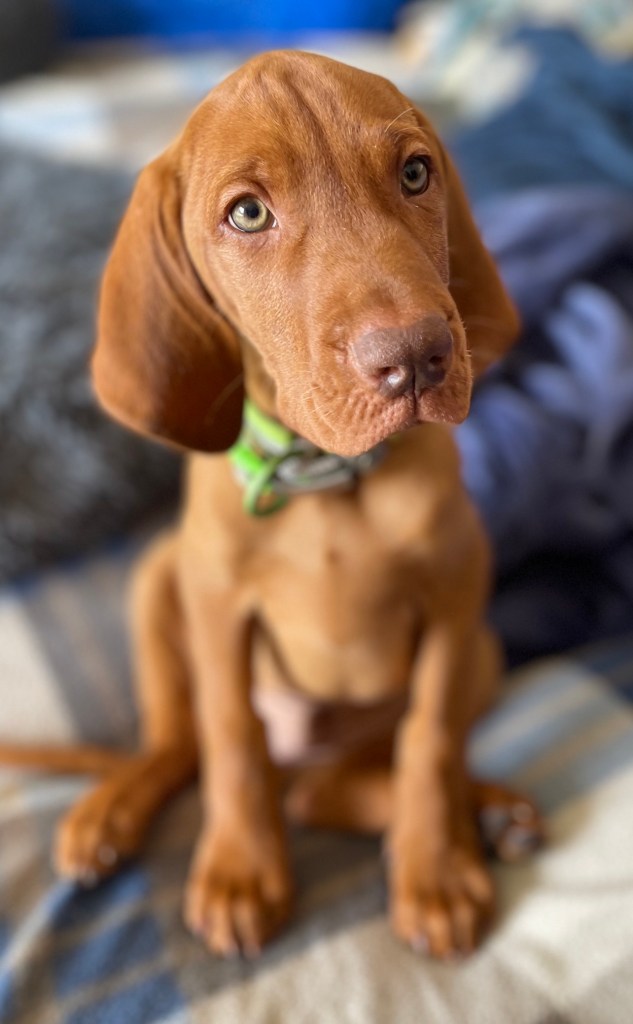
The face of an angel

Is Christmas Merry for our Dogs?

Christmas is a happy time for humans to get together and be merry (or argue depending on your family) But it can be a stressful and confusing time for our dogs.

Routines change, more people visit, or they are alone more often than normal, most dogs like routine and can get anxious when there are changes. On top of this they now have to cope with a tree in the house they can’t pee on, it has shiny balls all over it and nobody throws them! sometimes there are even edible things hanging there too that can’t be eaten, interesting presents they can’t chew, twinkling lights with wires that bite.

Did you know some fir trees produce oils which are mildly toxic and if ingested could cause your dog to vomit or excessively drool.

We all know there are loads of Christmas foods which are poisonous or toxic to your dog, including grapes, sultanas chocolate and raisins,

mince pies, Christmas puddings, dried fruit nuts, chocolate, even something that sound like they could be safe often aren’t. Turkey  scraps could contain tiny bones which are dangerous.

This doesn’t mean we should lock ourselves away and not celebrate, it’s just something all dog owners need to be aware of so we can make sure Christmas is a happy time for our dogs too.

Dog bites over the Christmas periods are higher than any other time of the year, in the majority of cases this involves young children. Not all dogs like tiny humans, they are loud and erratic. At Christmas they can be more excited than normal, maybe they have friends over, or even relatives the dogs have never even met!

All of this on top of probably getting less physical exercise than usual as we are all busy desperately trying to prep a meal and trimmings for the whole of the Moscow state circus !

Most well-socialised family dogs can cope with the temporary craziness of Christmas – and some actually enjoy it, however for a surprisingly large number it’s stressful and worrying. A dog that is under-exercised, over stimulated, under-supervised and over-threshold is an accident just waiting to happen.

So how can we prevent the dog from biting?

Make sure they get enough exercise, (it might actually help your stress levels to escape in the fresh air for an hour. Aunt Mable won’t notice the dust behind the chair!

Supervise all interactions between children and dogs. If you can’t, then create a safe space  for your dog to get away

Try and keep your dog’s routine the same as always.

Watch out for any signs your dog might be getting stressed.

Licking their lips, or parts of their bodies

Not settling

Following you around

peeing in the house

Chewing

Pacing or shaking

Whining or barking. …

Yawning, drooling,

Panting.

If you recognise the early signs then  help your dog,

Give them a quiet area away from everyone. Maybe try  Lick mats or a kong, with some tasty treats.

Have yourselves a merry Christmas and relax and enjoy the time with your friends and family  knowing that your dogs are safe and happy too.

Pacing or shaking

Whining or barking. …

Yawning, drooling,

Panting.

If you recognise the early signs then  help your dog,

Give them a quiet area away from everyone. Maybe try  Lick mats or a kong, with some tasty treats.

Have yourselves a merry Christmas and relax and enjoy the time with your friends and family  knowing that your dogs are safe and happy too.

MANTRAILING Do you influence your dog on the trail?

The line we use is the way we communicate to our dogs while they are working: The length between you and your dog needs to be long enough to allow your dog to work to the edges of the scent with minimal hindrance from us. If it is too short (which we see all the time) the dog will not be able to naturally follow the scent and work uninfluenced, too long and you will spend your time untangling it and tripping up your dog.

The tension on the line is so super important, I really cant stress this enough, Lines that drop on the floor with no tension and aren’t looped up quick enough often result in the dog being jerked at a critical point, (most common is after casting at a junction, the dog makes the correct direction choice, heads off quickly full of enthusiasm, reaches the end of the line with a jerk and reads this as a correction or a negative communication, the motivation drops and some dogs who are eager to please their owners will even just head off in the direction the handler is facing whether it is correct or not!   

The line should NEVER be used to Influence your dog while they are working. Using the line to direct or guide your dog will simple teach them to rely on you and not their own abilities to follow the scent. Use your words to engage your dog to trail, and be patient, to quote Kevin Kocher  

communicating with your dog through the lead is part of handling a dog. It is what separates a dog handler from a lead holder”.  

Don’t be a lead holder! your dog deserves more than that from you! 

And finally never underestimate how your position behind your dog can unintentionally influence them on a trail. A line to short and a handler stood or facing to the left in a junction can and often and does encourage the dog to head off in that direction. Patience is the key, always, and I really do mean ALWAYS try to stay directly behind your dog at safe but non hindering distance. Some handlers have a right or left bias, meaning they naturally walk slightly to one side or another, at a greater distance behind your trailing dog this may not be problem, but closer, maybe in a busy town or next to traffic when the line needs to be shorter for safety reasons, this slight bias may make for bad decisions on your dogs part. Dogs are clever at reading us, and taking situational cues we don’t even realize we are showing, this is true in trailing too, as instructors we are very careful not to influence your dogs as we invariably know where the trails go and are very aware that some dogs will pick up on us standing still at a missed turn or moving over to one side or  another when a turn approaches.  

For the more advanced trailing teams we follow you when you make mistakes and encourage you to ‘have a plan’ and assist you in helping your dog make the right decision.  


Some dogs are quick we know this and their directional changes are equally as rapid which will mean the line will end up on the floor, we understand this and totally sympathize with the difficulty as one of our dogs is just the same. The skill you have to practice is a little like cowboy rodeo training, gathering the line in a tidy loop at the same time as staying behind and facing the dog! I’m dizzy just typing this, but it can and must be done to ensure our dogs progress without influence or hindering, so grab your Stetson and get practicing!

Fabulous article by hound and the found

How Scent and Airflow Works.

rattlerjen

 rattlerjen9 years ago

How do those dogs find missing people?

Remember PigPen from Charlie Brown?  He always appeared to have clouds of dust coming off of him wherever he went.  This is not far from the truth.

You have thousands of tiny pieces of your body leaving you every minute; 40,000 pieces to be exact.  These tiny cornflake like bits are called rafts.

They are made up of skin cells, hygiene products, bacteria, fungus, parasites, sweat, hormones, and enzymes. They are unique to each individual human.  Even skin rafts from identical twins are different.  These are what dogs smell.

Some skin rafts are lighter in air, easily carried by air currents.  Others are heavier than air,  alighting on vegetation or falling to the ground.

Dog Handlers pay attention to air currents.

Skin rafts are carried along currents of air like millions of fluffy dandelion seeds.

We pay attention to physics.  Warm Air rises

and Cool air sinks.  Cold and moisture make air heavier. Your skin rafts first leave your body at about 2mph up in the air traveling along the current of air your 98.6 degree F produces.

Without any air movement

scent diffuses evenly

Diffusion

But of course, there is always something making air move.

When things are perfect, scent moves predictably like this:

Laminar Flow

Objects and other factors often cause air to move like this:

Turbulent Air Flow

Turbulent air flow causes handlers and their canines to mutter choice words under their breaths.

Different Types of Airflow

Normal Daytime Air

When the ground heats up during the day time, air begins to rise.

Normal Nighttime Air

When the ground begins to cool, air cools and begins to fall. It flows downhill like water.

Coning Plumes

  • movement of scent from subject downwind in the shape of a cone
  • during cloud covered days or nights
  • travels long distances
  • ideal for dogs

A dog will run perpendicular to the flow of the scent crossing in and out of the scent cone zeroing in to its source.

Fumigating Scent

  • occurs in the morning before sunup
  • scents travel down valleys like water
  • subjects on a hill can be detected by dog down below
  • It is good to get dogs out before sunrise

Lofting Scent

  • Occurs after sun sets
  • The ground is cooling but aloft air is still warm
  • usually occurs in valleys first then other areas later on
  • Work dogs on the high ground in the evening

Fanning Plumes

  • at night in stable air
  • scent holds at the same elevation level without falling or rising
  • dog may alert across a drainage or canyon at the same level, but can’t find a person
  • Be sure to report your alerts as scent can carry

Pooling Scent

  • collects in an area like a pool of water
  • usually occurs in a low area
  • Occurs where there is little dispersal of scent by the wind
  • It hard for dog to follow a scent pool to the subject

Eddying Scent

  • circular air forms behind an object (turbulence)
  • prevents scent from traveling along prevailing wind
  • example: eddies form at a line of trees next to an open field

Looping Plumes

  • Occurs in clear sky or with high clouds
  • Occurs at midday, a high convection situation
  • scent rises, cools, falls, heats up, rises, cools, falls, etc.
  • Dog will alert by putting his head up, but will lose the scent.

Chimney Effect

  • Happens when air currents move straight up an object
  • alerts may occur nearby   -but-
  • scent may come down as much as several hundred meters away from the subject
  • This makes it nearly impossible for the dog to find the subject
  • You should check around tall objects in the area

Thermoclines

  • caused by significant temperature and humidity differences in short distances
  • changes in elevation
  • drastic changes in shade and sunny spots
  • creates a wall like barrier of scent

The partnership with a hound by Darin Lee of Houndsong Rescue

I think the frustration with hounds comes from a lack of understanding of them and what their original purpose for being selectively being bred.
Hounds do not believe that they NEED you. You are a lovely part of their day – like a favorite coffee cup or a favorite pair of shoes. If the cup is broken or the shoes are lost, we can get along just fine with another.
Let me explain:
Where other breeds of dogs like Labradors, Shepherds, Border Collies, and a host of others are bred to work WITH man; their original bred temperament is to work alongside man in cooperation to achieve a goal.
The Border Collie follows man’s commands to herd the livestock. The Lab follows the hunter’s commands to get the quarry – so and so forth. They are a teammates of man. Neither can do their work without the other — and so they have been bred for eons to have that in their make up — to be anxious to please. Even the worst behaved Labrador cares when mom and dad are annoyed. It is in their DNA to make man happy.
Hounds… not so much.
Hounds have been bred for eons to be taken out to the edge of the woods or field and be let loose to go out and do what they do with NO INSTRUCTION from the hunter or handler. They go out and do their thing, all on their own. They make their own decisions and do their own work. And when that work is done and they have found their quarry, they command/call the hunter to come to them with those beautiful voices. (Who is working for whom in that scenario?)
Do you see how your hound thinks differently?
Life with a Hound is far more like having a spouse than a dog. It is far more of a “cooperative effort” with all the give and take that implies. Hounds are not going to do what you say just because you have said it. You are secondary to their desire. There has to be something in it for them. There has to be a trade off. If there is no reward or benefit for the Hound, the Hound cares little what you are asking him/her to do. People incorrectly refer to this as being stubborn – or worse, stupid.
Hounds are actually neither of those things – they are just independent and cunning. They prioritize things differently than do other breeds. They prioritize differently and you are not always their priority.
And, This is EXACTLY AS THEY SHOULD BE.
They were bred to be this way. It is all necessary to be a Successful hound dog.
When working with a Hound you have to always be thinking:
How do I make myself the priority?
What do I have to give this dog to make me more important than what it smells – or wants?
(and do not expect that anything will ever be 100% successful every time – always be looking for your Hound to act like a Hound.)
We humans always think we are in charge of things. We think that we are top of the chain, the head honcho’s…and we naturally approach training our dogs and living with our dogs this way – as though we are in charge.
Your Hound doesn’t see it that way.
Your Hound – at best – sees you as a family member or as a sibling (if you are very fortunate – as a parent). Do you walk into your sister or brother’s house, start barking orders and they hop to?
Mostly your Hound sees you as a good friend. And what do we do with our friends? When a friend does something for us, we return those favors. There is give and take. When a friendship is out of balance – when one friend takes and takes but does not give – the friendship suffers.
Hounds are happiest when their humans are humble and work with their character. A bond with a hound is not an easy one to create. There is a lot of ground work involved but when it is established and the balance is there, it’s a beautiful thing.
So if you have a hound or want one, love and appreciate them for what they are and not what they aren’t.
(This is a repost from a few different areas on the web where the author is unknown. If anyone knows of the author I would be happy to tag them!)

A sport for nervous dogs

Owning a nervous dog can be hard work. It can not only be distressing, but also isolating for you and your dog. The opportunity to join in with classes or meet other dog owners can be difficult. When building confidence in your dog we want to create positive experiences for them, and encourage them to want to investigate new things. These are built into the very essence of mantrailing.

Mantrailing is teaching your dog to find a specific person’s scent. All dogs are born being able to use their nose so what we’re teaching them isn’t anything new to them. But instead we are just directing their natural talent into a confidence building game using the power of scent, which allows your dog to work naturally in a fun way.

The olfactory bulb in your dogs brain, which processes scents takes up 1/8th of the dogs whole brain. This is why the dogs sense of smell is the their most prominent sense. The olfactory bulb is part of the limbic system which is the part of the brain which deals with emotions, memory and behaviour. Scent passes through this when being processed by the brain, it also travels to the cortex which deals with conscious thought.

Positive associations with scent allow the brain to release endorphins and serotonin. These hormones allow the dog to feel good about what they are doing, and these positive memories are brought to the forethought as they work on the scent again. The scent informs the dogs about the good things, but it also forewarns about the bad. Smells last for a lifetime in the memory of dogs and if we can build positive associations with a specific scent there is a huge foundation to work with.

Dogs can even distinguish the direction of travel of the scent, as well as time passed and the individual’s scent.

Another way mantrailing helps your dog become more confident and overcome their fears, is there always an exciting reward waiting at the end of the trail. This reward and its presentation is individual to each dog. They are able to work as an individual and make choices about how close they want to approach the person or not, we don’t want to create a conflict in the dog about going over to the person.

On introduction courses we can use people the dogs know as their trail layer for the first trail, and then from there we transition onto unknown trail layers when the dog is comfortable and knows the game. These unknown trailer layer do not have to interact with the dog at all and just become the scent to follow in order to get to the prize at the end, be that the food, or a toy. Surprisingly many dogs that initially show avoidance towards the trail layer will start warming up to them after a few trails, and want to investigate them as they have a positive experience with them and are not put into a contradictive situation.

As mantrailing is a dog sport where dogs are worked one at a time, it is ideal for those dogs who are worried about other dogs. Once they get into the task, they often become oblivious to the things around them and they can start to ignore other dogs, or things that would normally frighten or distract them. It can help them get past some fears by indirectly exposing the dog to them. Mantrailing helps create a shift in priorities for your dog from looking for danger, to following the scent. They are less likely to react to things that may trigger them normally.

If we use a toy as a reward, we have to make sure that we choose and instruct a trail layer that is capable of presenting or playing with the toy to ensure that we have the best reward possible for the dog. The sheer existence of the toy is often not enough for the dog, it needs to be interactive in a way that is positive for the dog.

If we use food as our reward, we want it to be licked out of the pot. Licking for dogs has been scientifically proven to release endorphins, the hormone linked to the feeling of happiness in dogs.

Article from Mantrailing uk

Separation Anxiety

Let’s talk about separation anxiety for a moment!
A label I hate, and a condition I personally find frustrating.
It’s often misused as a blanket term without understanding the actual cause.
Some dogs are just bored when they are left alone, some not trained to be alone, others left in a state of arousal.
Ask yourself does your dog stress because:
(Separation anxiety)- there are no humans with them?
(Separation frustration) (fomo! More frustration than anxiety.) – something is going on that they are not included in.
(Barrier frustration) – when there is a gate or blockage between you?
(Isolation distress) – They are alone completely isolated?
(Hyper- attachment) – they cannot cope without their primary care giver.

This list is not entire but for now I’ll expand on the last.
Hyper dependancy or hyper attachment can be common with rescue dogs. It is easy to understand why, they have lost everything, sometimes more than once. Now they have everything, food, warm bed, toys, treats, someone to look after their every need, they will never be hungry or cold again. It is easy for them to attach to their new owners a little too much and you almost become an enabler for the anxiety!
In the firsts fees weeks/ months it’s a fine balance with emotionally scared dogs, they need to feel safe and grow confidence. This will only happen with a bond and knowing they are supporting. But a hyper attachment will hinder this growth as they will use you as a shield, and ultimately may even begin to guard you as a prized procession they will not be able to cope for a second without you. They may even begin to look for signs that you may leave, (picking keys up ect) Their lives will be full of stress even if it’s subtle it can still lead to massive problems.

Sign of stress
Barking / howling / whining
Only eating with you.
Following you everywhere
Escaping
Drooling
Panting
Yawning
Licking
Wide eyes
Nervous
Soiling
Scratching (themselves or objects)
Lip licking
Shadow chasing
Pacing
Staying at the last place you were
Watching doors window
Chewing your things

Again this list goes on…

Most things you’ll read about solving this will not be aimed at rescue dogs with emotional baggage. Tread carefully you could make matters worse.

My rescue street dog ‘Goose’ came to me from Cyprus aged six and half months old, for 3 days I allowed him to bond and get used to his new home. I let him follow me everywhere and spent every minute with him.
From day 4, I closed the gate to the kitchen whilst cooking, making lunch or a brew. To begin with he sat with his nose pushed through the gap watching my every move. If I went out of sight he whimpered. If he had been quiet for a few seconds I would go back to the gate and give hime a treat. We built the time between treats, as he began to relax and lay by the gate whithout making a sound when I was out of sight. We extended this to me leaving the kitchen (through the other door) just out and back in, to start with.
For the next 11 days this is all I did, tiny little steps of time or in new area. Goose now lays in his bed on the landing when I shower. Stays in the lounge when I use the loo. Even stays in the lounge when I make a cuppa.
Today I left him in the house without a human for the first time.
I prepped by leaving the tv on, put my boots on, picked up my keys, all low key, no big fuss, dropped some treats on the floor and walked out.
I left the doors open so he could come to the hall gate and see I wasn’t there, he walked back and forth a few times and gave a little whimper or two. But that was it. I was out for 8 minutes, and at this point that’s fine, I will now build this up in tiny steps.
He needs to be happy on his own. Taking the time to get this right now will make things so much easier later on. He is an amazing little dog and deserves everything I can give him to ensure his further happy and stress free.